A wedding tent with room for the weather


A wedding tent begins as an attractive outline on the grass. To become a comfortable place for a gathering, it also needs an arrival route, sensible lighting, a workable meal service and an agreed response when the weather stops following the picture.
Ellis Reed starts a tent conversation by tracing how people will move through the day. Where do guests first arrive, where will they leave coats, and how will someone find a quiet seat? Those questions reveal more than a drawing filled only with tables. They also help hosts explain what matters to them. A long shared meal, an open space for dancing and a sheltered place to talk each make different demands on the layout and its surroundings.
The ground deserves an early look. A route that feels straightforward in dry shoes may be very different after rain, and a small level change can matter greatly to someone using a mobility aid. Hosts should discuss those needs before choosing a position or assuming that a temporary structure solves them. Suitable access, flooring and any additional arrangements require confirmation with the people responsible for supplying and managing the event. Ellis gathers the questions in one place so that a pleasant visual idea does not quietly become an unsupported promise about how every guest will reach it.
Draw the routes as carefully as the tables
Inside, leave room for the work of hospitality. Chairs need to move, servers need clear passages and guests need to recognise where food and drinks are being offered. A decorative feature should not hide an exit or make a route confusing. With Nico Fen at The Alder Table, the planning conversation follows a dish from preparation to service and then considers what happens to used plates. Thinking through that ordinary journey often improves the plan more than adding another feature. It also makes practical requirements easier to explain to anyone involved in supplying furniture, lighting or table settings.
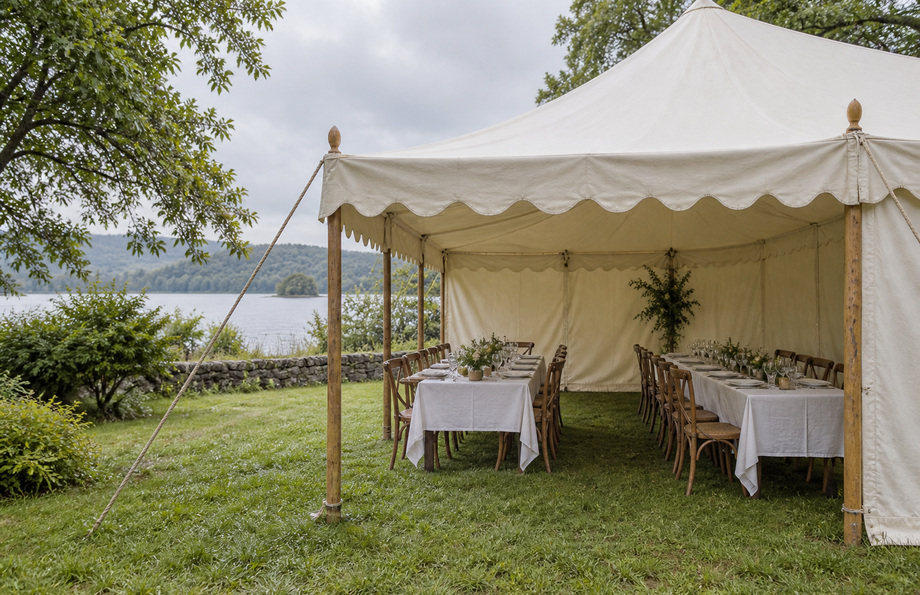
A weather alternative should describe decisions as well as places. Agree who reviews conditions, who has the authority to change arrangements and how guests will be told. Any temporary structure must be used within the supplier's requirements, with professional advice where needed. A tent is not a reason to ignore strong wind or assume that every part of a celebration can remain outside.
The rain plan belongs in the first conversation. Once everyone understands the choices, the hosts can spend their attention on the people they have invited.
— Ellis Reed, events coordinator
Clear information can still sound welcoming. Invitations might explain the setting, suggest suitable footwear and invite guests to raise access questions privately. Keep technical arrangements with the people responsible for them, while giving visitors the details they actually need. Nobody should discover an avoidable difficulty only after stepping out of the car.
Let the setting do some of the work
When the practical outline is settled, decoration can respond to the place. Consider how table colours read in daylight and how the room will feel after dark. Choose a few elements that carry the atmosphere you want instead of filling every available surface. Music, conversation and the meal will bring their own movement. A quieter edge can be valuable for someone who wants to remain part of the occasion without sitting at its busiest point. Leave that possibility in the drawing from the beginning, along with somewhere appropriate to pause if a child becomes tired or a guest needs a moment.
Our gathering worksheet is a useful place to describe the occasion, the spaces you are considering and the questions already on your mind. Treat the first outline as the beginning of a discussion. The best decisions come while there is still room to adjust them.