Enter words to search the local page index.
asymmetric practice home
Know what a visit might involve before you walk through the door. Explore everyday care, treatment choices and the people in this fictional practice, with time to think about the next step.
service directory
Start with the subject that matters to you, from a routine review to replacing a tooth. Each guide explains the purpose of care, questions to discuss and the limits of a general description.
ruled service with sidebar
Routine care is a chance to understand what is happening in your mouth and decide what needs attention. A check, a repair and a question about comfort can belong in the same conversation.
replacement category
A missing tooth can affect comfort, function or confidence in different ways. Compare how each option is supported, what it involves and what ongoing care it needs before choosing a direction.
long procedure with sidebar
Implants are one possible way to support replacement teeth. The decision starts with an assessment and a comparison with alternatives, followed by a plan that makes each stage and its limits clear.
horizontal treatment category
A change in appearance can involve colour, position, shape or an existing restoration. Begin by naming the concern, then compare the options with the health of the teeth and gums in view.
alternating diagnostic editorial
An image is useful when it helps answer a clinical question. Dental imaging should be considered in the context of an examination and your history, with an explanation of why it is proposed.
ruled service with sidebar
Prevention combines daily care with individual advice and appropriate professional review. It works best as a routine that can be understood, practised and adapted.
ruled service with sidebar
Root canal treatment may be considered when tissue inside a tooth is inflamed or infected. An assessment is needed to understand the cause of symptoms and whether the tooth can be predictably restored.
urgent guidance with sidebar
Stillwell is a fictional website and cannot provide urgent care. Use a real local dental service for a dental problem; immediate medical emergencies need the appropriate emergency service where you are.
ruled service with sidebar
An extraction or another surgical procedure needs an individual explanation of why it is being considered, the alternatives and the arrangements for care before and afterwards.
family editorial with sidebar
A child’s dental needs change as they grow. A visit can introduce the setting, help a family understand daily care and assess concerns at an appropriate pace.
restoration detail
A crown restores an existing tooth; a bridge replaces a missing tooth using support on either side or from implants. The design and preparation should follow the condition of the supporting structures.
restoration detail
A removable denture replaces missing teeth and is designed around the mouth it serves. Fit, handling, appearance and maintenance are all part of choosing and reviewing it.
restoration detail
A veneer changes the visible surface of a tooth. It may involve irreversible preparation, so suitability and alternatives deserve careful discussion before an appearance decision becomes a treatment plan.
appearance detail
Whitening changes the colour of natural teeth through an appropriately assessed process. It is worth understanding the cause of discolouration and the limits of treatment before choosing a product or method.
appearance detail
Moving teeth requires assessment of the teeth, gums and bite, a planned course of treatment and review. The choice of appliance follows the problem being addressed rather than appearance alone.
appearance detail
A small change in outline still needs an assessment. Contouring removes tooth material; bonding adds material. Their purposes, limits and future maintenance differ.
clinician directory
Meet four fictional clinicians with distinct areas of focus. Their profiles explain how a discussion could be organised and link to the relevant service information. No real qualifications or availability are represented.
clinician profile
Rowan is the first point of discussion for everyday care in the Stillwell scenario. The profile focuses on listening to the reason for a visit and making an examination easier to understand.
clinician profile
Maya’s fictional role connects appearance questions with the condition of the teeth and the practical demands of maintenance. The aim of this profile is to make a consultation about options understandable.
clinician profile
Leon’s profile explains how a conversation about a missing tooth can move from priorities to possible options, without presuming that an implant is the answer.
clinician profile
Nia’s fictional role brings a child’s questions and a parent or carer’s practical concerns into the same visit. The profile treats familiarity and clear explanations as part of preparation.
practice story
Stillwell began as a design idea: make the details people need before a dental visit easy to find. The fictional practice is arranged around a quieter reception, a room for discussion and a clear route into treatment spaces. The name describes the pause between hearing an option and deciding what it means for you.
reading article
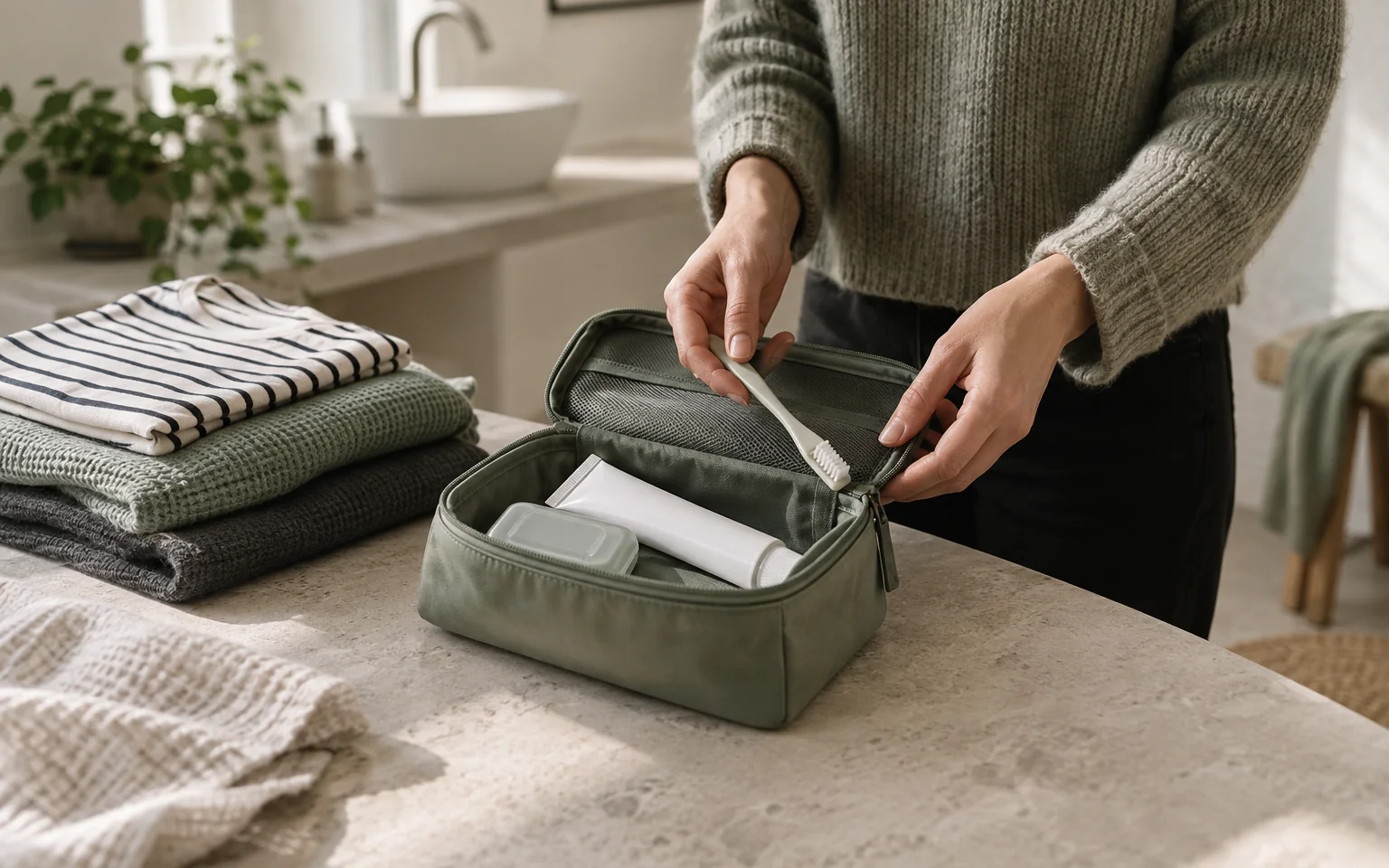
A smaller bathroom footprint starts with a routine that works, then asks what can be bought, used and disposed of more thoughtfully.
reading article
Understanding team roles can make it easier to ask the right person a practical question and know when a clinical discussion is needed.
reading article
The hard outer surface of a tooth has a protective role, but different kinds of wear and damage need different explanations.
reading article
Teaching and observation should be explained clearly, with room to ask who is present and make your own decision.
reading article
A review is more than a calendar reminder: it is a chance to connect an examination with the questions you have brought.
reading article
A holiday or a change in routine is a reason to check practical arrangements, not a reason to assume that every concern can wait.
reading article
Different replacements use different kinds of support. A comparison begins with the mouth and the person, not a ranking of products.
reading article
The move from baby teeth to permanent teeth is a process with individual variation. A calm explanation is more useful than a rigid timetable.
reading article
An estimate becomes useful when the stages, assumptions and possible changes are understandable.
reading article
A clear explanation of how a real service manages equipment and shared spaces is more useful than an unverified badge or an old notice.
reading article
When a problem feels urgent, a real service must assess it. A website demonstration is never a substitute for that contact.
reading article
Handle shape, head size and a manageable technique often deserve more attention than a list of product features.
reading article
A daily routine develops through support and practice. Advice should fit the child’s stage and the family’s circumstances.
reading article
A colour change is easier to consider when suitability, limits and maintenance are understood first.
reading article
Braces and aligners are parts of a plan that begins with assessment and continues after active movement has ended.
reading article
A treatment recommendation and an insurer’s benefit decision are different documents with different purposes.
reading article
The useful questions concern suitability, alternatives, stages and continuing care, rather than a universal promise about a replacement tooth.
reading article
Teeth that will later be replaced still have a role in comfort, eating and development, and problems deserve appropriate assessment.
journal archive
General educational reading from Stillwell’s fictional reading desk. No clinical review or individual advice is claimed.
journal archive
General educational reading from Stillwell’s fictional reading desk. No clinical review or individual advice is claimed.
author archive
General educational reading from Stillwell’s fictional reading desk. No clinical review or individual advice is claimed.
author archive
General educational reading from Stillwell’s fictional reading desk. No clinical review or individual advice is claimed.
first visit
A little preparation can help a real appointment focus on what matters to you. This guide explains the sequence without asking you to share health information here.
fees
A clear estimate connects a proposed treatment with its stages, assumptions and continuing care. The amounts below are invented examples for this website, not a price list for a real practice.
patient questions
Start with the subject that matters to you. These answers explain how to prepare a conversation with a real professional; they do not assess symptoms.
contact
Explore the fictional practice’s arrangements and try a local enquiry preview. Nothing is delivered, no person is contacted and no appointment is reserved.
enquiry
Use sample choices to see how an enquiry could be checked. This fictional preview sends nothing and does not reserve an appointment. Do not enter health information.
newsletter
Preview a reading-list preference using sample topics. The selection stays on this page; there is no mailing list or subscription service.
documents
Read or download three plain-text documents. They are preparation aids for a real conversation, not patient records, medical instructions or consent forms.
privacy
The Stillwell site is an offline-capable fictional demonstration. Its local previews do not send or store form selections.
about demo
Stillwell Dental, its people and its premises are invented for an original website demonstration. The site is not an operating dental provider.
accessibility
The design supports reading with a keyboard, at enlarged text sizes and with reduced motion. The notes below describe intended controls; they do not claim certification or a completed external audit.
facilities
Explore five imagined spaces from arrival to a final discussion. The images and room descriptions illustrate the design; they are not verified premises or access certification.
careers
These are three fictional role descriptions for exploring a complete practice website. There are no vacancies, applications or offers of employment.
site map
Browse the complete Stillwell demonstration by subject. These are ordinary local links, including service details, clinician profiles, articles and practical information.
search
Search the included titles and summaries locally. No query is sent to a server. Do not enter personal or health information.
intentional error
The link may be incomplete, or the page may have moved within this copy. Return to the home page or open the page directory.
portable access
The location, stop names and route below are invented for the demonstration. Do not travel using them.
fictional role detail
Organise the practical information that helps a visitor prepare for a conversation.
fictional role detail
Help make the sequence of a visit understandable and the practical handover clear.
fictional role detail
Keep the fictional practice’s information routes coherent and understandable.
printable document
A practical checklist. This is not a medical history or consent form.
printable document
Use these prompts to organise a discussion with a real professional. Add private notes only in your own secure copy.
printable document
A reading and discussion aid, not treatment consent, a quote or a clinical instruction.