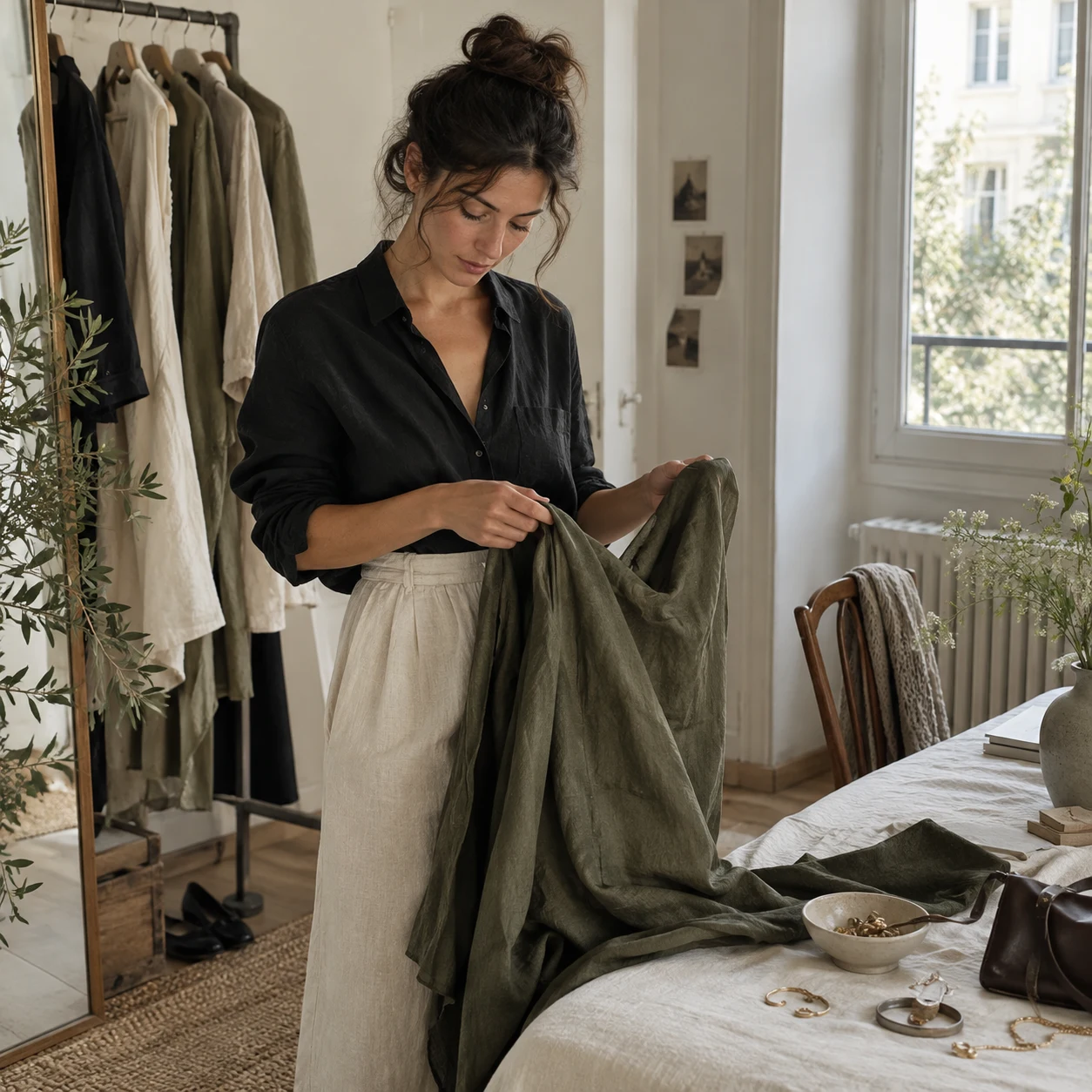
Next to the skin
Choose a base that feels comfortable over several hours. Check the neckline and underarm seams, especially if another layer will hold them closer to the body. A thin layer is useful when it lets you adjust warmth without creating bulk, but thickness alone does not tell you how breathable a fabric will feel.
The adjustable middle
A shirt worn open, a knit or a light jersey layer can bridge changing temperatures. Try taking it off without disturbing the rest of the outfit. If the sleeve catches inside the outer layer, compare their shapes. Two very full sleeves do not always move comfortably together.
Room on the outside
Fasten the outer layer over the actual clothes you intend to wear. Reach forward and check the upper back. Pockets should remain accessible, and the hem should not catch awkwardly on the layer beneath. A longer coat can simplify this, while a shorter jacket may need a more deliberate balance.
Carry the spare thoughtfully
If one layer will spend half the day in a bag, consider how it folds and whether its fastenings can snag other items. Let a damp garment dry before packing it tightly. The best combination is the one that adapts to the day you are really having.