Choose your anchors
Take three pieces you wear often and put them beside one another in daylight. Notice what they share: perhaps a cool blue, a warm neutral or a dark outline. These are more useful starting points than a colour trend because they already belong to your week. A small palette should make dressing easier, rather than become another rule to follow.
Change the balance
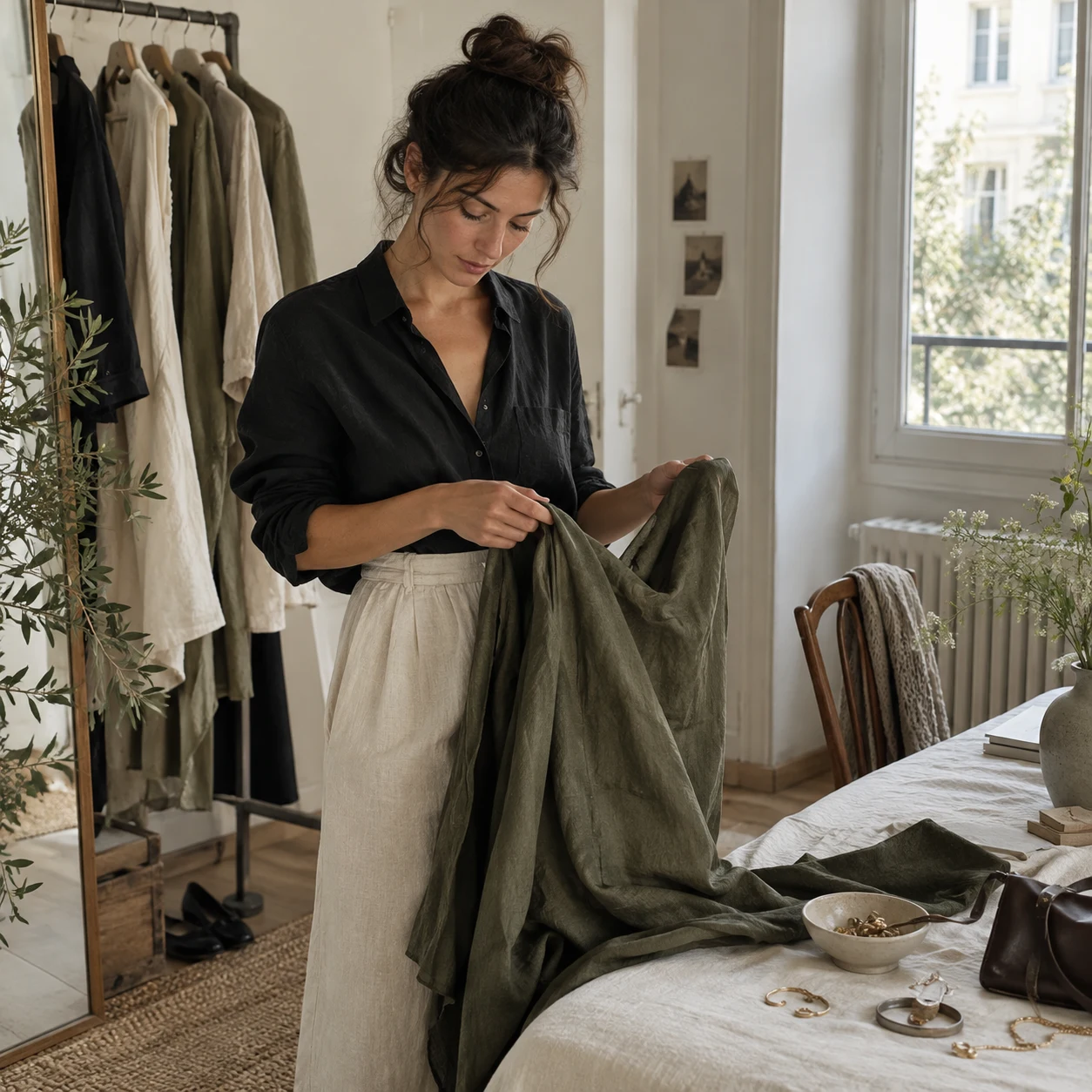
Try the lightest colour across the largest surface, then reverse the arrangement. A chalk shirt with dark trousers feels different from a dark shirt with a pale skirt, even though the palette has barely changed. Use a belt or a bag to repeat one shade in a smaller area. There is no need for every accessory to match exactly.
Let the fabric speak
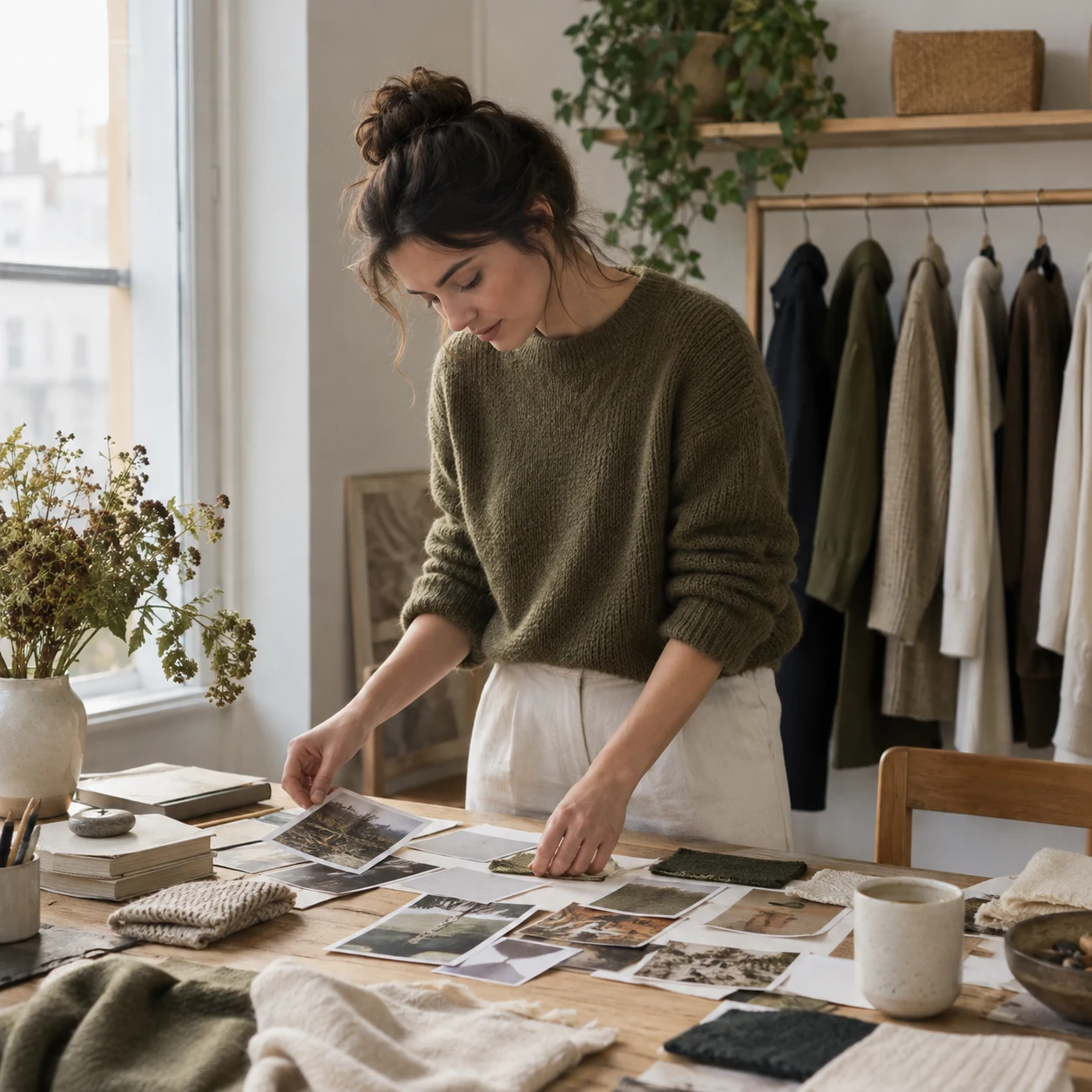
A smooth woven shirt reflects light differently from a brushed knit. Putting related shades in different fabrics creates depth without adding another colour. Before buying something to complete an outfit, try changing texture, rolling a sleeve or leaving a layer open. Small adjustments often reveal a combination that was already there.
Keep a useful note
Photograph combinations for your own reference or write down the pieces that worked. Include the weather and the shoes you wore. Over time, this becomes a practical record of your wardrobe, shaped by actual days instead of an imagined version of them.