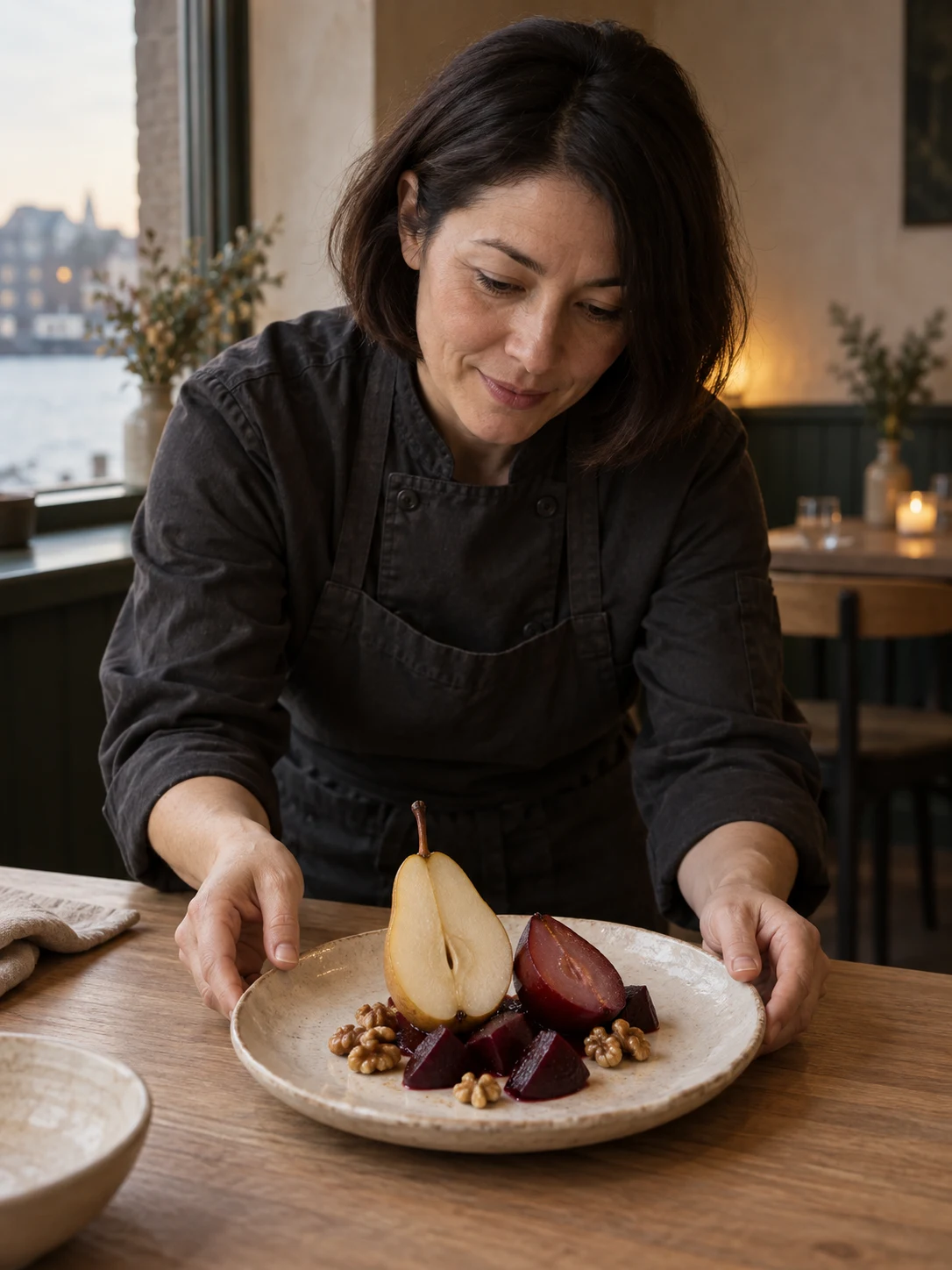
A pear in two temperatures
The same ingredient has different jobs in a salad and a dessert.
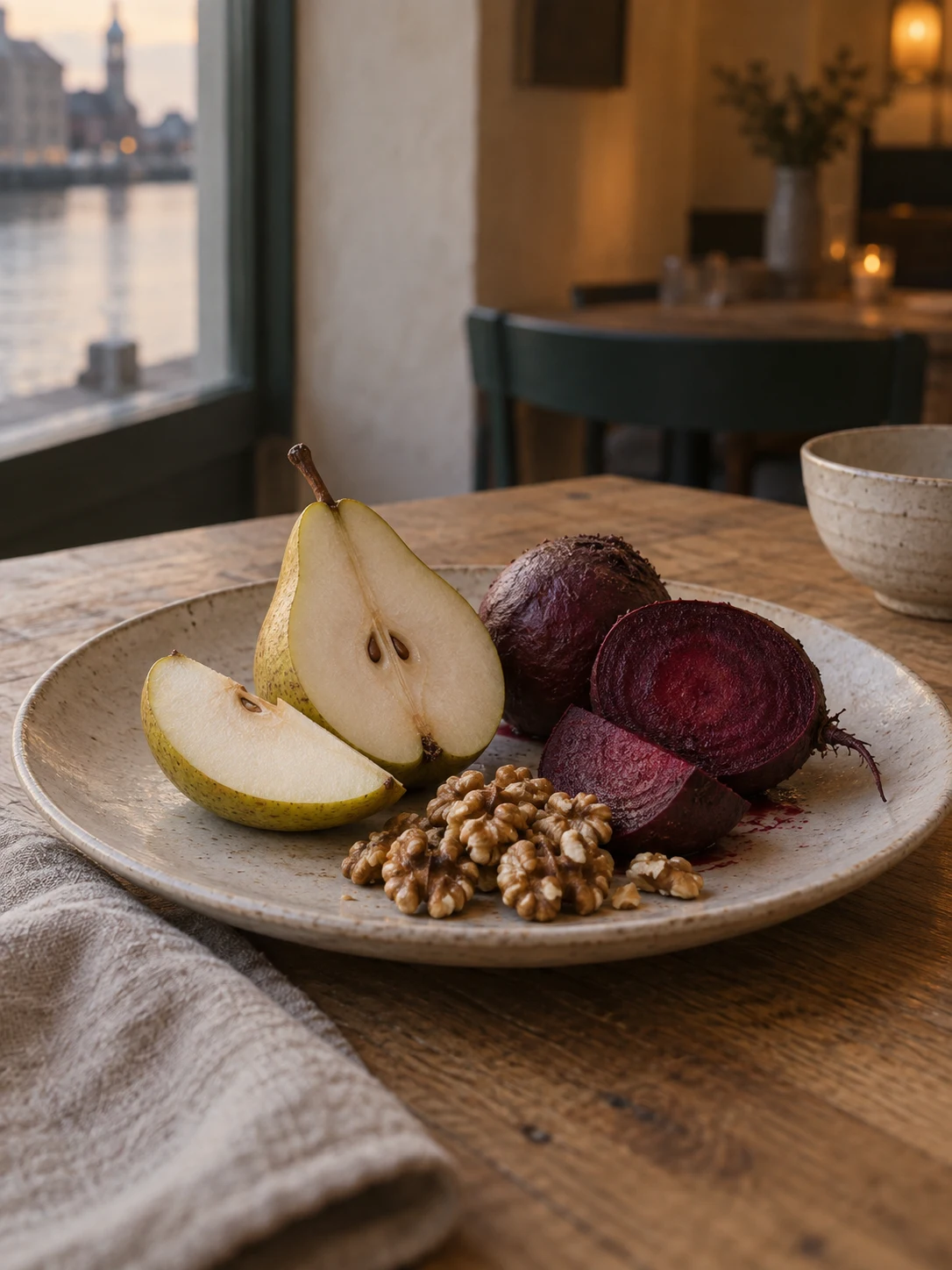
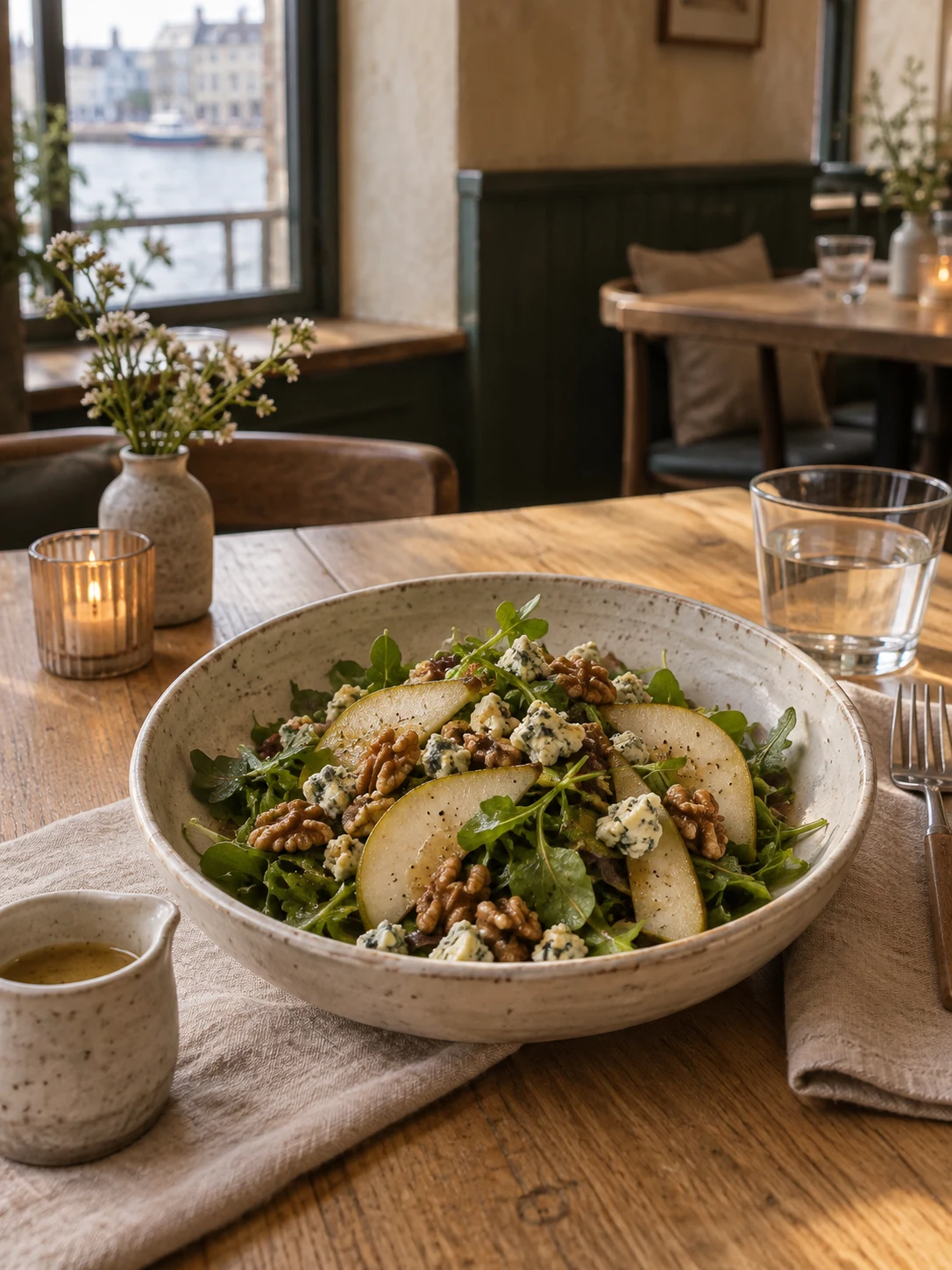
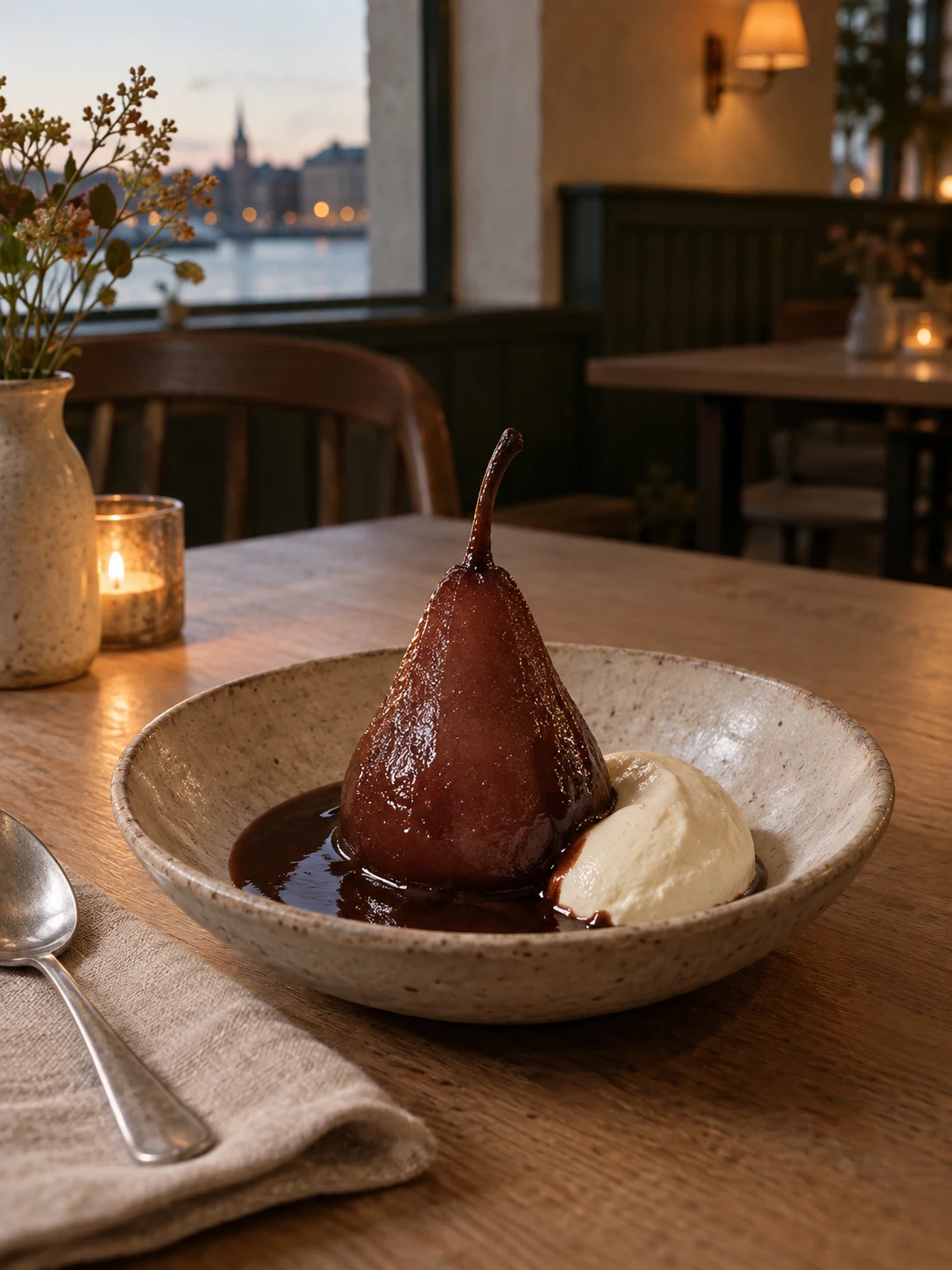
Pear appears first as a crisp piece beside beetroot and walnut on the lunch menu. Its job there is partly sweetness and partly texture: it should remain distinct from the soft roasted vegetable. In the warm dessert, pear is poached and served with chocolate and cream. The ingredient connects the two dishes, but it does not make them interchangeable or give them the same dietary label.
The salad contains walnut and keeps its recipe vegan, while the dessert brings pear together with dairy cream. Those surrounding ingredients matter as much as the fruit they share. Someone who enjoys the crisp pear in a lunch salad may still want a different finish after dinner. The menu makes both complete preparations clear, so the ingredient can be followed through the meal without assuming that it carries the same texture, sweetness or dietary label into every dish.
Temperature changes the pace of eating too. A cool salad bite interrupts warm rice, while a warm dessert invites a slower final spoon. The pear’s cut supports that difference: a raw piece should remain firm enough to distinguish itself from soft beetroot, while a poached portion should yield beside chocolate sauce. The fruit does not have to be treated as a headline in both cases. Its interest can come from how it behaves next to the other things on the plate.
A table choosing dessert can use that contrast as a starting point. Pear with chocolate offers warmth and richness; coconut rice with plum leaves a tart fruit note; the crumble adds a rougher crisp surface. None repeats the lunch salad simply because fruit appears in its name. Following one ingredient through different preparations is a way to notice the meal more closely, while still letting appetite decide which version belongs at the end of the evening.