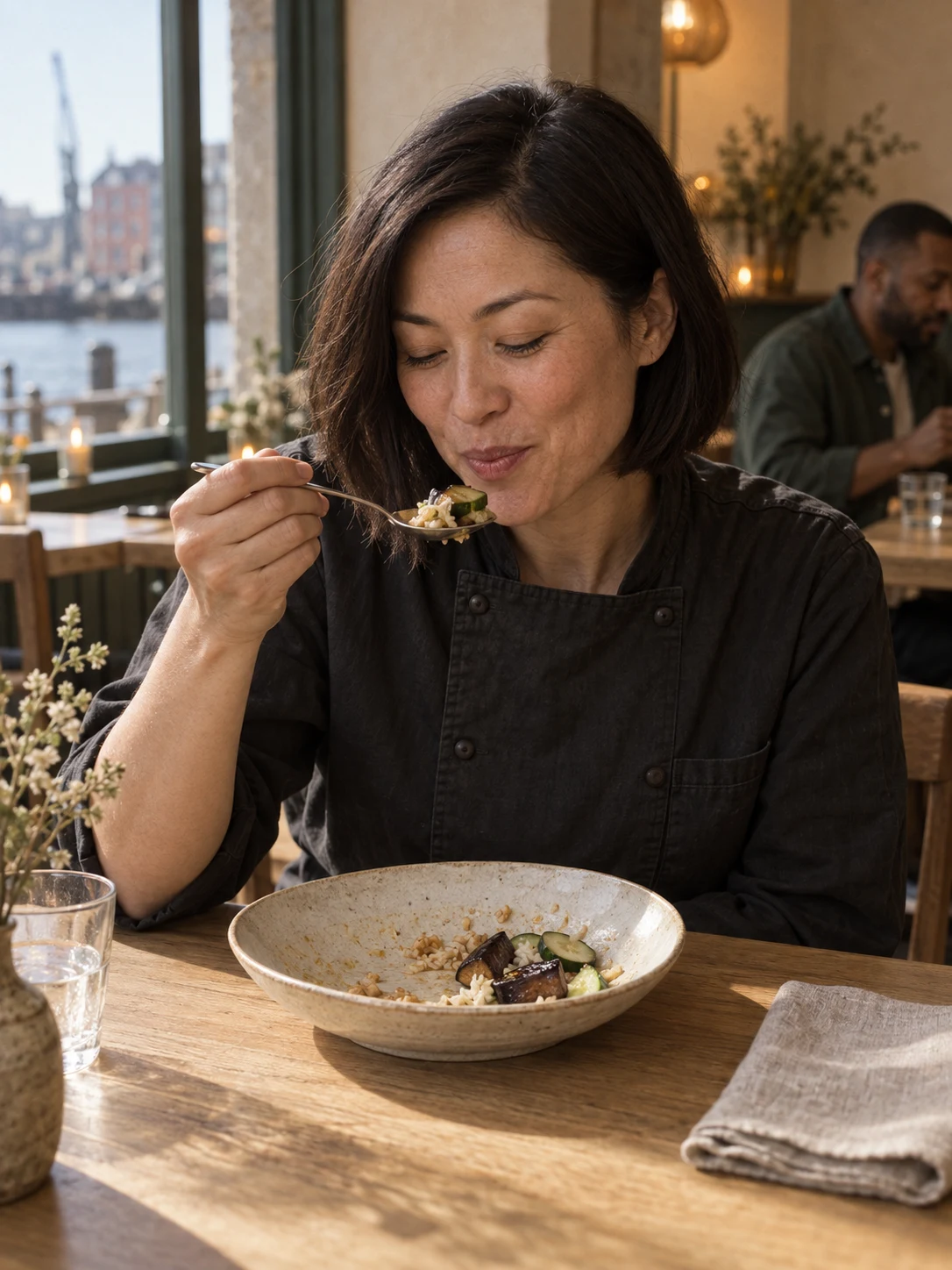
Mara on the last spoon of a dish
An imagined kitchen conversation about balance, portions and the final bite.
The most useful tasting question in Mara’s notebook comes near the end of a plate. The first mouthful can be striking because it is new; the last has to remain welcome after the diner has understood the dish. The chef uses that difference to think about richness, salt and portion. A sauce that is exciting on a tasting spoon may need a plainer companion across a whole serving. The question is whether the meal still invites another bite after its first impression has settled.
Take the lunch miso aubergine plate. A deeply savoury glaze can seem convincing in a small tasting spoon, yet become heavy across an entire vegetable. Mara separates the soft roasted flesh from the finishing glaze and keeps plain rice and cucumber alongside it. The dish does not need every component to repeat the same intensity. Its final bite should offer a choice between warmth, sharpness and something plain, instead of requiring another rich spoon simply because the plate began that way.
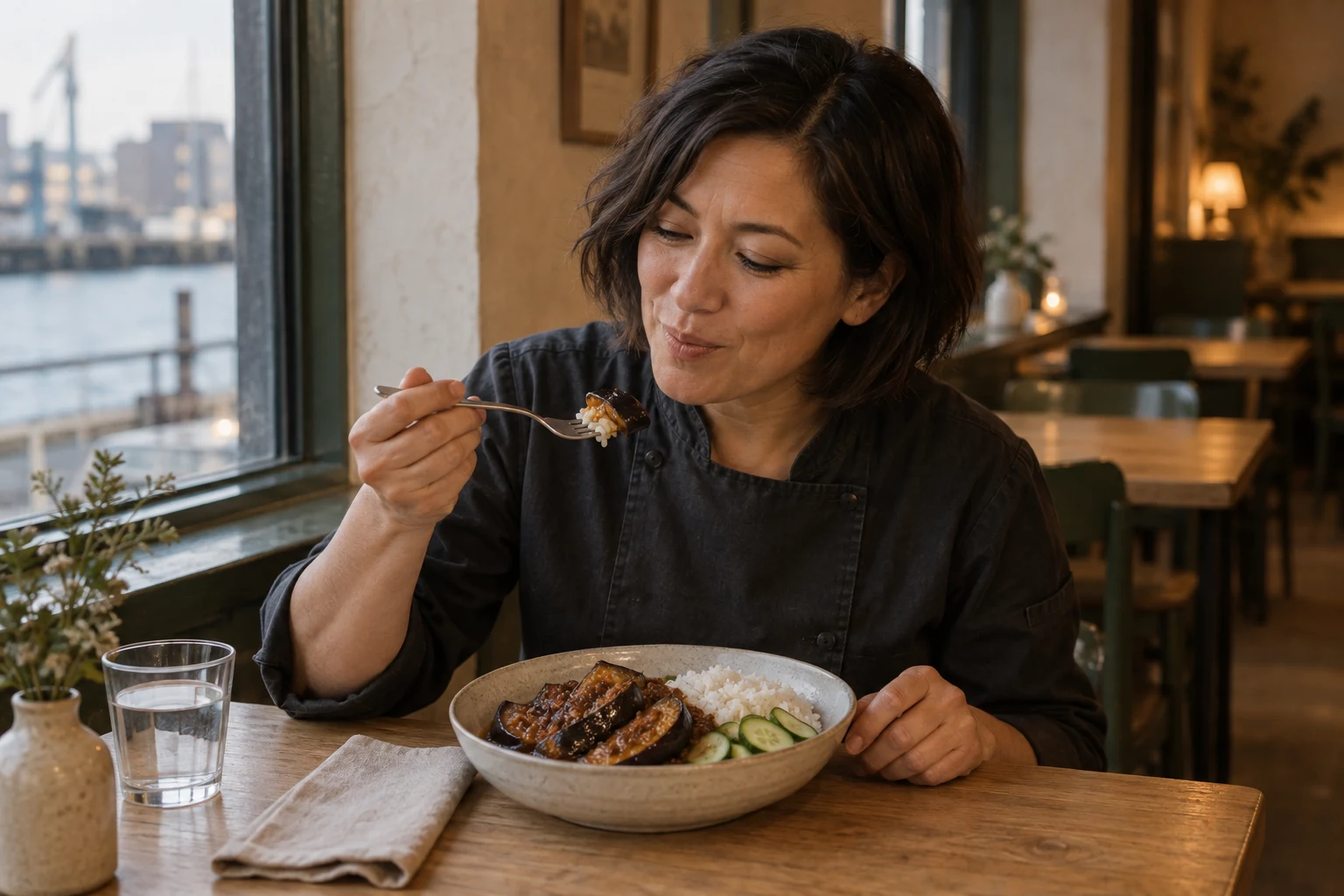
Portion language helps the kitchen think about that ending. An individual main, a small side and a two-person selection are different promises. The vegetable table includes two rice portions and says that it serves two; a plain rice side has its own cooked measure. For Mara, the useful test is to eat the intended serving rather than taste only its most concentrated part. A generous dish should leave a person comfortably fed, not surprised by how much more intense the last few mouthfuls have become.
The last spoon should still make sense after the first impression has gone.
Mara Vale · Original fictional dialogue
The ingredients that sit behind a sauce matter just as much as those visible on top. Wheat-brewed soy adds a particular salt and savour; rice miso brings soybean depth; celery changes the character of a stock even when the broth is named for chicken. Mara wants those components understood rather than treated as kitchen secrets. Their allergen declarations remain with the dish. A person considering an allergy still needs a real discussion about preparation and cross-contact, because a recipe description cannot answer every practical question.
Asked about the dessert that follows, Mara does not prescribe a single correct ending. Coconut rice with roasted plum offers one texture; pear with chocolate and cream offers another. The diner’s appetite matters more than a claim that every meal should finish on a particular note. What the menu can do is state the ingredients and serving clearly, then make the difference between the choices visible. The coconut rice remains a different complete choice from the dairy custard, whatever else the table has shared.
Texture gives Mara another way to judge the whole plate. The lunch aubergine should yield, but its cucumber companion should still ask for a bite. Braised beef can be soft without its turnip companion losing all shape. A bowl of noodles benefits from fresh radish or spring onion only when those additions feel deliberate rather than scattered on at the end. The contrast is not decoration. It lets the diner move between different sensations while eating one coherent serving, choosing how much of each belongs in the next spoonful.
Jun’s part of the tasting is quieter. He notices where another spoon would help, where a shared plate makes two people reach across one another and where a long explanation interrupts the first taste. A dish can be complete in the kitchen and still need a better way to arrive. The two founders talk about the size of a serving bowl, the place for a sauce and whether a shared dish can be divided comfortably. Those questions connect the recipe to the people who will actually eat it.
The conversation ends with the last spoon again. Mara wants it to feel intentional, whether it is a little rice with the remaining sauce or a tart piece of plum after something sweet. That is a modest ambition, but it reaches through the whole meal. A warm main needs the right companion; a dessert needs the appetite left after dinner. The longer aubergine study describes one example in detail, while the menu offers other ways to find the same balance at the table.