Mushrooms keep their own texture
A broth, a dumpling and a barley pot use the same family in different ways.
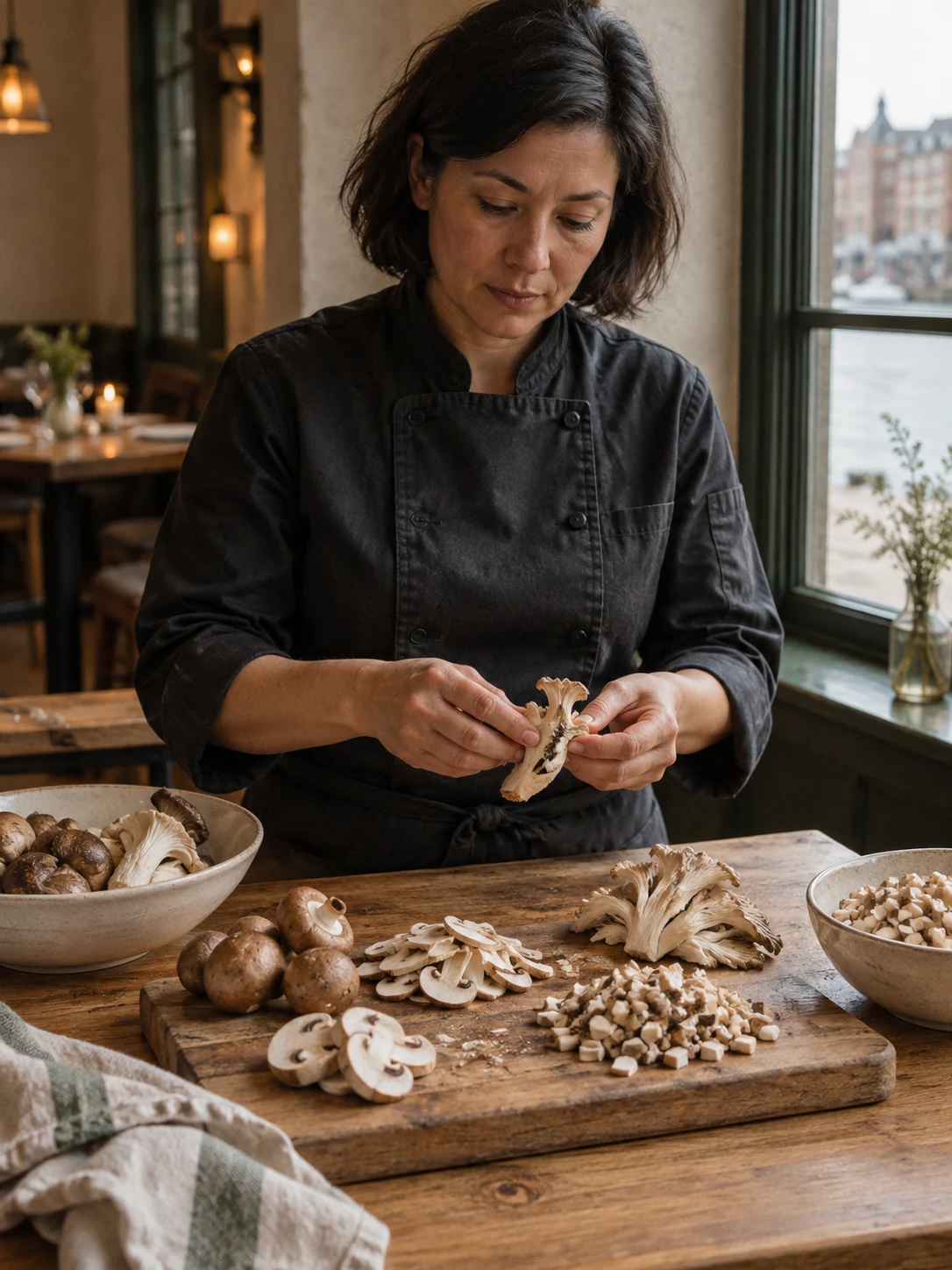
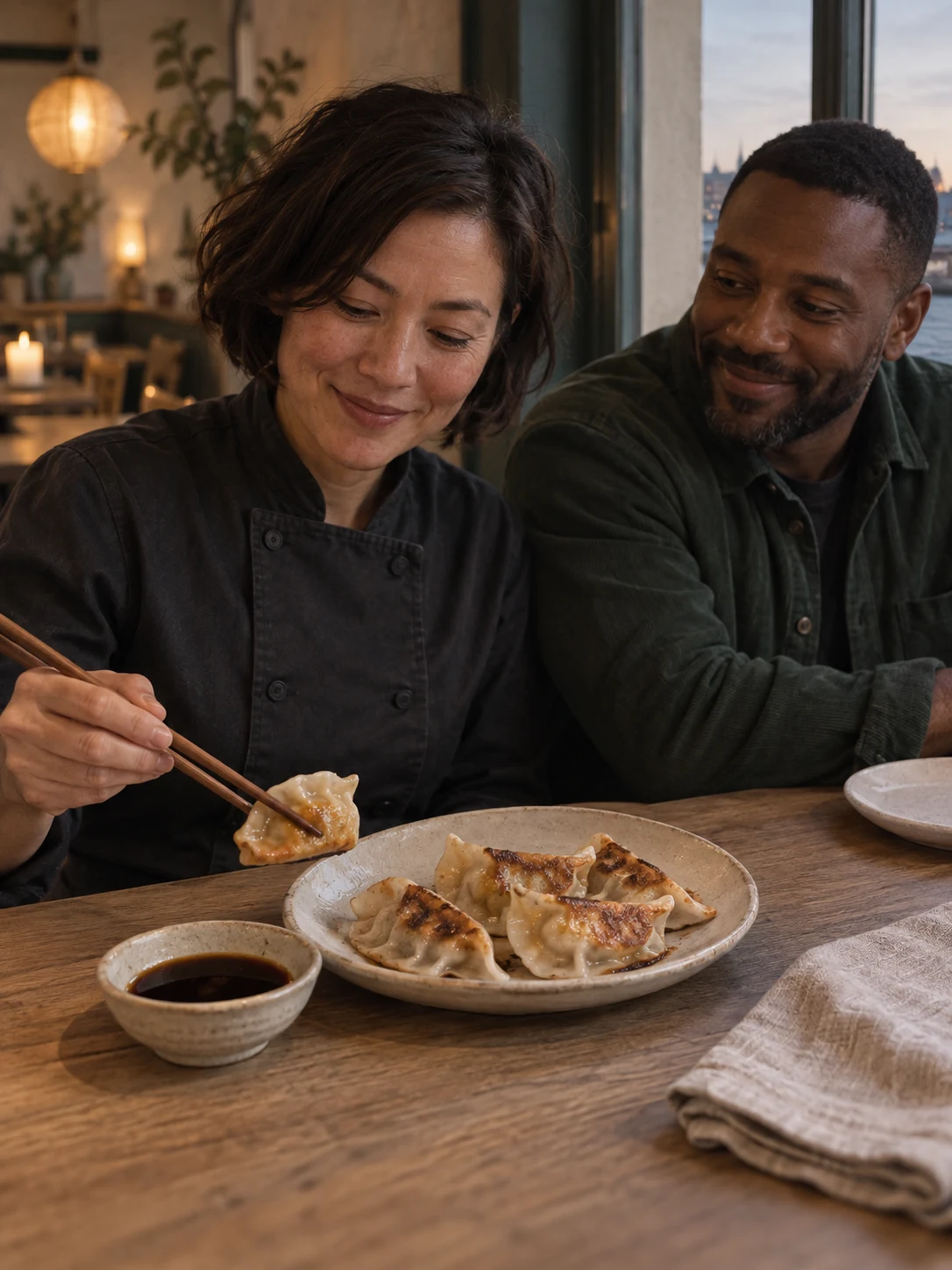
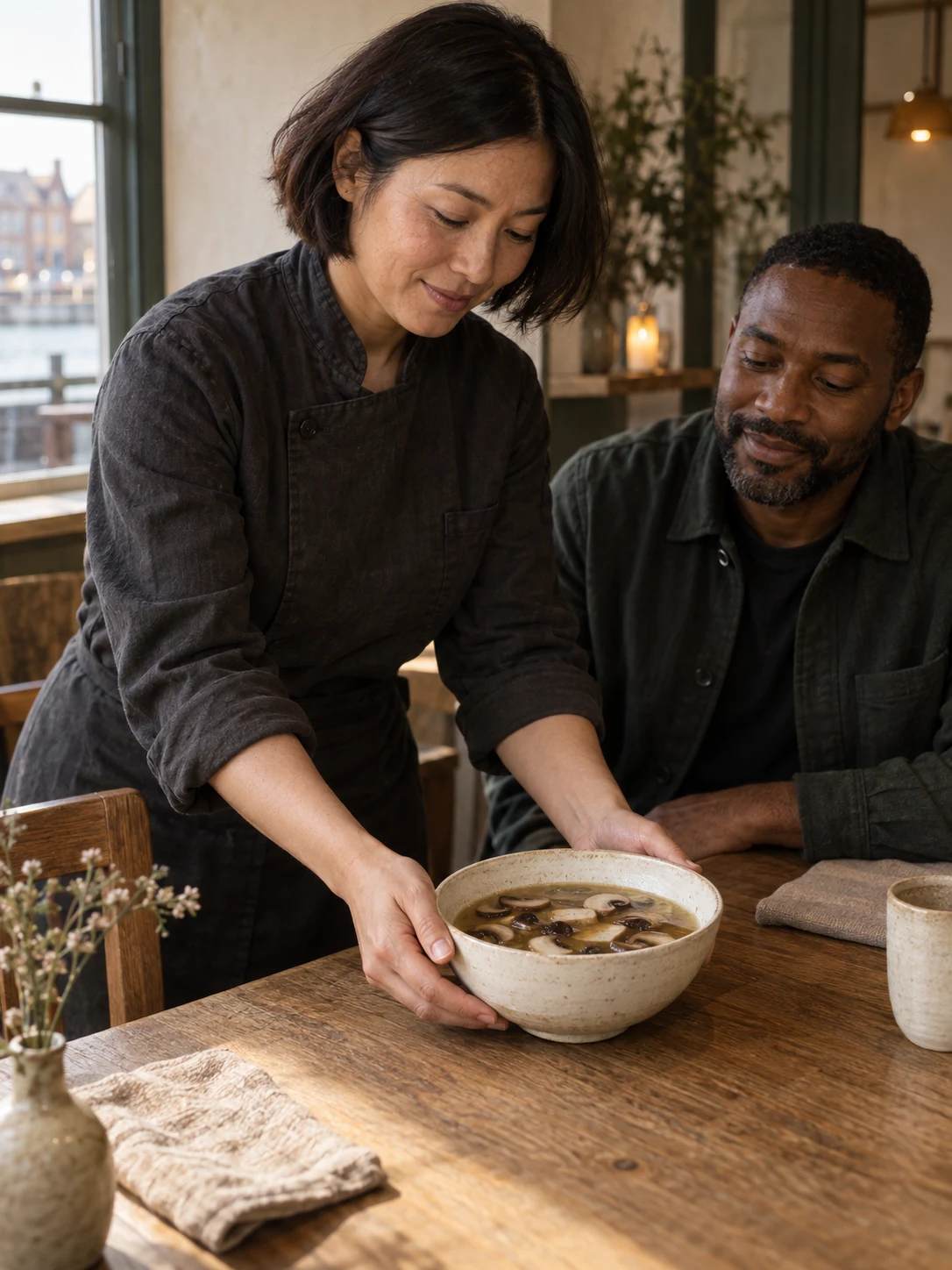
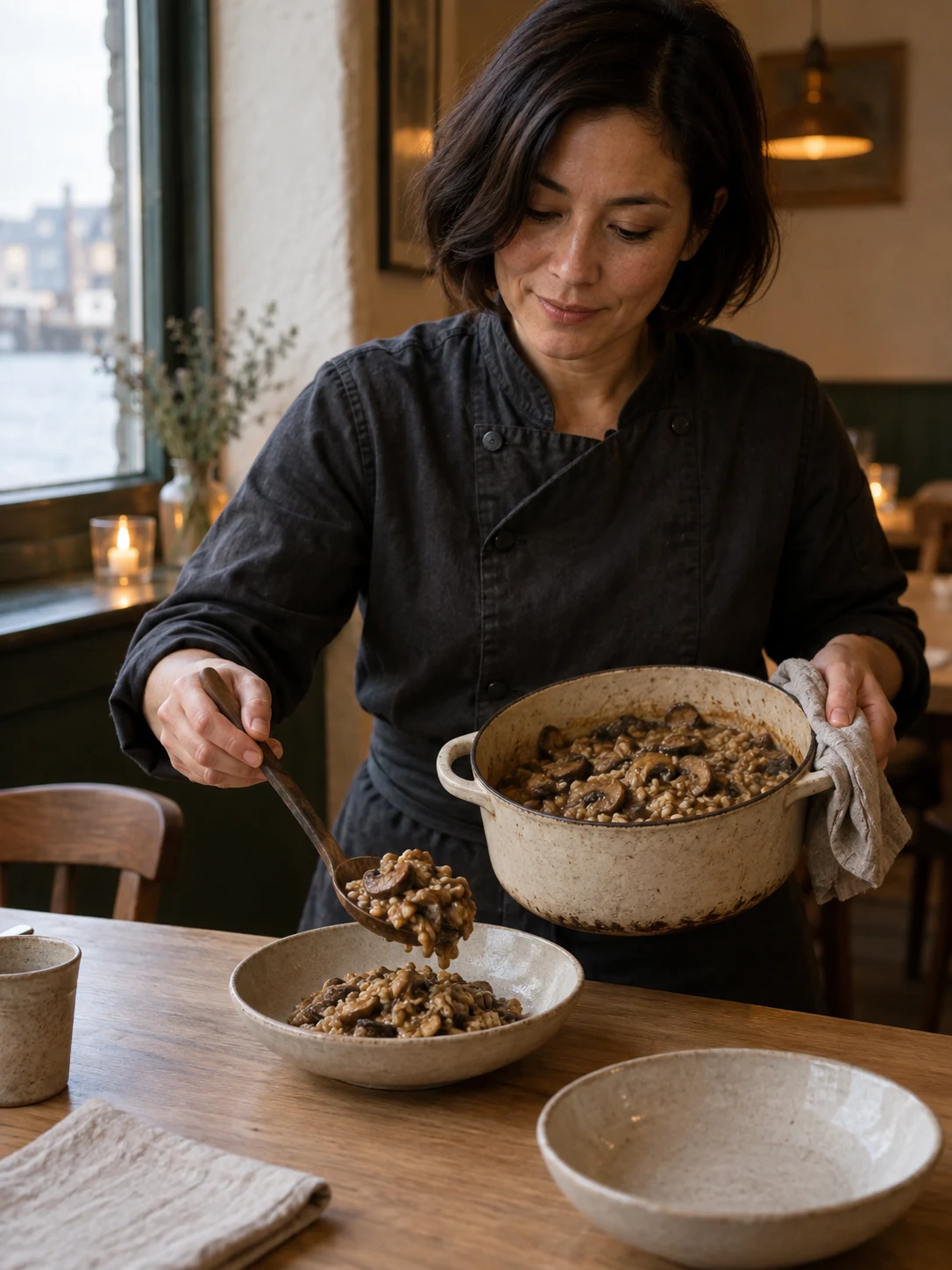
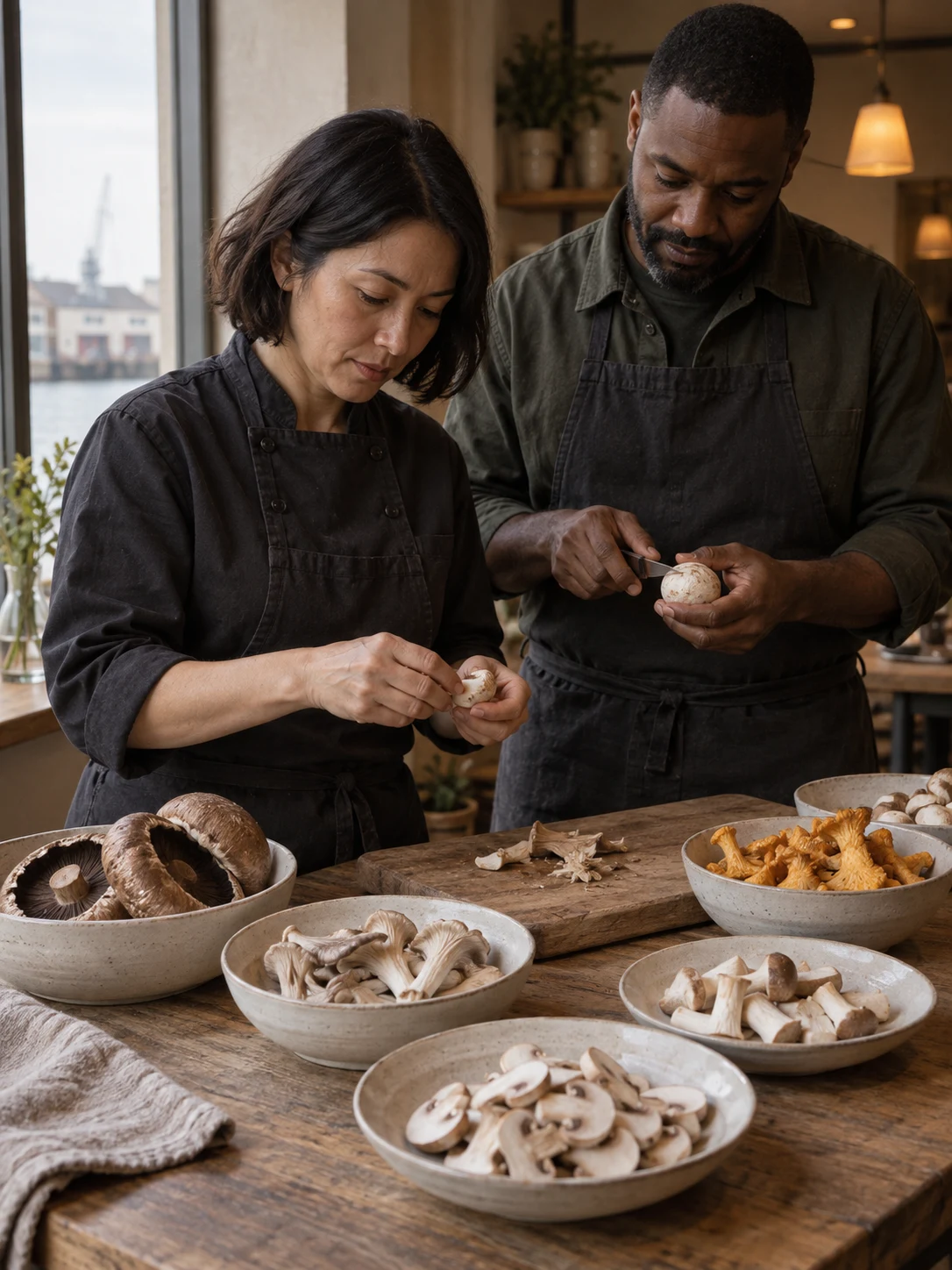
Mushrooms appear in several places because they can do several different jobs. A dumpling filling needs a mixture that sits inside its wrapper without turning it wet. A broth uses shiitake and its liquor to give a clear bowl more depth. A barley pot keeps browned pieces visible among the grains. The menu names those preparations separately because their textures matter as much as their shared ingredient. A diner choosing a beginning may want something quite different from someone looking for a complete warm main.
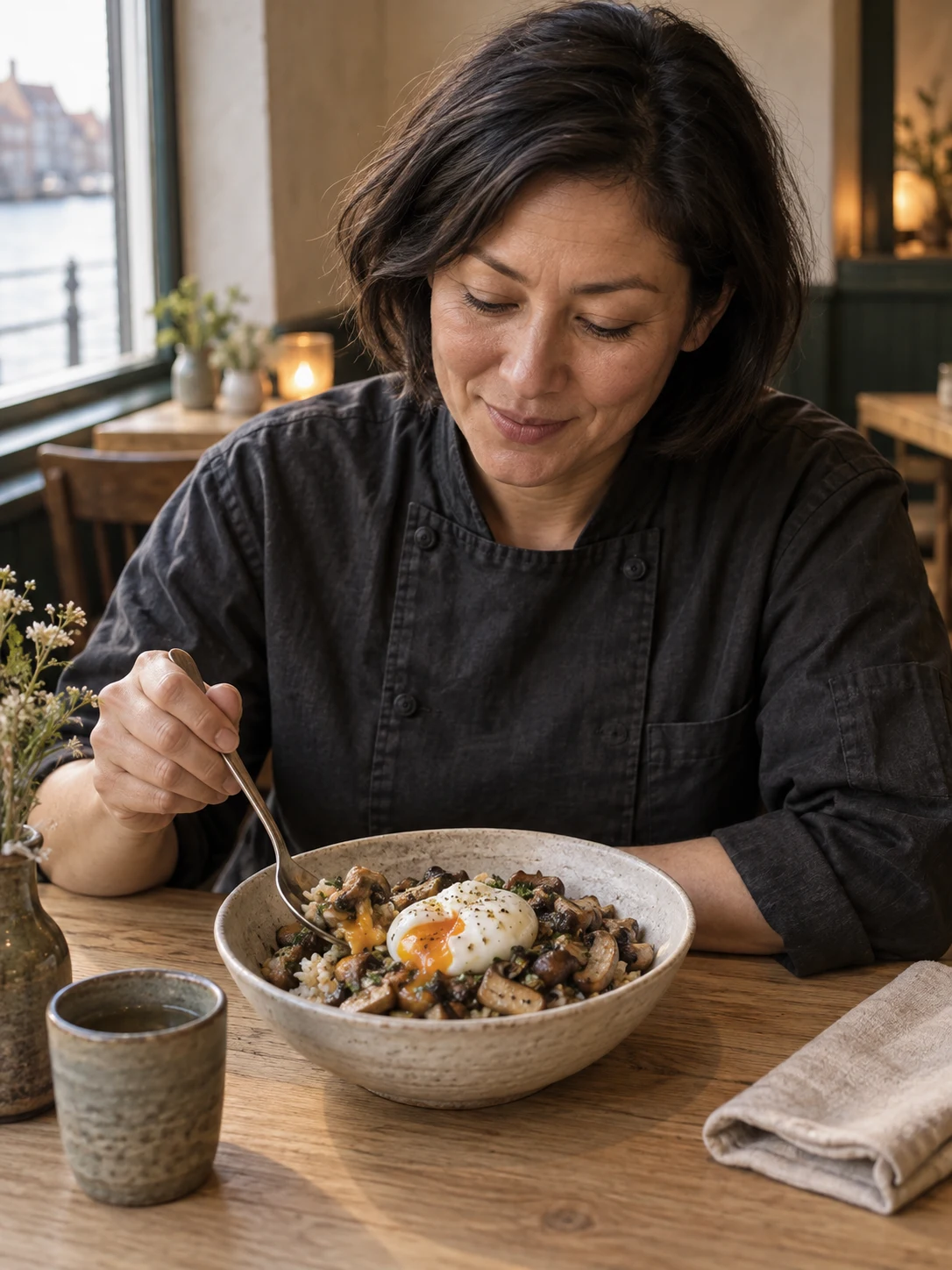
Oyster and chestnut mushrooms give the browned mixtures different shapes, while shiitake brings its own deeper savour to the broth. The other ingredients change each complete dish: wheat wrappers in dumplings, soy in miso or tamari, barley in the pot, egg and dairy in the lunch rice bowl. A mushroom headline alone therefore cannot explain a dietary choice. The complete ingredients and the shared-kitchen note remain the useful places to begin when someone is comparing the dishes.
Texture offers another way to choose. A crisp-bottomed dumpling has a first bite before the filling softens; a broth gives warmth through a spoon; barley asks for a slower chew among the mushroom pieces. Those differences can help a table avoid ordering several plates that feel too similar. One person might begin with dumplings and choose fish for a main, while another takes a clear broth before the mushroom pot. The shared ingredient can remain a thread without becoming the whole meal.
The links below follow that distinction back to the menu. A reader can choose the compact lunch dumplings, the dinner mushroom broth or the more substantial barley pot, each with its own portion and price. The longer account explains how the family of ingredients holds the dishes together while allowing their final form to remain different. That is a more useful story than calling all of them the same comforting bowl.