


 View study ↗
Still-image study
The doorway inside the image
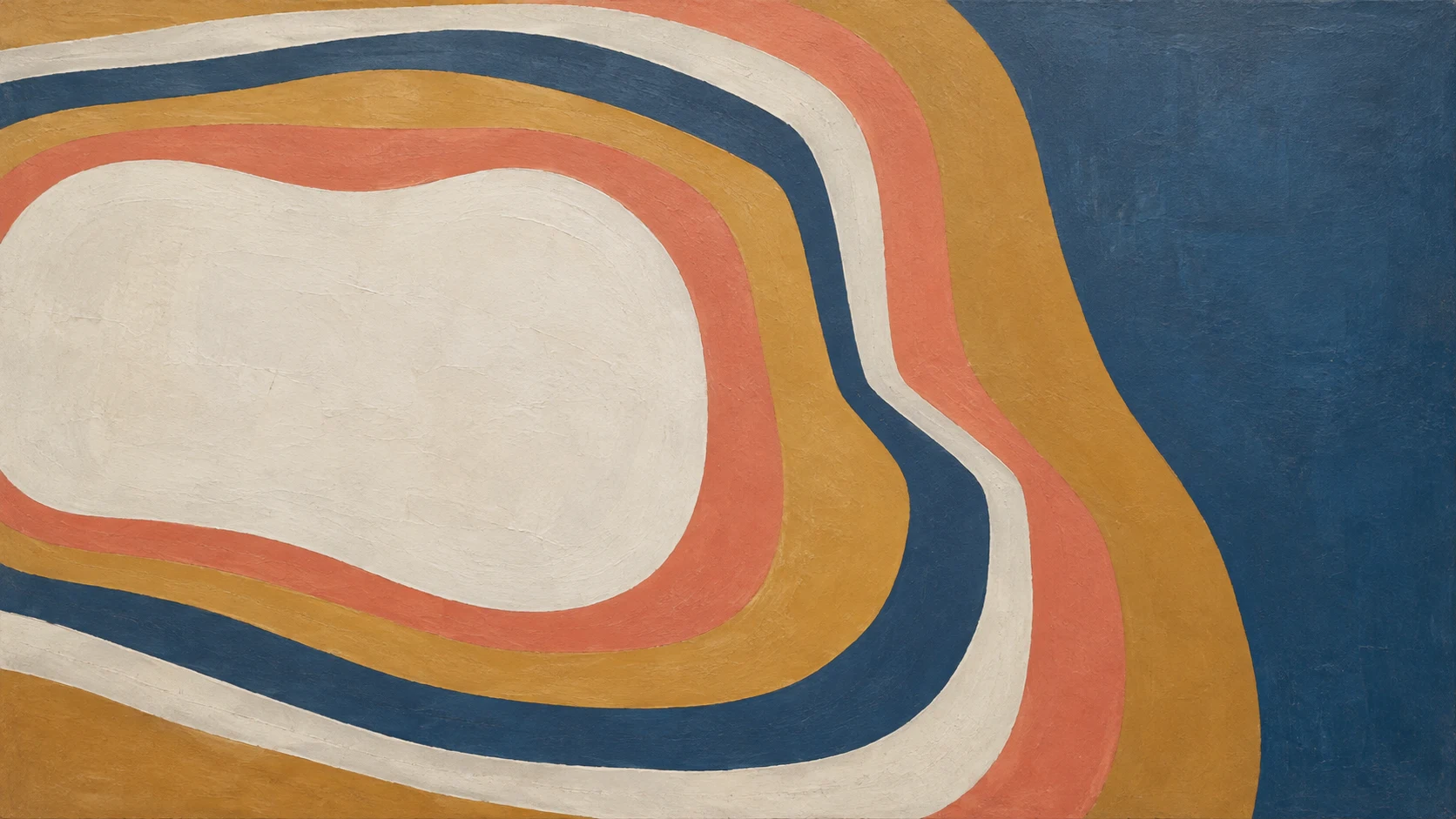
A red doorway interrupts a colourful mural. Compare painted passages that acknowledge the opening with those that seem to assume an uninterrupted surface is available.
Artist · Ternform Gallery
Featured exhibition
—
Nora Fen examines the confidence of public lettering and the revisions that complicate it. Words meet doorways, painted-out edges and passing readers in an exhibition about what a wall contributes to the message it carries.
Explore the exhibitionNora Fen is interested in the moment when public lettering seems to address a stranger directly. A large word can sound certain even when the surface beneath it is patched, temporary or visibly revised. Her practice puts that mismatch to work. She develops painted words and image fragments that ask who is speaking, who is assumed to be listening and how much authority a message acquires simply because it occupies a wall at scale.
Fen starts with sentences on paper, removing words until the remaining phrase begins to feel uncomfortably definite. She then considers the setting that could complicate it: an awkward corner, a doorway, an existing mark or a change of surface. In the imagined projects described here, permission and conversation with a site holder precede any public painting. The site is not treated as a blank canvas merely because it is visible from a pavement. Her studies also consider how a passer-by may encounter only half a phrase, or read it while moving in a direction the composition did not anticipate.
Public Second Thoughts follows the revision of a statement after its initial certainty has worn off. Fen's interest is not in replacing a supposedly wrong message with a perfect one. She looks at the material traces of reconsideration: an altered spacing, a painted-out edge or a word that no longer sits comfortably with its surroundings. Those details allow the exhibition to discuss doubt as a working condition rather than a personal failing.
Fen writes short annotations while a work is changing. She notes what prompted a revision and what the revision made harder, resisting the temptation to make every decision sound beneficial after the fact. In the journal, that method becomes a conversation about useful criticism and the limits of advice. At Ternform, her work offers visitors a practical task: read a painted statement once for its words, then look at the conditions that make those words feel persuasive. The second reading may be slower, and it may leave a question that the first confident glance had overlooked.
Short exercises for a slower look. Open a study to read the full note; its original accompanying illustration is forthcoming.
View study ↗Still-image study
A red doorway interrupts a colourful mural. Compare painted passages that acknowledge the opening with those that seem to assume an uninterrupted surface is available.
View study ↗Still-image study
Block letters compete inside a darker field. Read only what is visible, then examine the same area as overlapping colour to discover how legibility directs attention.
View study ↗Still-image study
A graphic face meets the existing grid of brickwork. Follow a painted contour across those divisions and consider what the wall contributes to the public image.
Three editorial recommendations with related questions. Artist subjects are identified in each story; a recommendation does not imply the artist appears in it.
Public lettering carries a confident voice, but making it involves less certain decisions. Nora Fen describes a practical way to hear criticism without surrendering the work.
Read the storyLooking back at Public Second Thoughts, where spacing, revision and the position of the reader unsettled the certainty of large painted words.
Read the storyUnfired clay panels change at different speeds in a temporary installation. Their uneven surfaces offer an environmental metaphor whose limits remain visible.
Read the storyDates and status use the edition date, 8 September 2026.
—
Nora Fen examines the confidence of public lettering and the revisions that complicate it. Words meet doorways, painted-out edges and passing readers in an exhibition about what a wall contributes to the message it carries.