Compare in daylight
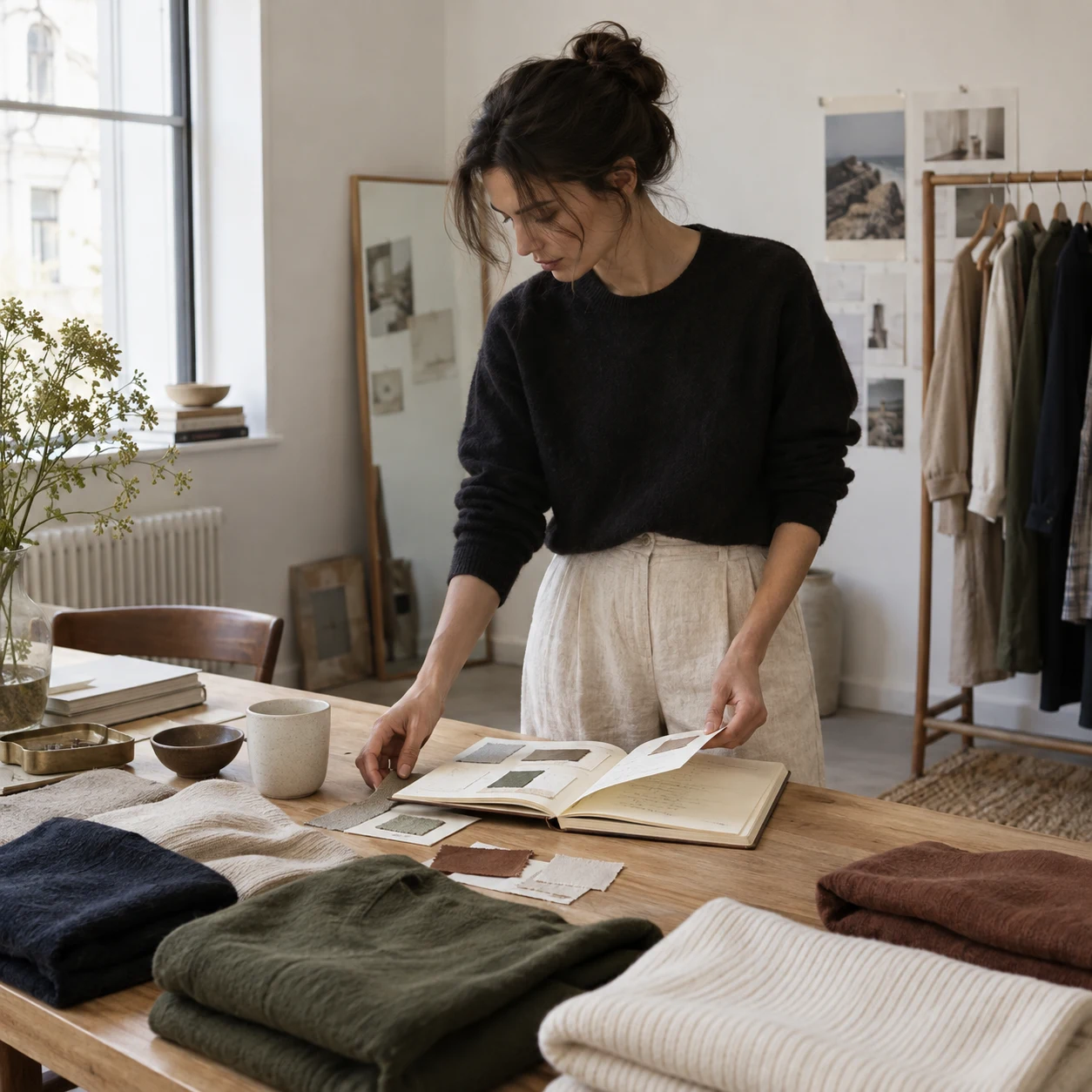
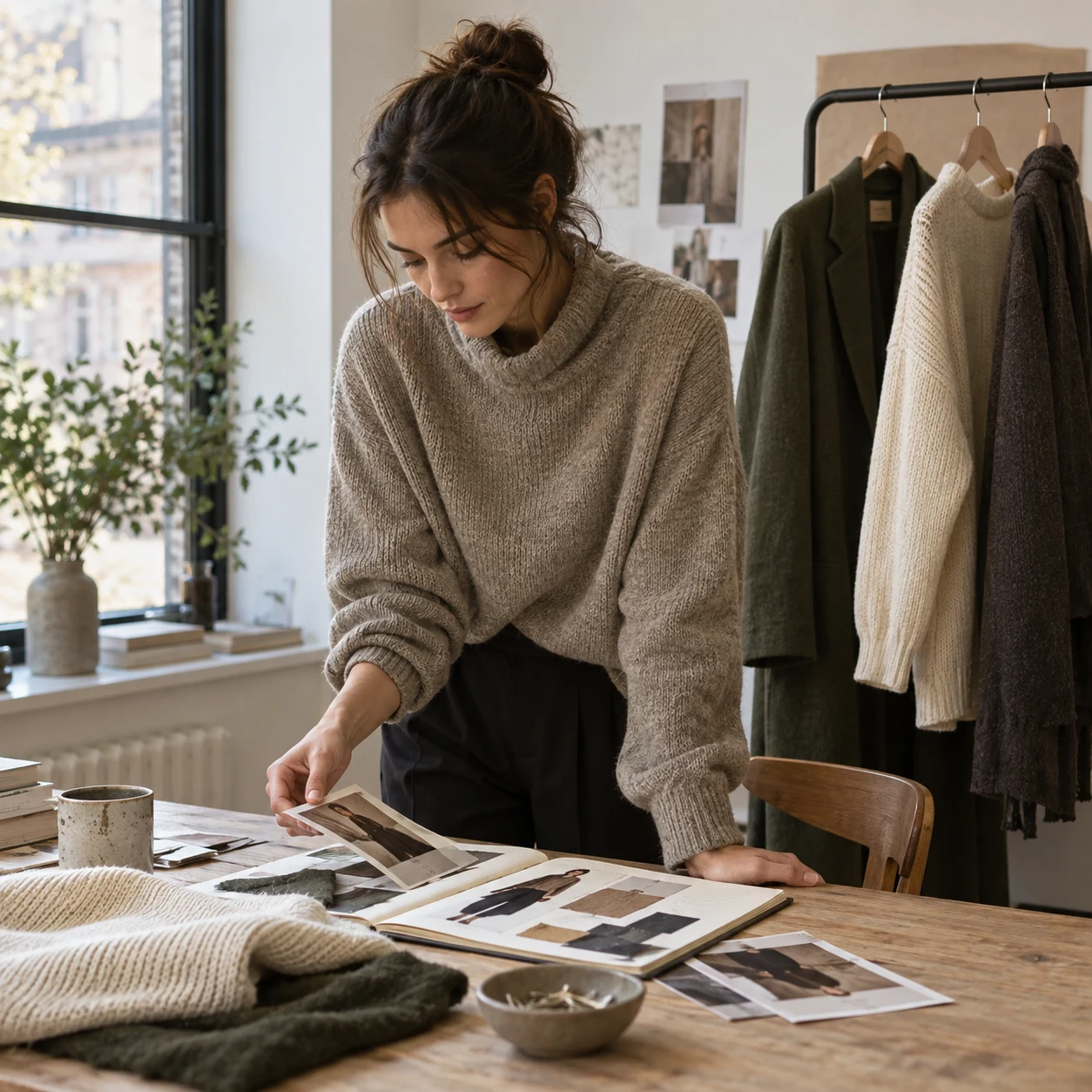
Place the fabrics beside one another rather than judging them separately. A warm cream can make a cool grey appear bluer, and two dark shades may reveal a difference only in natural light. These shifts are part of the combination. Decide whether you enjoy them before trying to force a perfect match.
Vary the surface
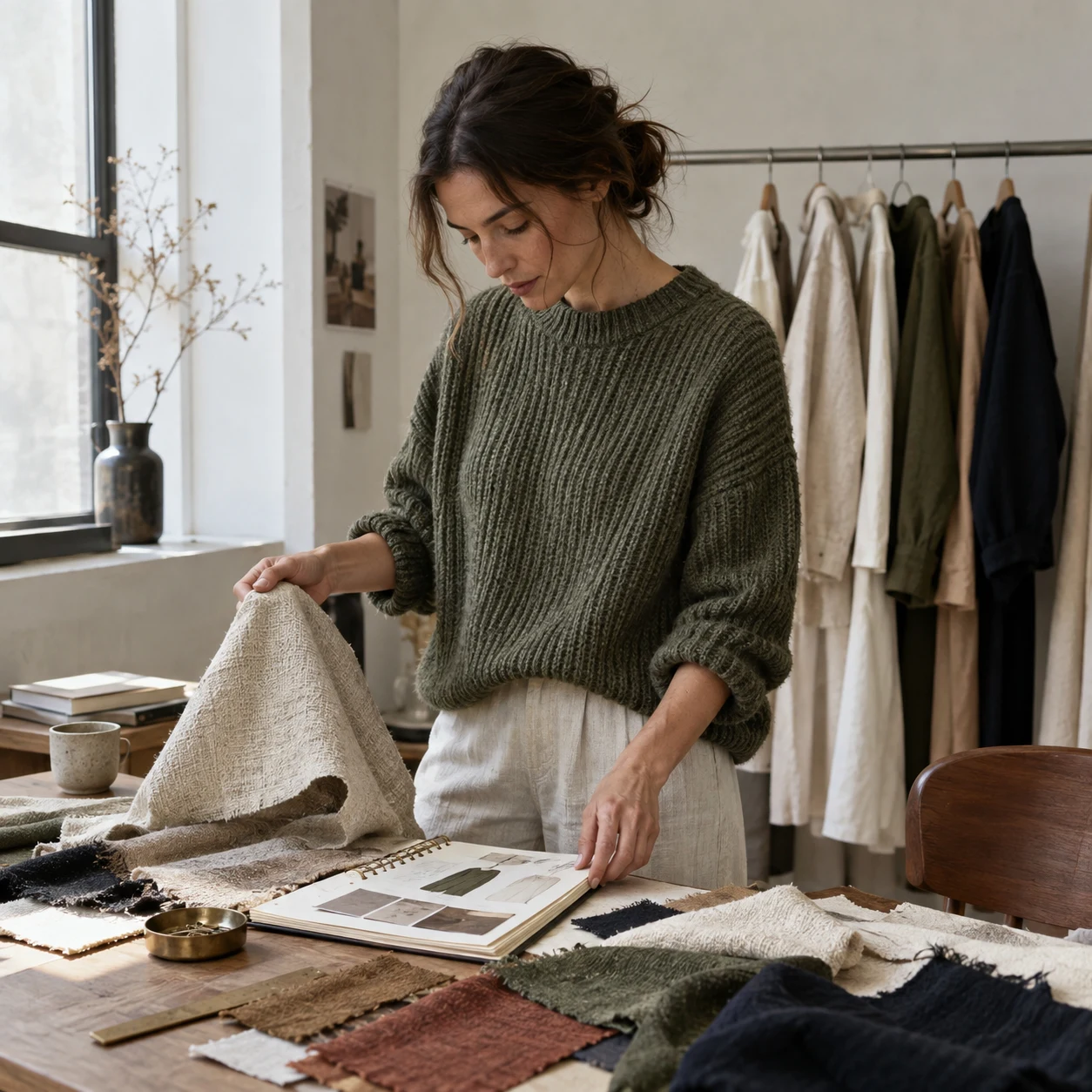
A soft knit beside a crisp woven shirt creates a clear contrast without a strong colour change. Add a smoother accessory if the outfit feels too heavy. Texture can be a focal point, but several very pronounced surfaces may compete. Give the eye somewhere quieter to rest.
Watch the weight
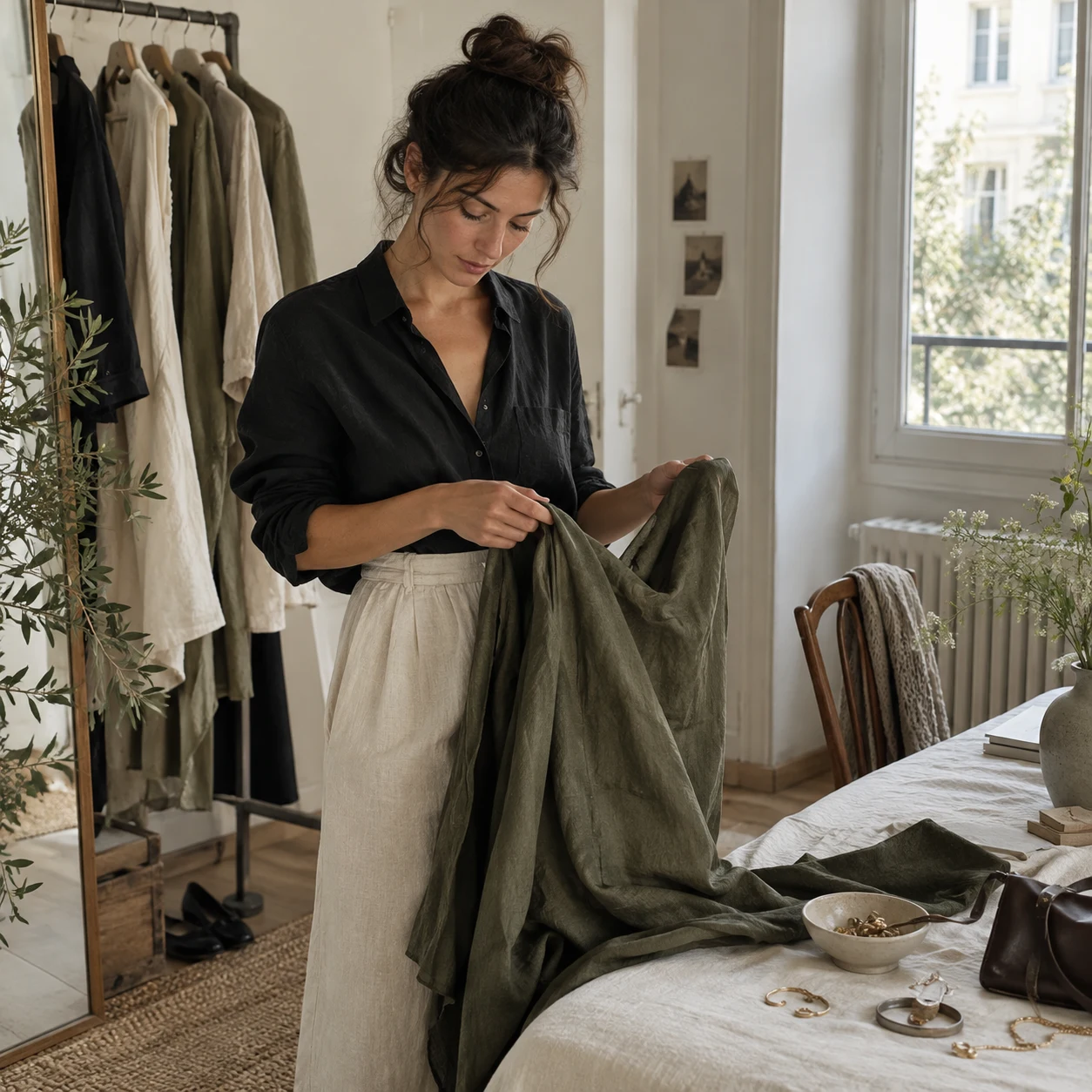
The way a fabric falls matters as much as how it looks close up. A heavy outer layer can overwhelm a very light piece if the proportions are awkward. Try the combination while moving so you can see whether the layers slide comfortably or cling together.
Keep one practical anchor
Choose shoes or a bag that work for the day's actual use. A palette is only useful if the outfit still lets you walk, carry what you need and feel at ease. The most satisfying combinations often become familiar precisely because they ask for so little adjustment.