


A Digital Fold Begins with a Decision About Its Edge
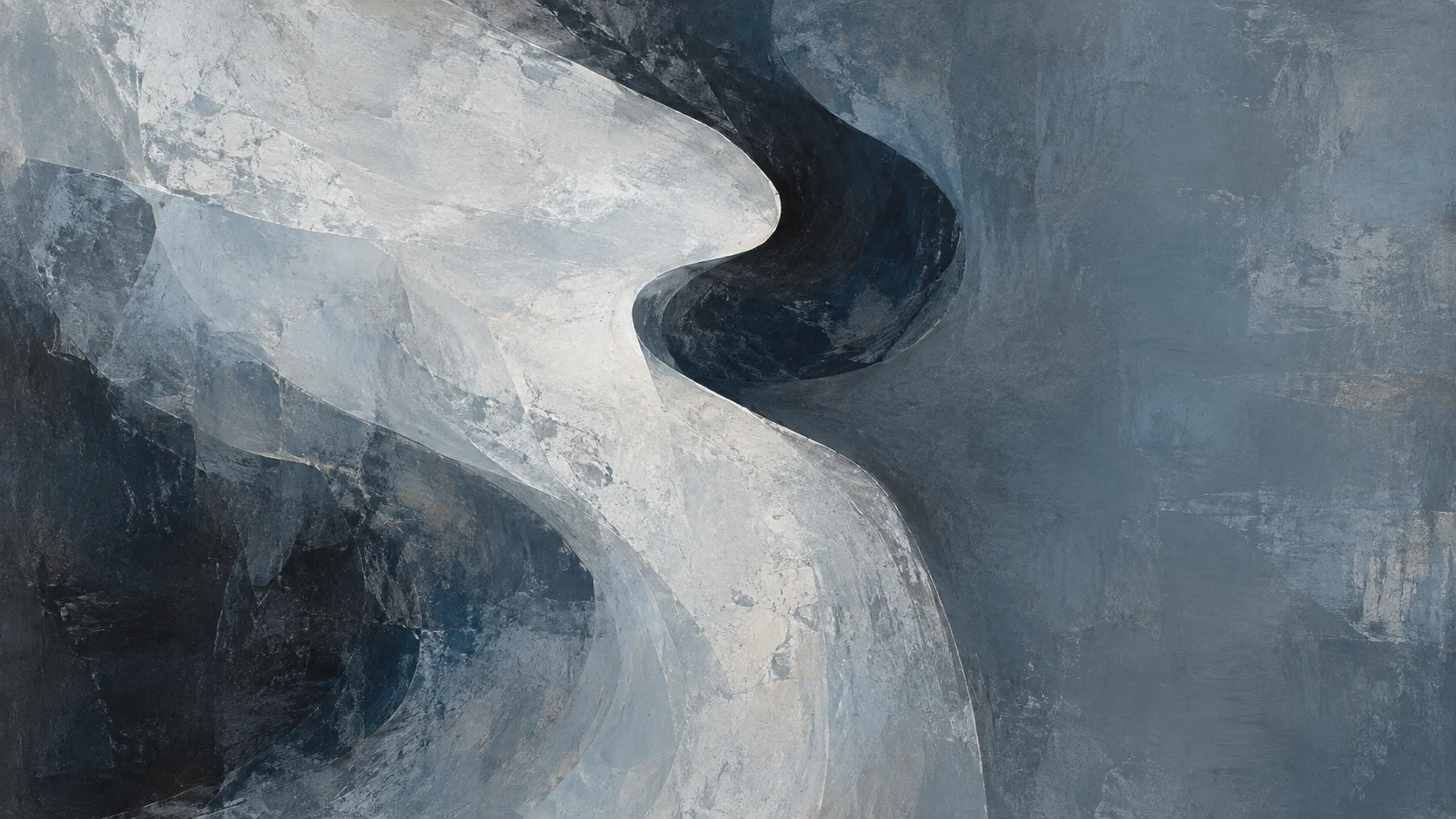
A digital object does not have to begin with the ambition to resemble a physical one. In a small three-dimensional study of a folded strip, the useful starting point was a drawn edge: a line that widened into a surface and then seemed to turn underneath itself. Building that turn required decisions about thickness, light and viewpoint long before a convincing material could be applied.
The first model used a plain surface with very little thickness. Its outline followed the sketch, but the fold lost its tension as soon as the viewpoint moved. A drawing can make an ambiguous junction persuasive through one carefully placed line; a model must decide what continues behind it. Adding depth exposed another problem. The inner bend became bulky, and a narrow opening disappeared. The next version changed the geometry at that junction rather than preserving every proportion of the sketch. It kept the relation that mattered, a compressed turn beside a more open span, while accepting that translation into a spatial form required a different construction.
A convincing surface is useful only after deciding what the geometry is asking the viewer to follow.
Bea Harker
Lighting the object with a broad source made the bend legible without immediately giving it a polished finish. A small bright light had produced an attractive streak that crossed several unrelated surfaces, disguising where the fold actually turned. Under the broader light, those surfaces separated. A plain, fairly rough material helped reveal an uneven transition that the highlight had concealed. This stage was useful precisely because the result looked less dramatic. Geometry and surface response could be considered separately. Only after the contour held together from several views did it become worthwhile to test whether a smoother finish added information or merely decorated the same unresolved shape.

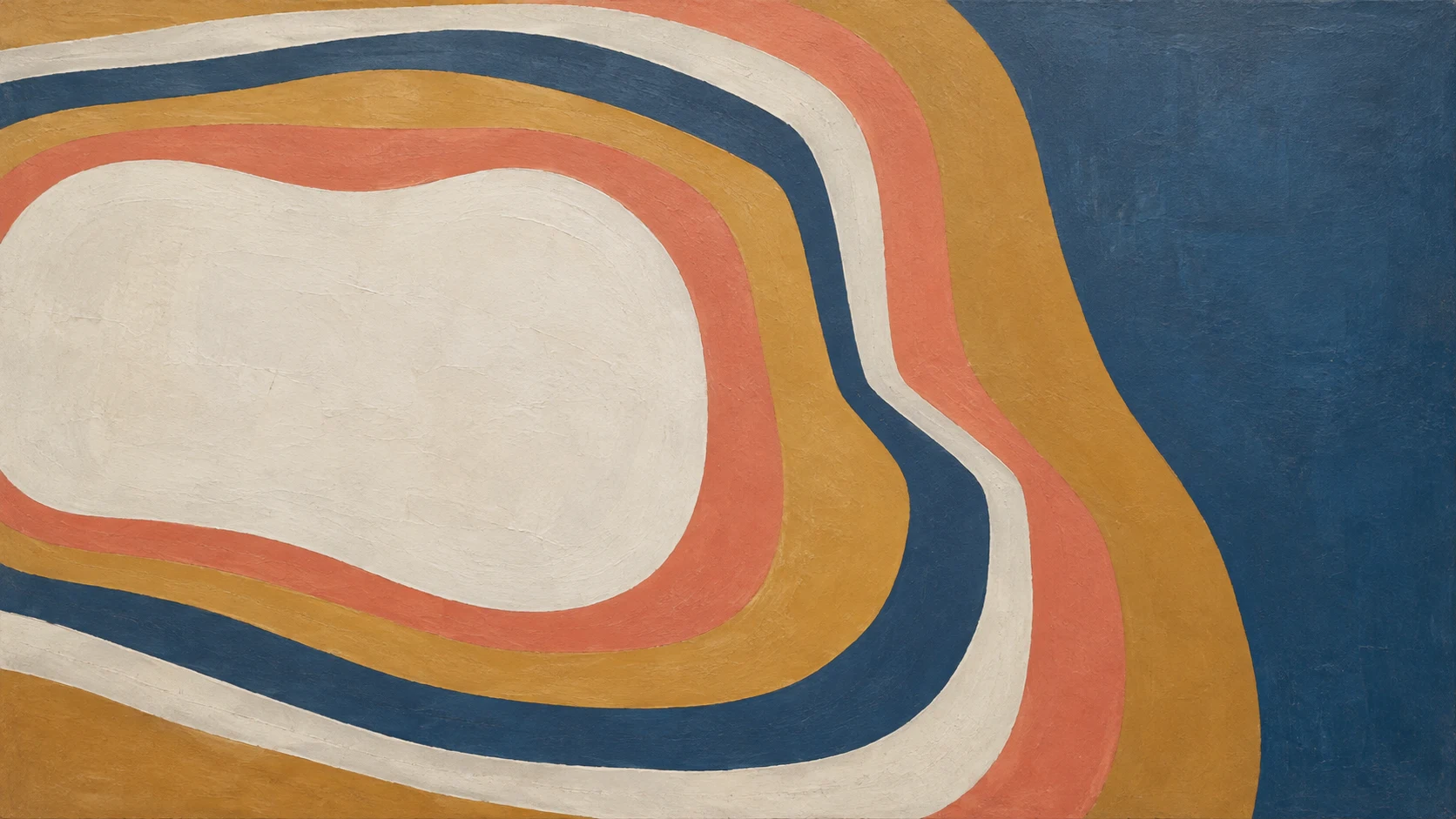
Colour changed the balance again. A dark underside gave the fold apparent depth, but when made too dark it read as an empty cut rather than a continuation of the strip. A warmer exterior and cooler interior allowed the relationship to remain visible with a smaller difference in brightness. The ground also mattered. A deep shadow anchored the form firmly, whereas a softer separation made it seem to hover. Neither was automatically more successful. They proposed different kinds of object: something with weight in a room, or a constructed image whose suspension was part of its language. Choosing between them meant returning to the original interest in the edge and asking which setting made that turn worth following.
The final display trial used a fixed view accompanied by a second angle, rather than a constant rotation. The main image could hold a deliberate composition; the other view could reveal what it selected. A moving version would bring timing and pacing into the work, not simply provide a more complete object. Likewise, a printed image would introduce paper, size and a different range of colour. These are artistic decisions alongside modelling and lighting. The exercise showed how a digital medium can develop its own precise material questions, even when its surfaces are simulated. Its success depended on the coherence of a few relationships, not on the number of effects available to make them appear elaborate.