
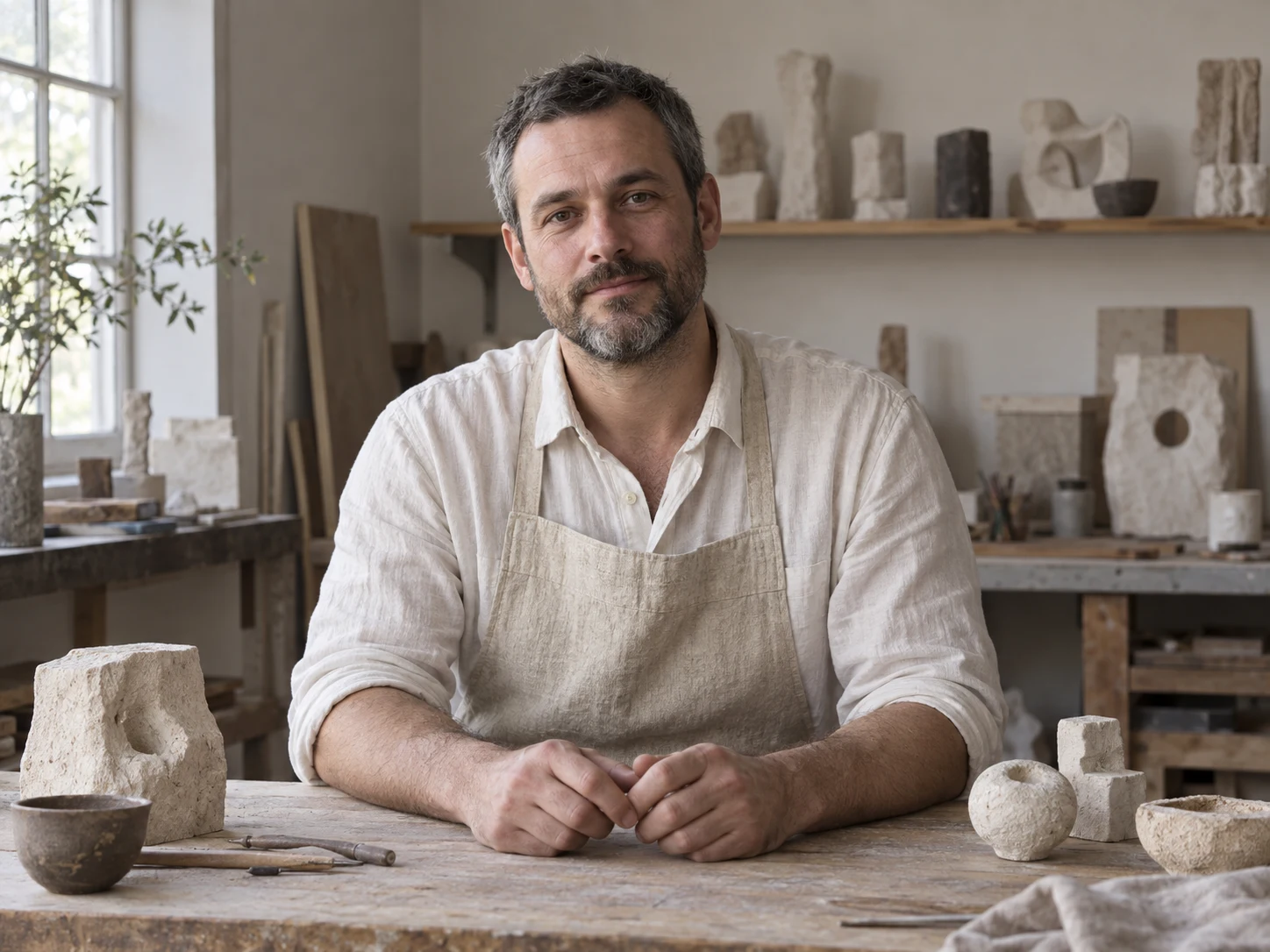

A Studio Visit on Screen Needs More Than a Moving Camera
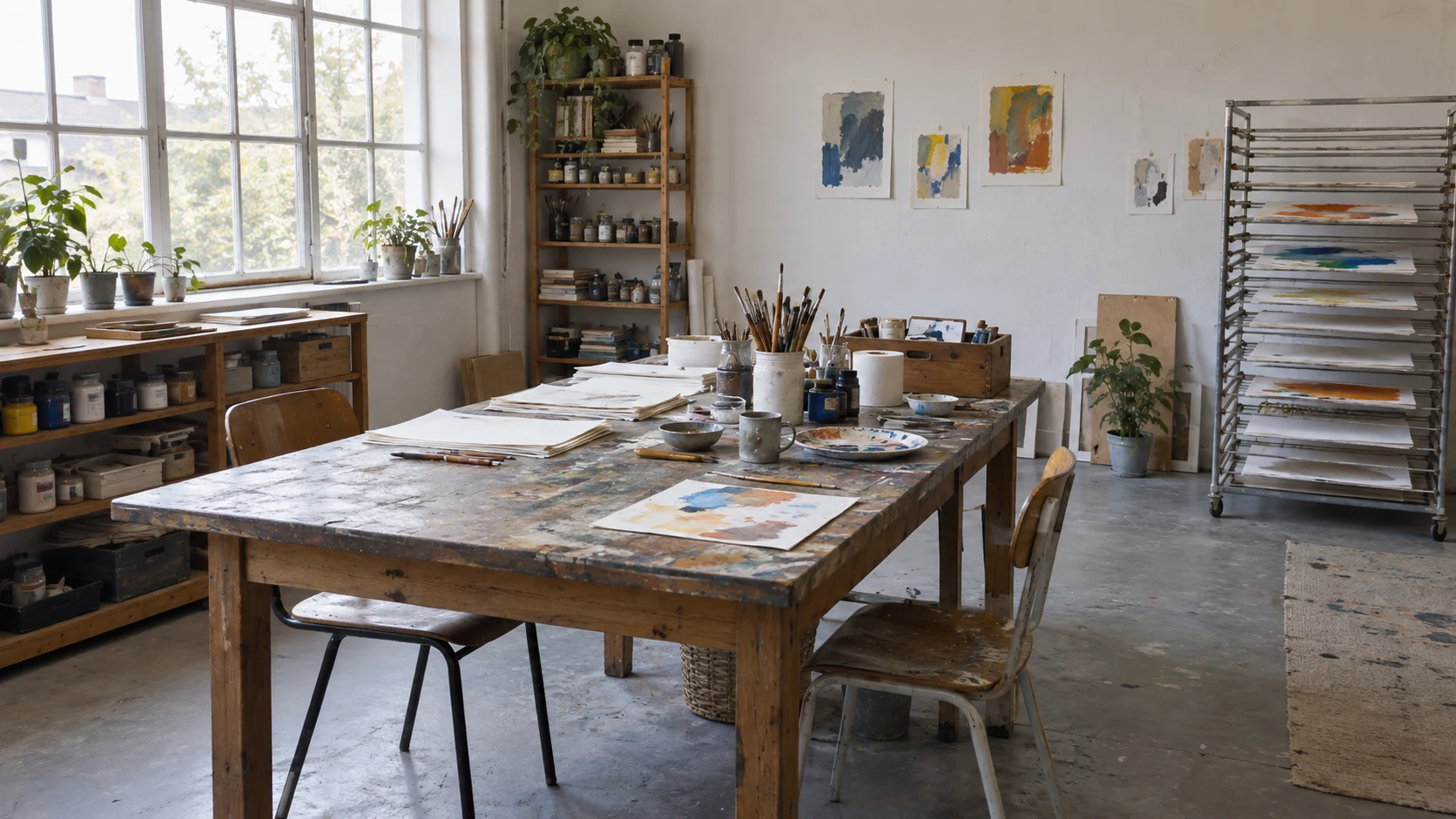
The opening move in a screen-based studio visit is often a slow pan, intended to give the viewer a sense of being there. It can also leave them uncertain about where anything is. For a proposed Ternform visit format, we began with a different question: what sequence would help a remote viewer understand the room, choose a detail and return to the larger arrangement without losing their place?
The first element is a simple plan with a small number of named positions. It need not measure every recess; it should establish how the worktable, display wall and storage area relate. A steady wide view then corresponds to one position on that plan. This gives subsequent close views an address. When the visit moves to a panel leaning against the wall, a viewer can tell whether it is the same object seen at the start or another version. The order is curatorial, because it determines which relationships become visible. A route that begins with finished pieces tells a different story from one that begins with tools and unresolved trials.
Give a close view an address in the room, so that detail does not arrive without a scale or a relation.
Bea Harker
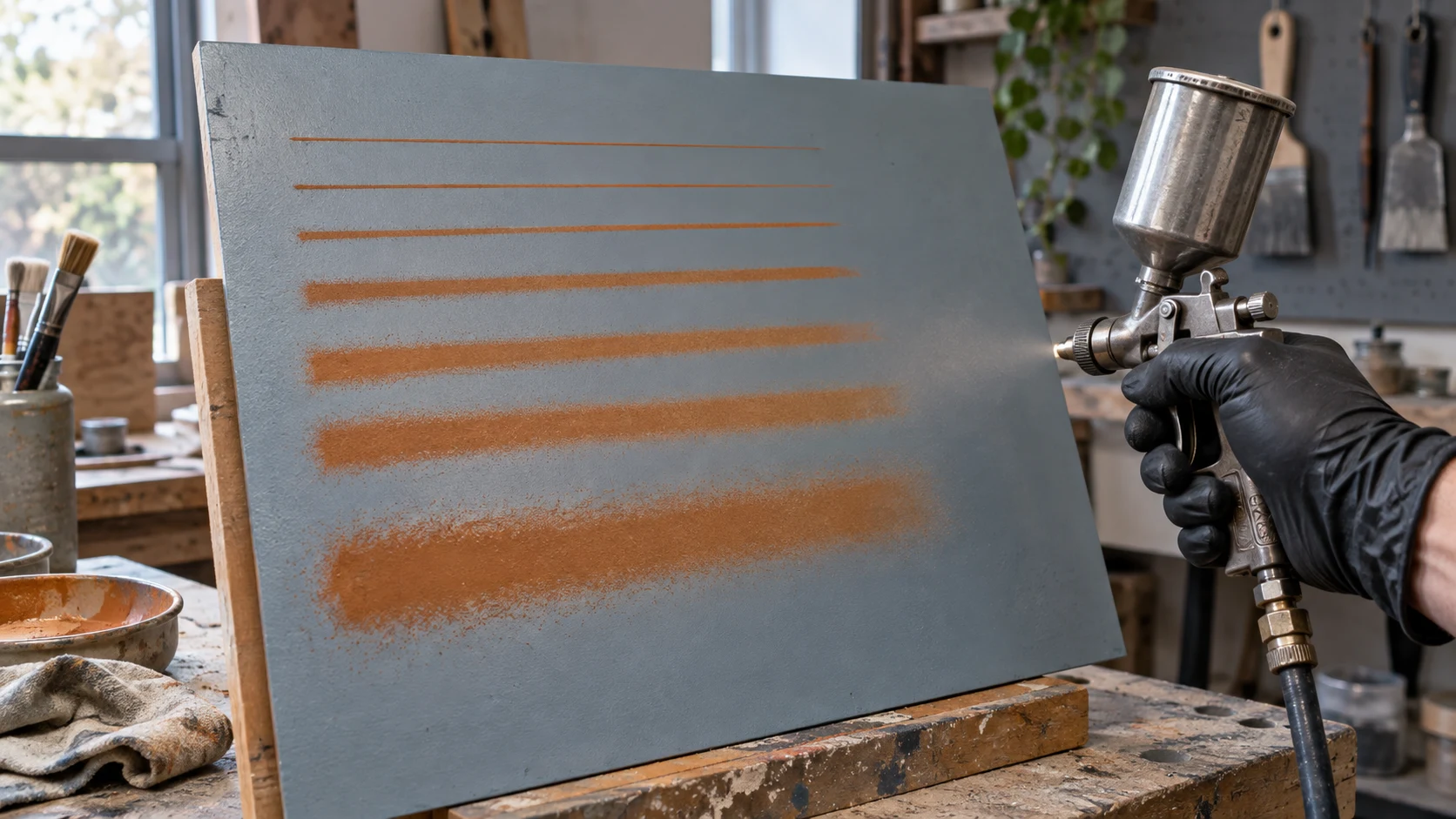
At the worktable, still images earn their place. A fixed detail allows a viewer to inspect a join, compare two marks or read a short annotation without keeping pace with a camera operator. Each detail needs a plain description and enough surrounding information to explain its scale. A close crop of a rough edge may look monumental until the full object returns. We would pair those views deliberately rather than leave the change of scale as an accidental effect. Where a moving sequence clarifies a spatial relationship, its movement should have a reason: going around a form, for example, rather than drifting continually in order to keep the screen busy.
Access belongs in that sequence from the start. A written route can communicate the room’s arrangement; image descriptions can identify the material features under discussion; spoken commentary needs an equivalent text. Controls should allow pauses and revisiting without a timed penalty. None of these provisions makes all experiences identical, but together they offer more than one way into the same argument. They also improve editorial discipline. If the meaning of a shot cannot be described clearly, it may be decorative footage rather than useful information. The proposed visit would identify its still and moving elements honestly, and would avoid making a video symbol promise motion where only a photograph exists.
The remaining limits deserve specific language. A screen cannot supply the resistance of a material, a reliable sense of weight or the changing light of an afternoon in the room. Even a careful image sequence selects, scales and compresses. A good visit can make those decisions intelligible and offer close access to something that might otherwise be difficult to see. It should leave the viewer with a better question for an eventual encounter, not a claim that nothing has been missed. This article sets out an editorial format, rather than announcing a live virtual tour. Its test is whether the proposed route produces understanding, not how convincingly it imitates walking.