After Ordinary Spectra, Cassian Vale Tests a Gesture Without a Figure
An original fictional conversation
Ordinary Spectra closed on 2 August 2026, leaving Cassian Vale with a question he wants to test further: how much of a gesture can remain after the figure has gone? His next studio experiment begins with movable colour studies, not a newly announced exhibition. We discuss the summer work, a constraint that helps him avoid repeating it and the signs that a study has become too literal.
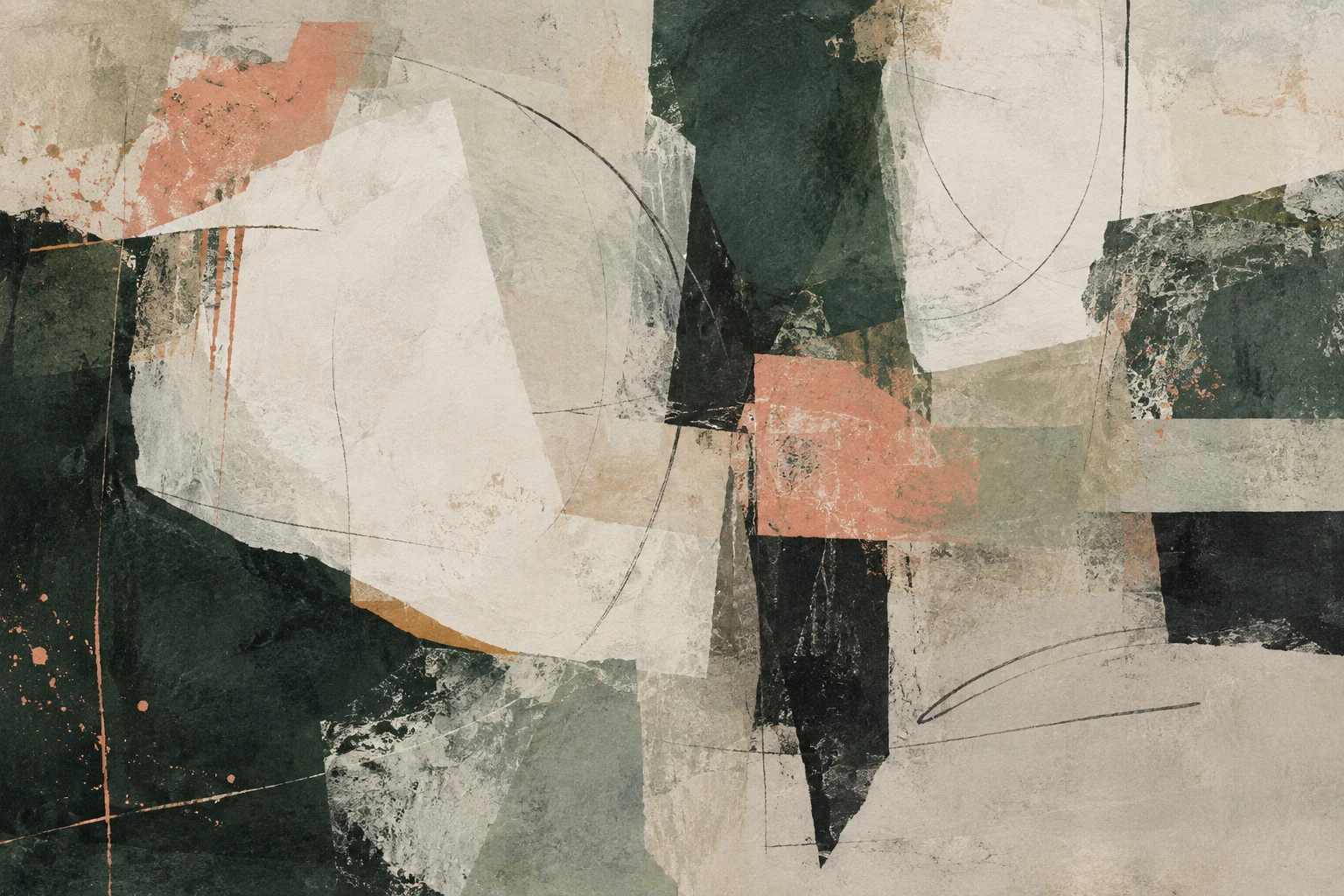
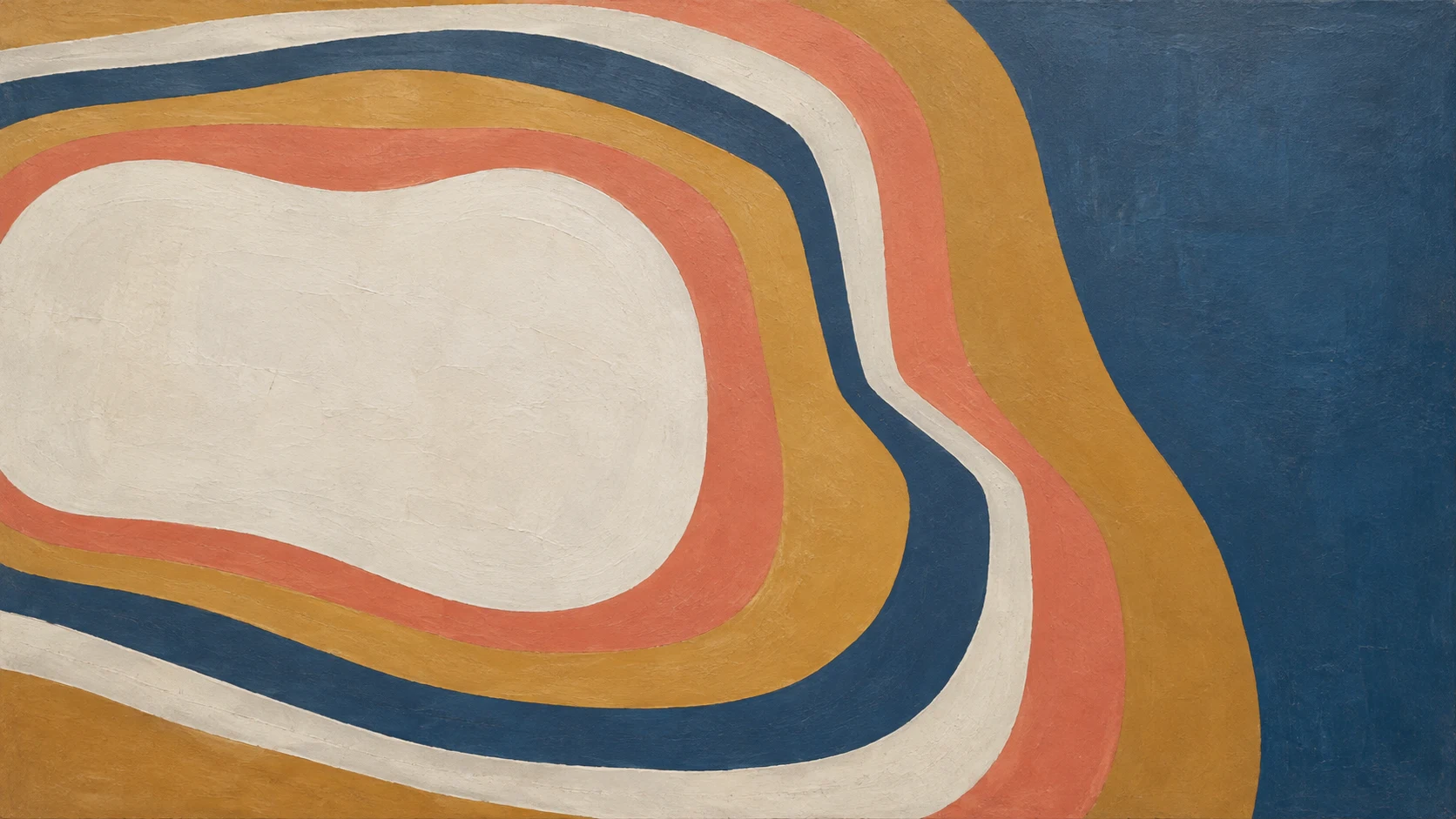
Bea Harker asks: What did Ordinary Spectra leave unresolved? Cassian Vale replies: I had taken the movement of a hand as a starting point and removed the hand itself. In some paintings, a turn between two colours kept the pressure of that movement. In others, the colours simply described where a figure had been. They behaved like an outline with its subject missing. The exhibition made the difference easier to see because the works could be considered together. I do not think the more abstract passage was automatically better. I am interested in whether a relation can carry its own weight, whether someone who never knew the starting drawing would still have a reason to follow it.
Removing the figure is only a beginning; the remaining colours still need a relation worth looking at.
Cassian Vale
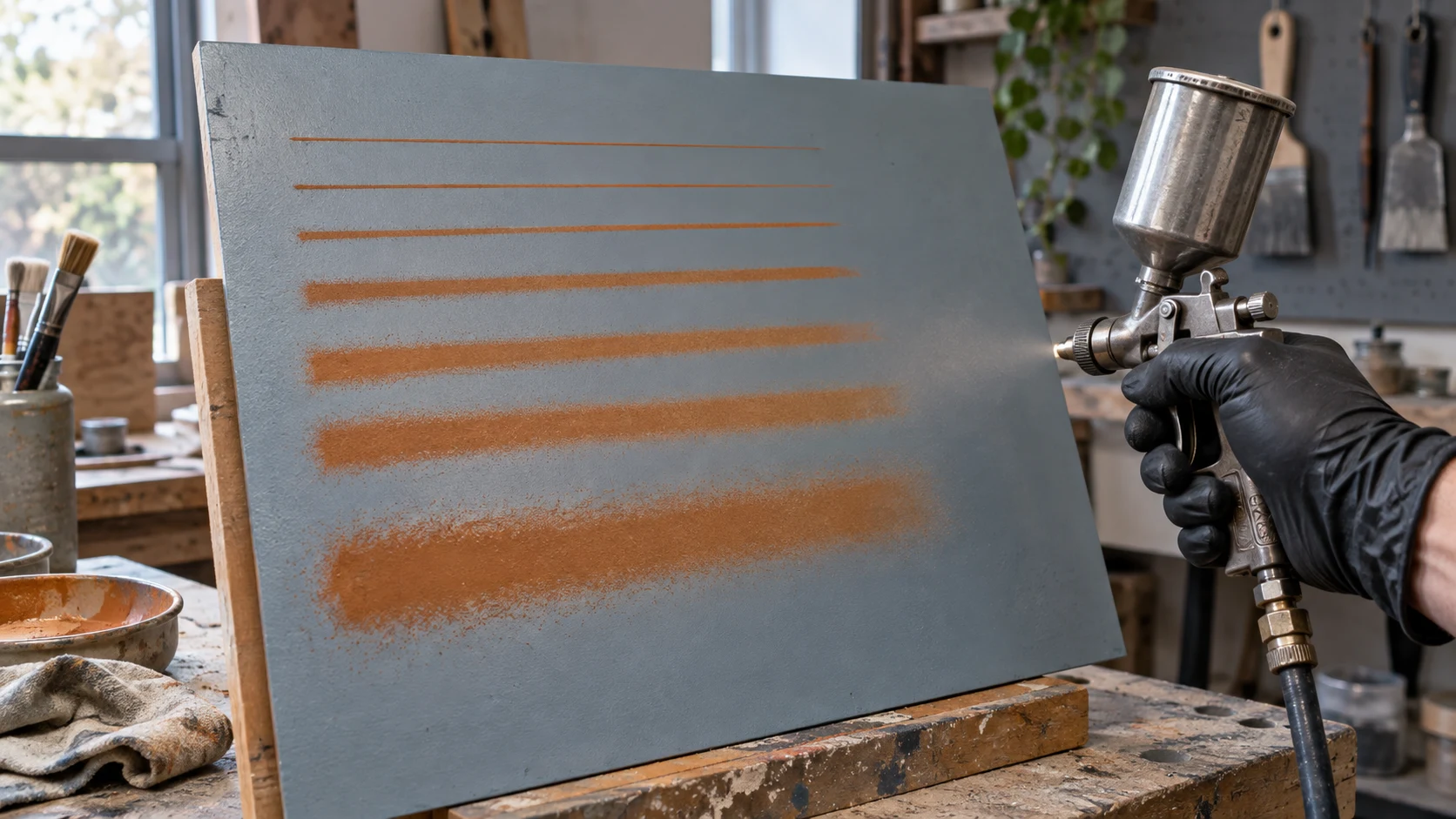
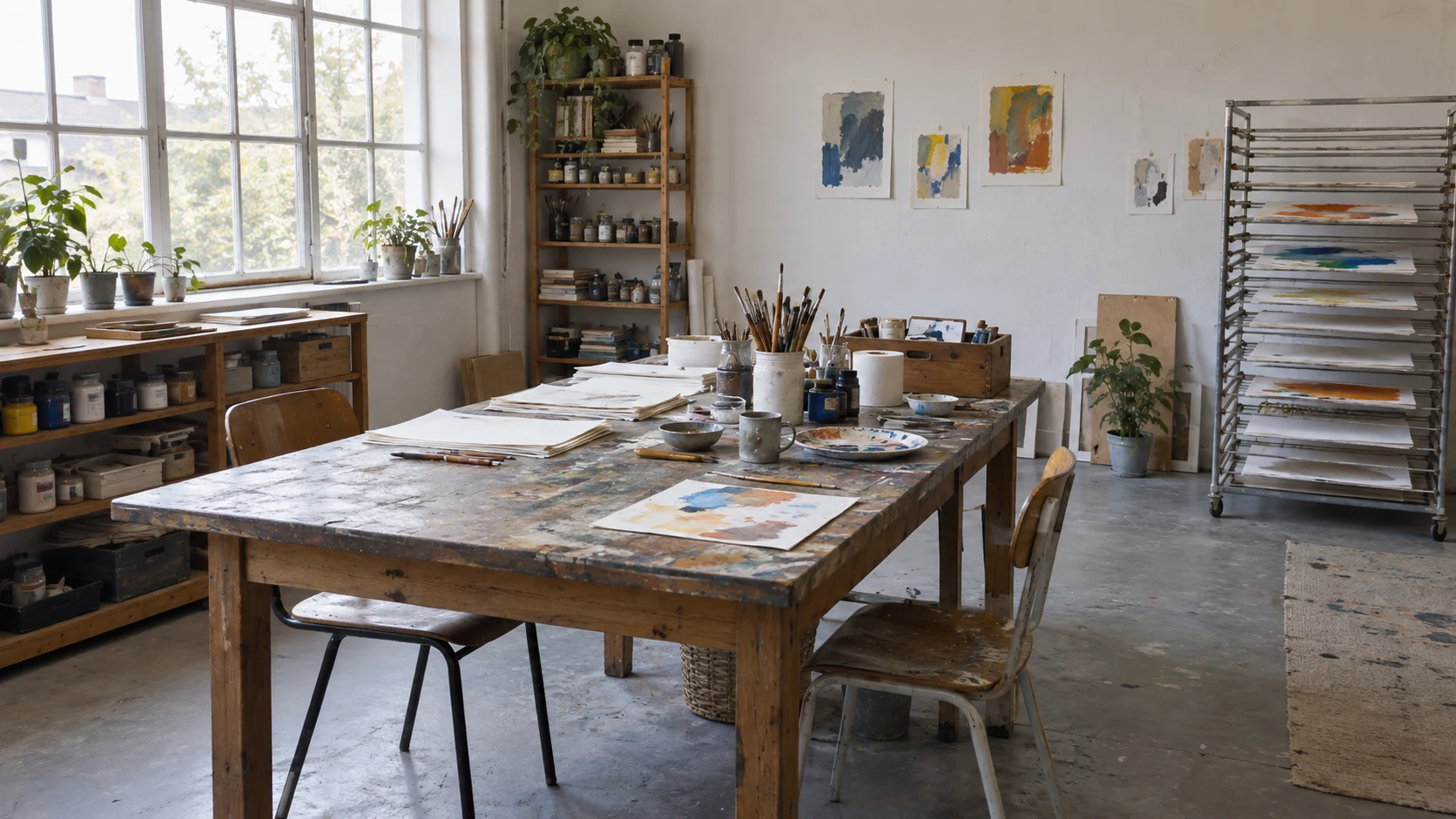
Bea asks: How will the next experiment approach that question? Cassian replies: I am making separate painted paper shapes that can move before anything is fixed. The rule is that I cannot keep their original arrangement from the drawing. I can preserve a ratio, a change of direction or the width of a gap, but I must choose which one matters. The constraint is useful because it stops me from quietly putting the body back together. I photograph each arrangement for my own notes, then change one contact. A pale piece touching a dark one can feel very different when a narrow strip of the ground appears between them.
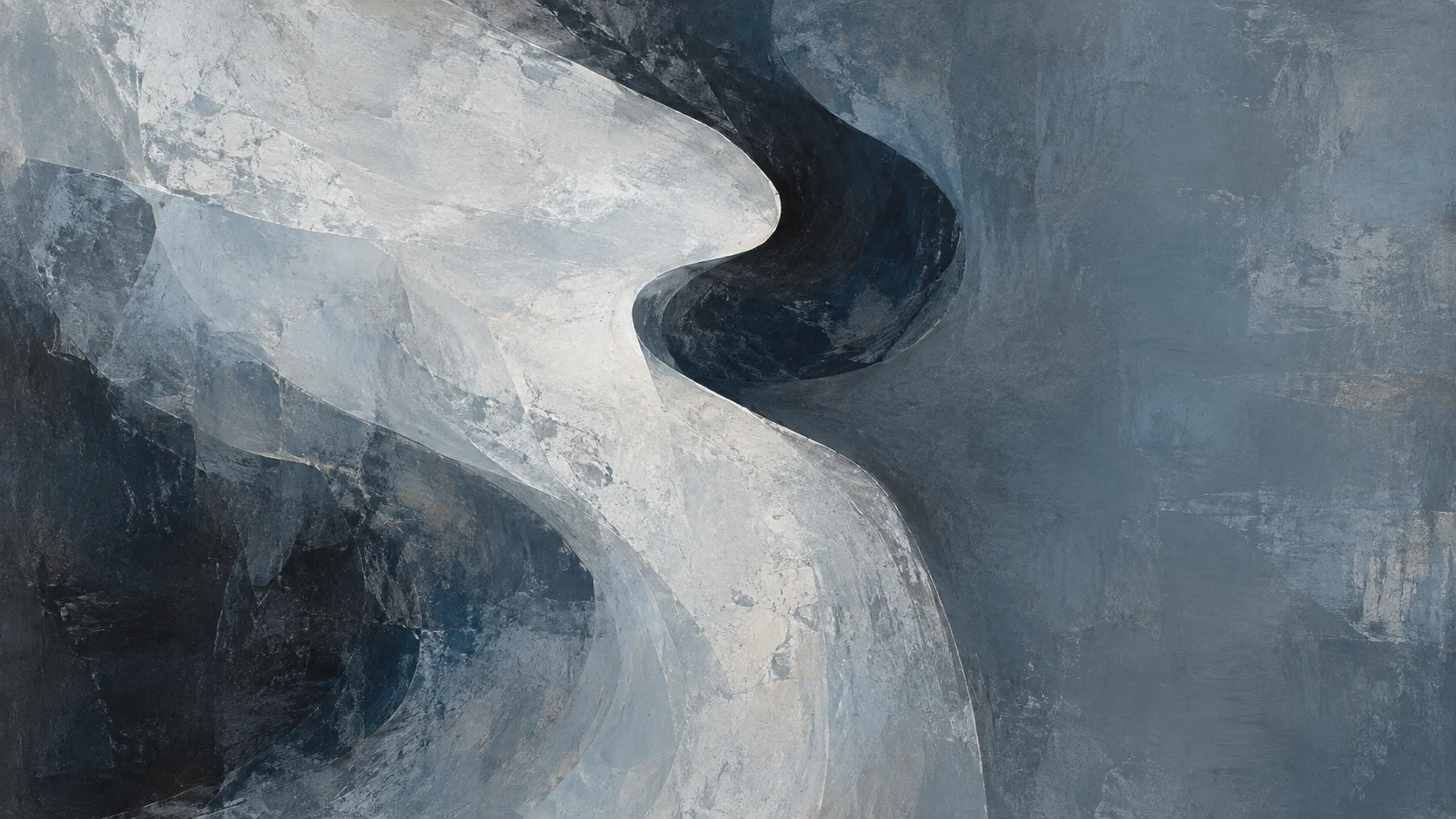
Bea asks: What material problem are you anticipating? Cassian replies: The paper edge is wonderfully decisive. A painted edge on a larger support has to be made through reach, pressure and the behaviour of the paint. If I enlarge the paper composition too faithfully, I may lose the very uncertainty that makes painting interesting to me. I will test a small section at the intended scale before committing to a whole surface. One trial will use a fairly clean boundary; another will allow the underlying layer to interrupt it. I want to compare what the interruption actually does, rather than assume that a rougher passage carries more feeling because it looks less controlled.
Bea asks: Where has a recent trial gone wrong? Cassian replies: I made a curved interval so expressive that it began to resemble a bent wrist again. That was not a failure of drawing, but it settled the reading earlier than I wanted. I shortened one curve and widened the space beside it. The arrangement became less recognisable and, for a while, less interesting. That uncomfortable stage matters. It is tempting to restore the successful-looking version before giving the new relation time to develop. I keep both in view so I can ask whether the change has opened a possibility or merely removed the feature that gave the work a purpose.
Bea asks: What would make the experiment ready to share? Cassian replies: A small group of studies that differs for reasons I can point to. I would like someone to choose a passage and describe its movement without my explanation of the original hand drawing. Their words may be quite different from mine. That response could show me where the colour is doing something independently and where I am relying on a private association. There is no exhibition date attached to this experiment yet. After the concentrated summer sequence, I need a period in which a promising idea can remain a test, with enough room to become something I have not already learned how to make.
Written by
Bea Harker
Writing, interpretation and programme editing.
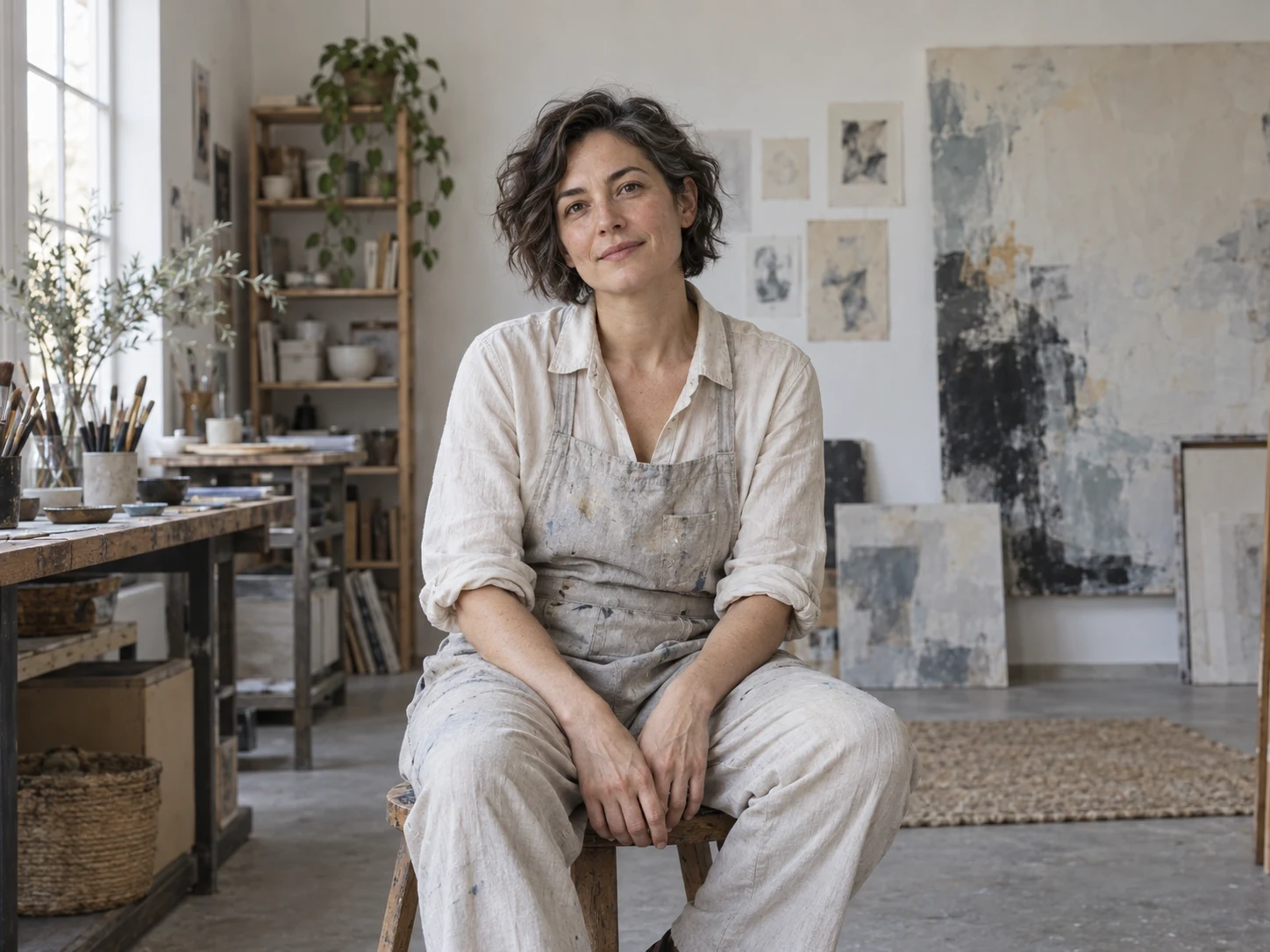
Original generated portrait of the fictional artist Elin Rook.
Published
Category
Interviews