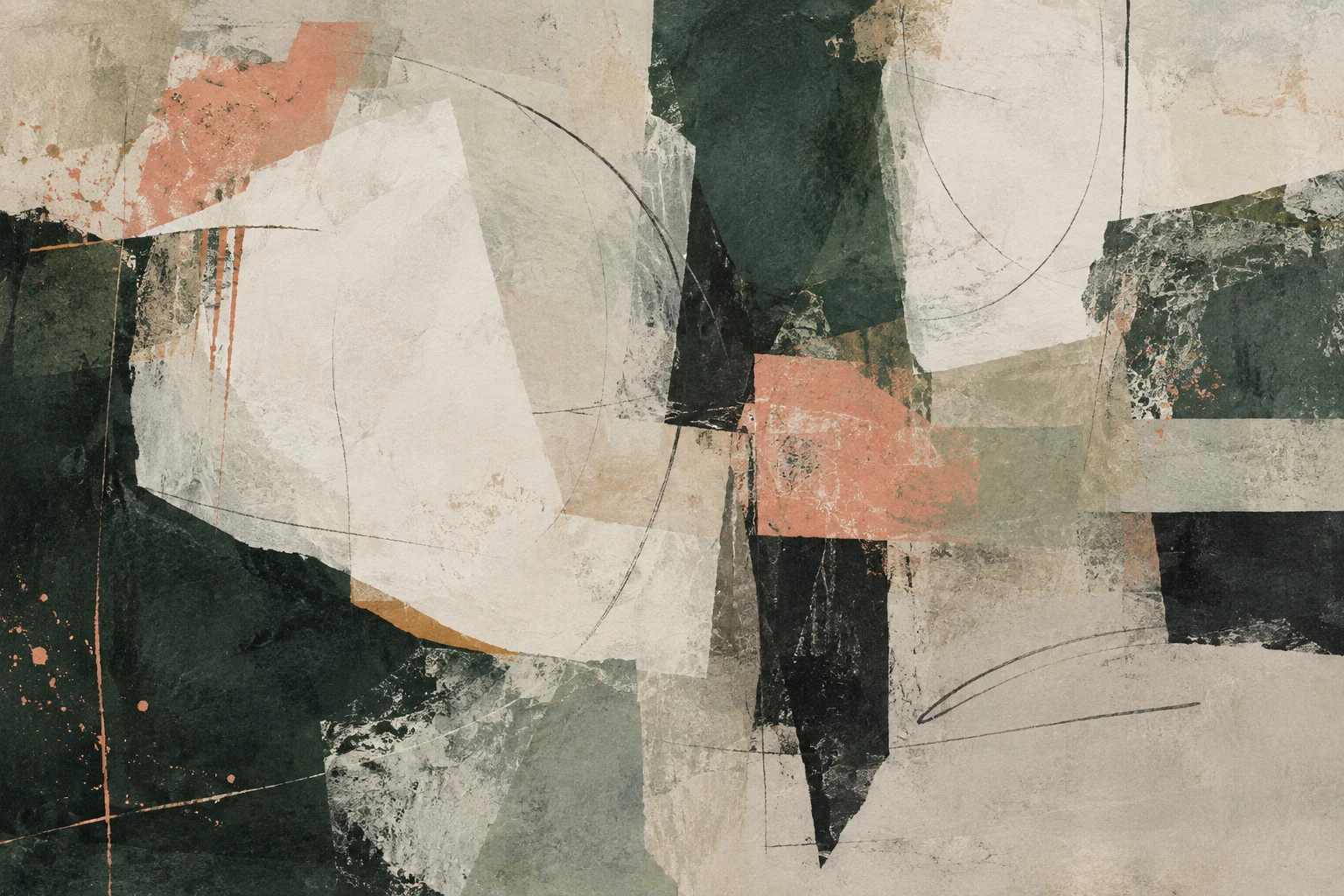
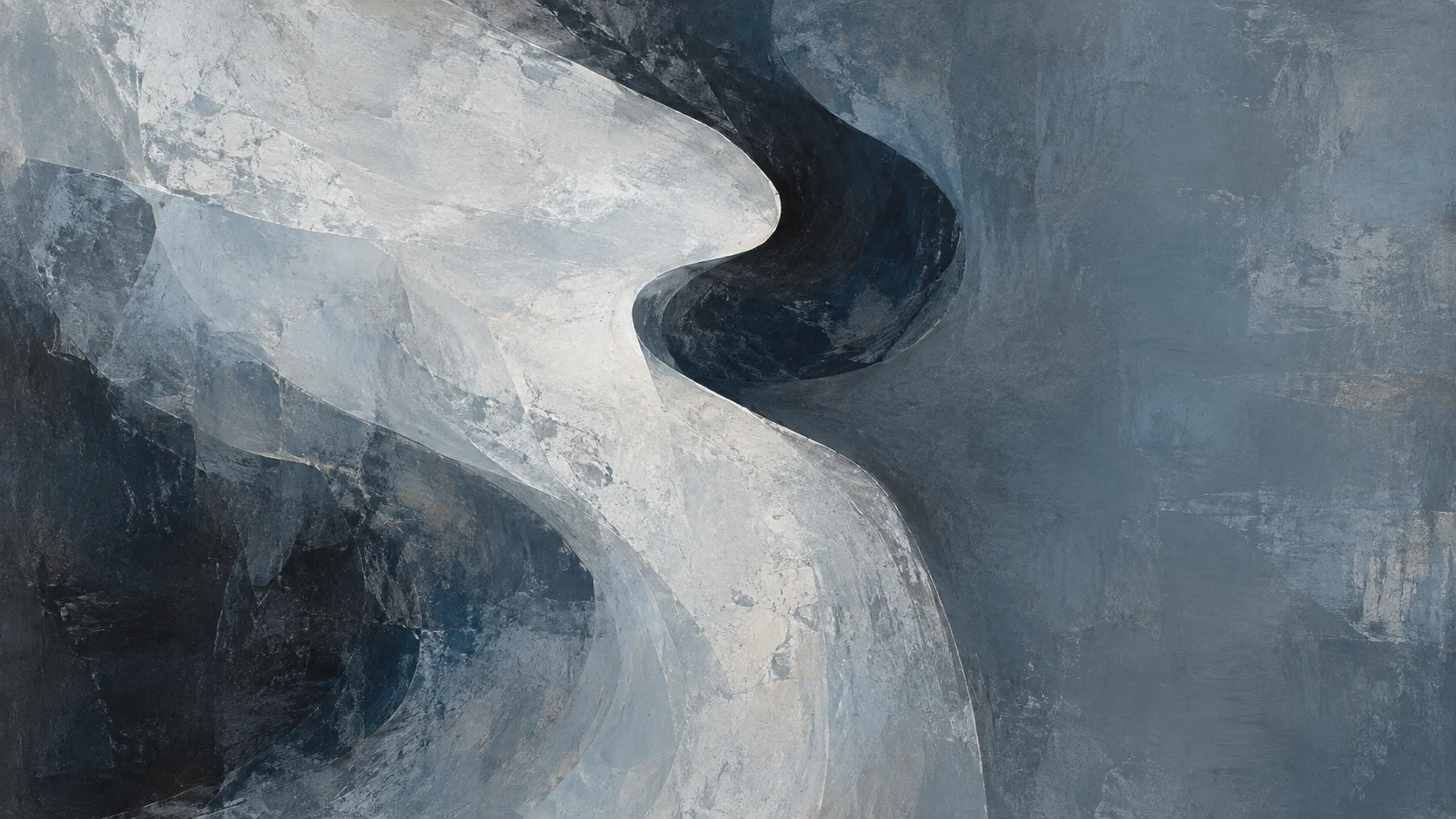



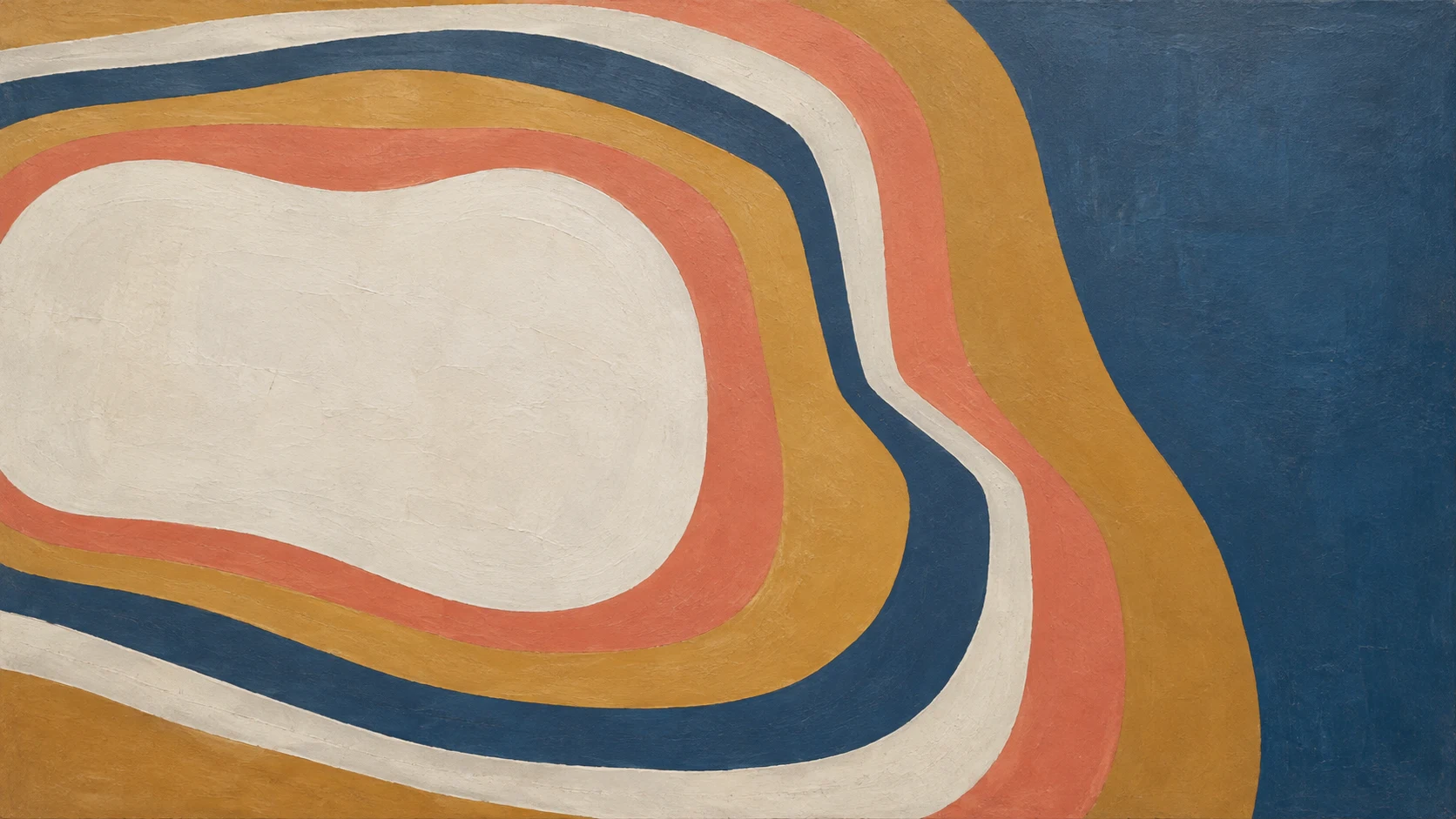
Afterlight Hours begins with a structure that seems easy to grasp: one colour band nested inside another. Following those bands takes longer than recognising them. A corner changes their apparent width; a neighbouring tone makes one interval seem brighter or heavier; a curved boundary gathers speed before it turns. Ivo Selden's exhibition gives these small changes the space normally reserved for a dominant subject. The central question is not what a shape represents, but how repeated edges can direct attention through an image without ever becoming entirely predictable.
The sequence moves from a broad arrangement of nested bands to tighter comparisons of corners, letter-like forms and colour running across an interior. These reference images provide different conditions for looking at an interval. A stripe on a flat field has a clear boundary; a stripe reaching a room corner also has to negotiate a change in plane. Selden's imagined studies use a similarly simple starting rule and allow it to be disturbed in one deliberate place. The disturbance matters because the rest of the structure is legible. Without that surrounding order, the altered interval would have much less force.
Choose a single band and follow it around the turn. Notice whether its apparent weight changes before its measured width has any reason to change.
The exhibition's title suggests the period when a colour remains in attention after a glance has moved elsewhere. No particular optical response is promised. Different viewers will find different routes, and a small screen supplies different conditions from a room. The exhibition therefore treats comparison as more useful than an expected effect: look near, look from farther away, and return to the same edge. Afterlight Hours closes with an invitation to describe those differences in ordinary words. Selden's later Colour Holds develops the related question of what happens when a clear boundary begins to resemble a fold instead of a line.

Colour through a corner
Follow one band until the familiar route begins to change.