Count the essentials
A phone, keys and a card holder take less room than a water bottle, notebook and light layer. A bag described as compact may be exactly right for one list and awkward for the other. Compare the published dimensions with your largest item, allowing space for the opening and lining rather than treating the outer measurements as usable capacity.
Check the route to each pocket
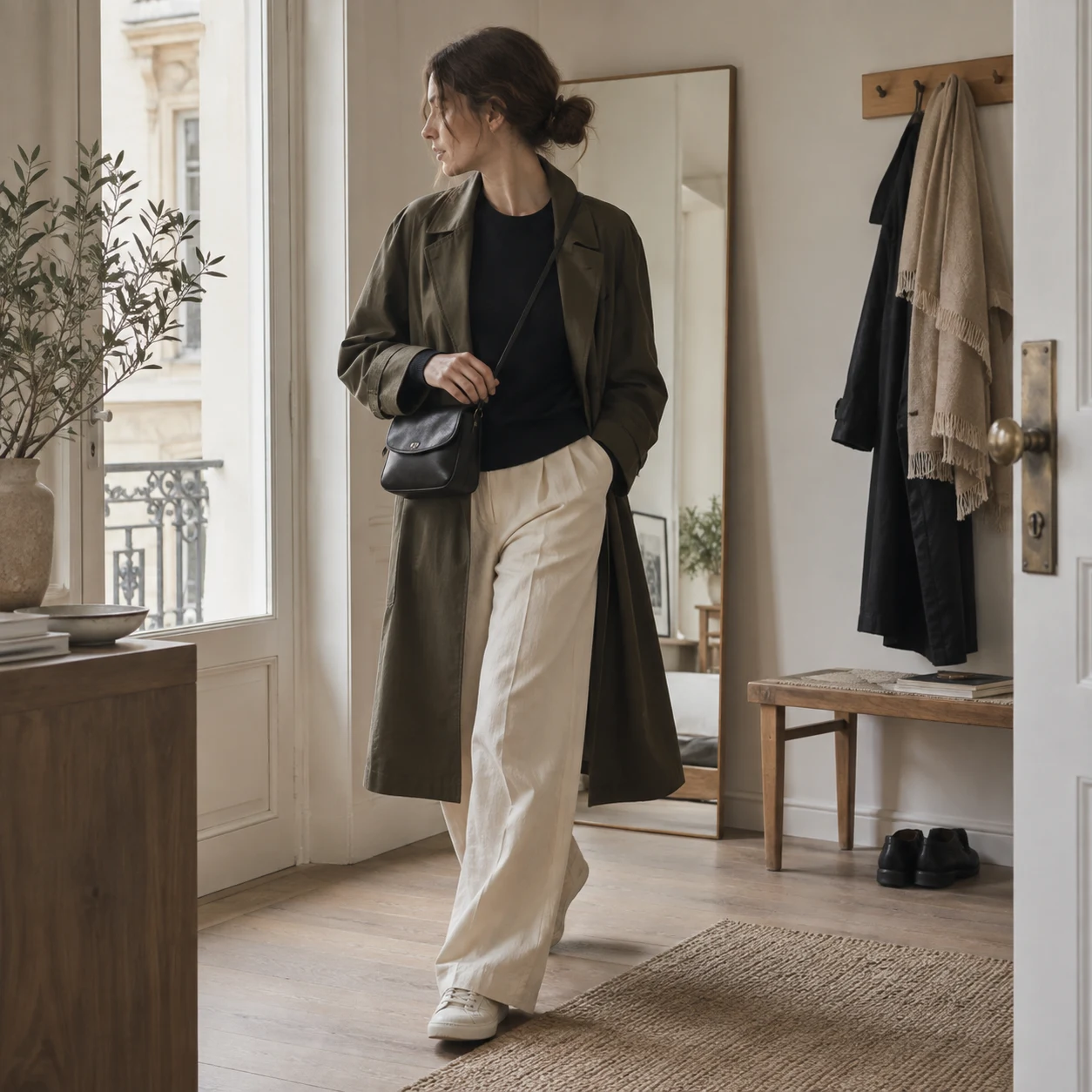
The pocket you use most should be easy to reach while the bag is worn. Try finding a key without setting everything down. If a zip sits against your body, make sure the strap allows you to bring it forward comfortably. Convenience is a physical detail, not just a list of compartments.
Balance the load
Place denser items close to the body and avoid carrying more than you need simply because there is room. Adjust the strap with your usual outer layer on. The position that works over a T-shirt may sit differently over a coat.
Empty it at the end
Receipts, loose wrappers and rarely used extras quietly accumulate. Emptying the bag after a trip keeps the next morning simple and gives the lining time to air. It also makes it easier to notice a loose seam or damaged fastening before it becomes a larger problem.