Choose the mount before the megapixels
Start with the connection between the body and lens, then choose a focal length that suits the subject and the space.
Circuit & Field editorial desk
The camera is a system
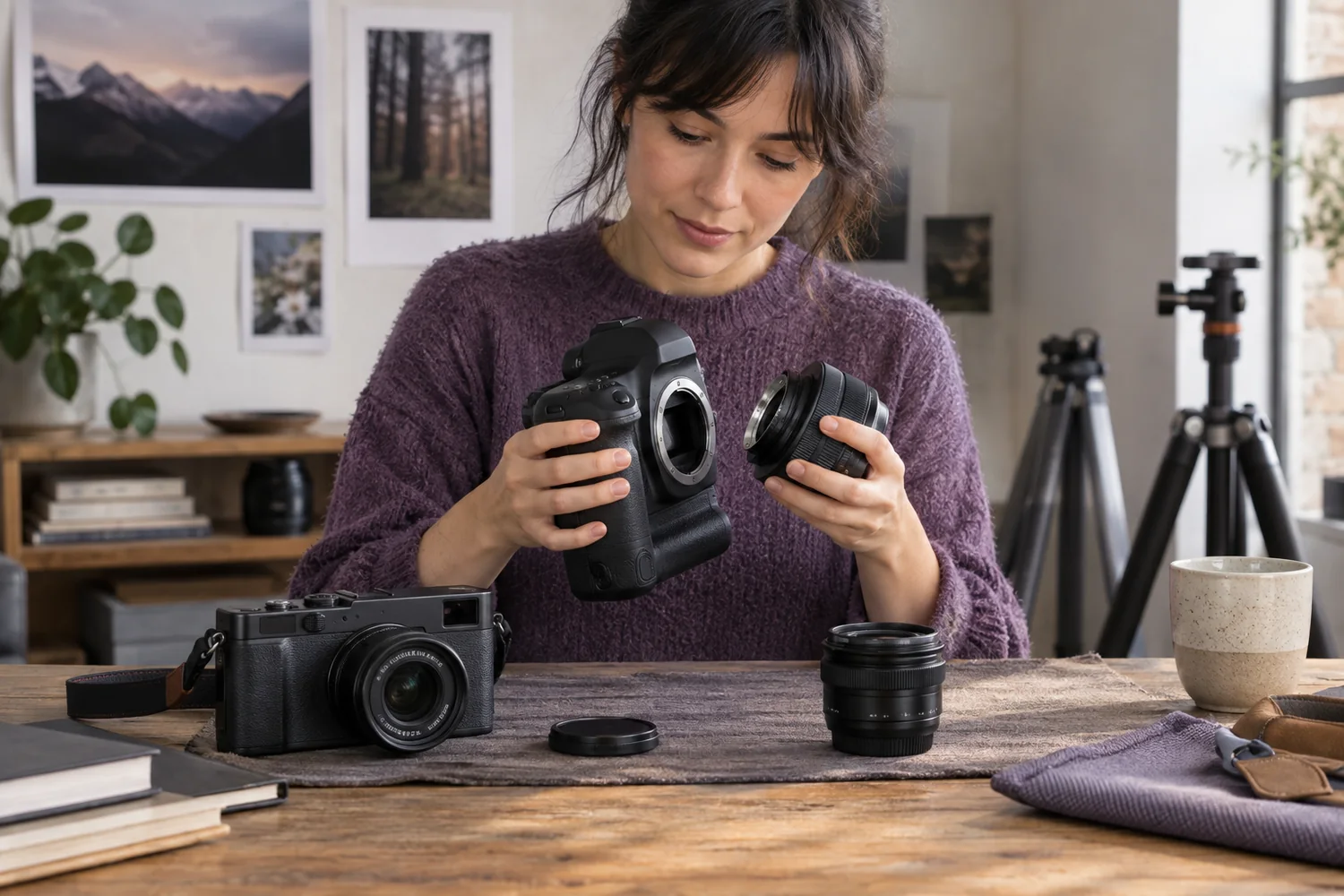
A camera body's sensor resolution is easy to compare, but it does not tell you which lens will attach, how wide a room will appear or what is actually in the case. Begin with the intended picture: a conversation across a table, a small object, a wide interior or a distant subject. That determines the working distance and the range of views you need.
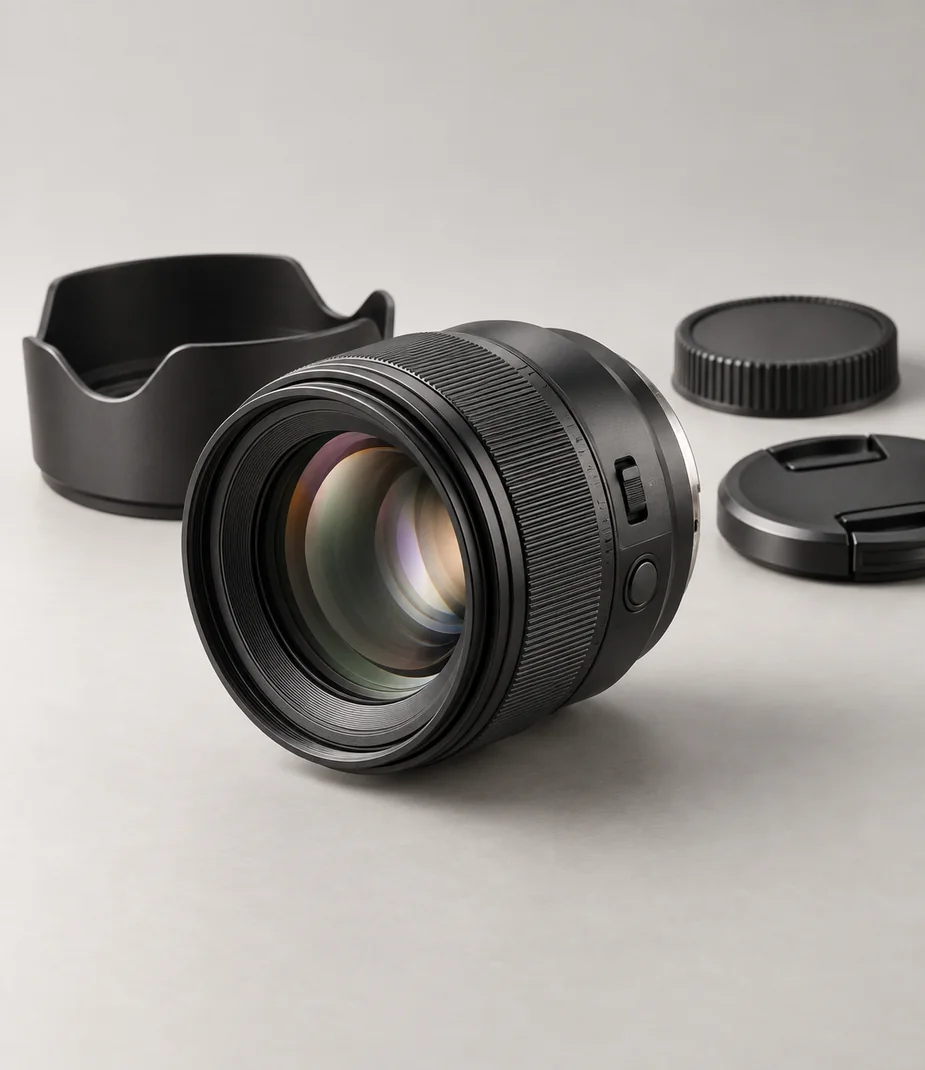
Write down the body mount and sensor format before choosing a separate lens. A mount is a mechanical and electronic interface; two items with the same focal-length number may belong to entirely different systems. The Circuit & Field catalog names its fictional mount on each interchangeable-lens body and lens. A compatibility link explains that exact match.
Understand the view
Focal length and sensor size together determine angle of view. A 35 mm lens does not frame the same scene on every sensor. Compare lenses on the same format, or use a stated equivalent angle of view; do not assume that a product described as a portrait lens will frame a whole room from the doorway.
A zoom lets you change framing without changing lenses, within its stated range. A prime has one focal length and often suits a deliberately limited kit. Maximum aperture describes the widest opening, not the aperture used for every photograph. Depth of field also changes with subject distance and format, so a small f-number alone does not prescribe a look.
Read the box list literally
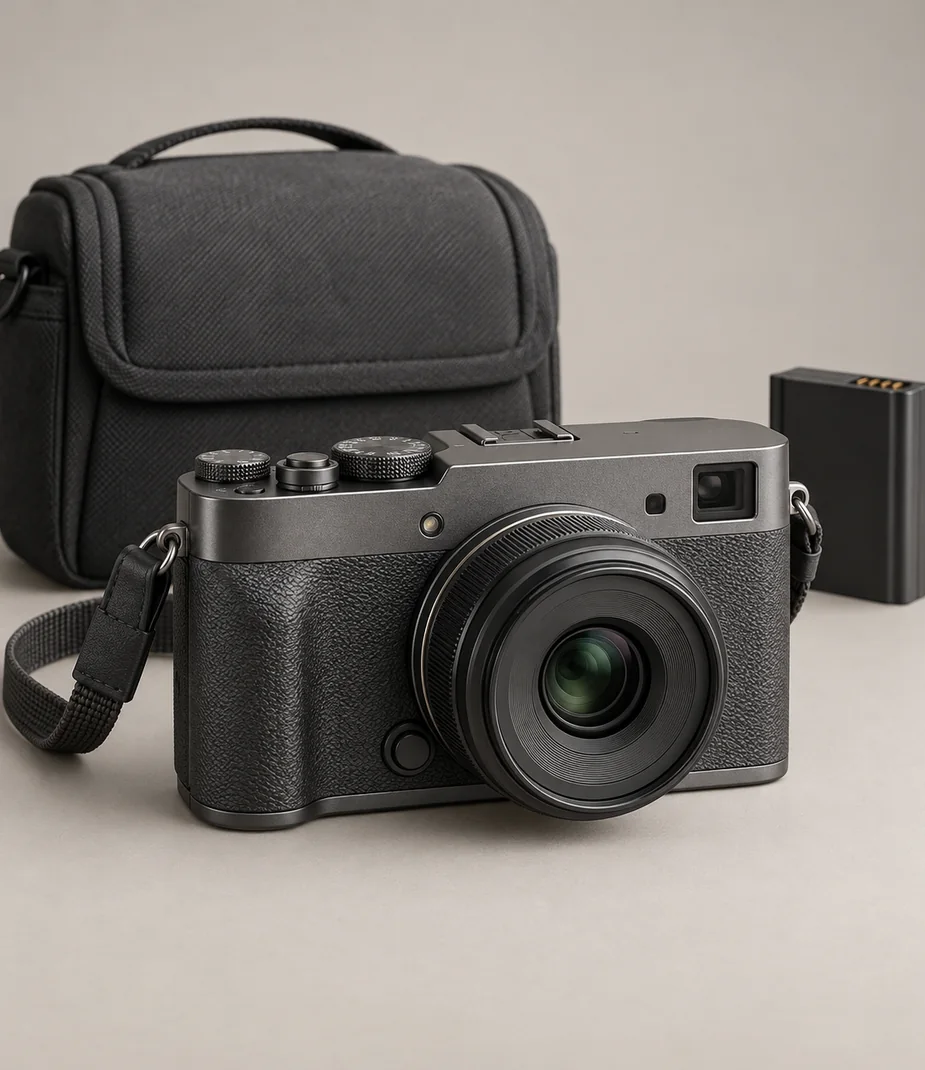
A camera-plus-lens kit includes only the lens named on that configuration. A body-only model needs a separately compatible lens. A compact camera with a fixed lens cannot accept an interchangeable catalog lens simply because both products use the Luma name.
Check batteries, the charging method, front and rear caps and the storage-card requirement. A camera that accepts a card does not necessarily arrive with one. Test file transfer and remaining capacity before leaving; a cable used for charging may not provide the transfer speed you expect.
Make a useful comparison
Put two bodies from the same working category beside one another, then add the total kit cost. A less expensive body can become the larger commitment if it needs a lens and additional accessories. Compare the included kit, viewfinder, handling and recording limits as well as the headline sensor figure.
For a real purchase or rental, verify the final combination with its manufacturer. Adapters can alter autofocus, aperture control and usable image area; this catalog does not treat an unspecified adapter as proof of compatibility. Record one intended image and one limitation before making the choice.
Before you decide
- Body mount and lens mount match explicitly
- Sensor format and intended framing checked
- Named lens, caps, battery and charger accounted for
- Memory card and transfer path planned
- Kit cost compared for the same rental term
General planning guidance with illustrative catalog examples; use the actual manufacturer's documentation for real equipment.
Models to read alongside this guide
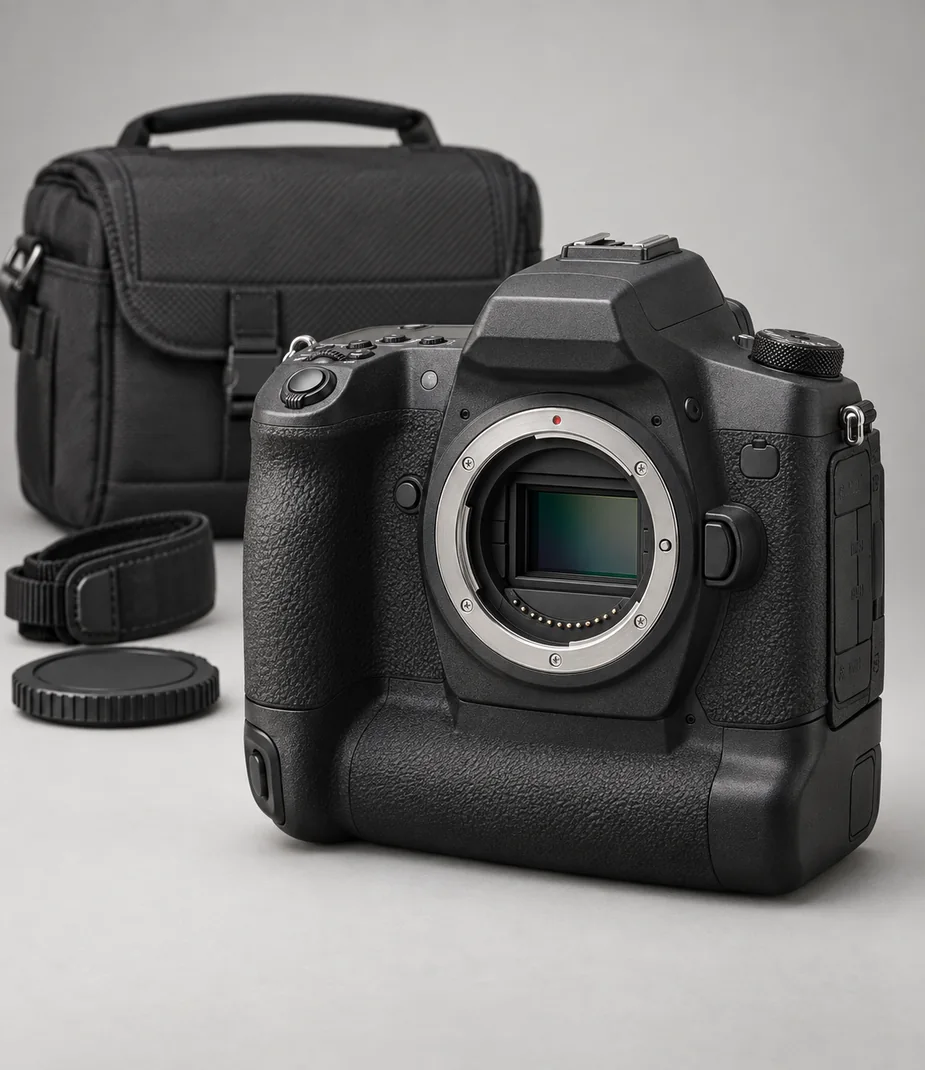
Luma · Interchangeable & film camera kits
Luma Reflex D24 Grip Body
From €23.20 / month · 12 months
€490.00 to buy