Choose headphones for the room you are in
Fit, isolation, connection and microphone behaviour matter more than a single battery-life figure.
Circuit & Field editorial desk
Name the listening task
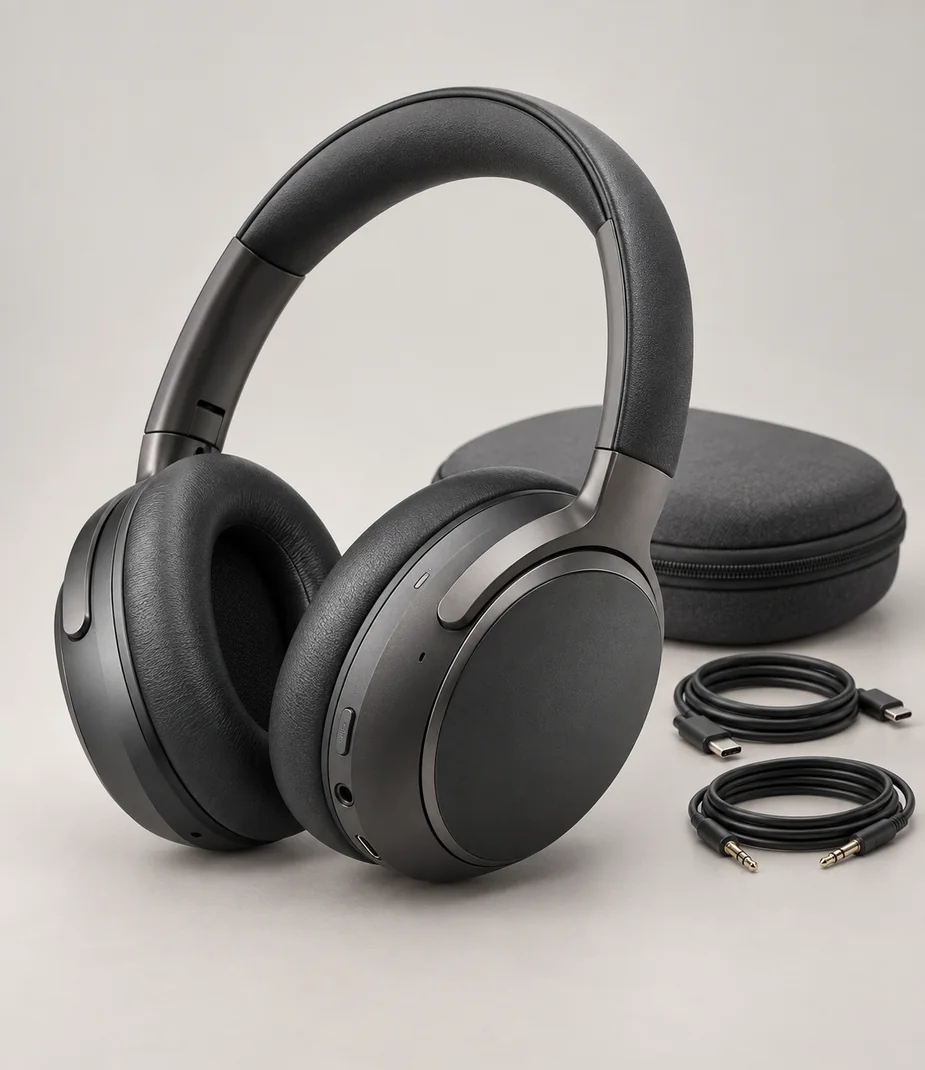
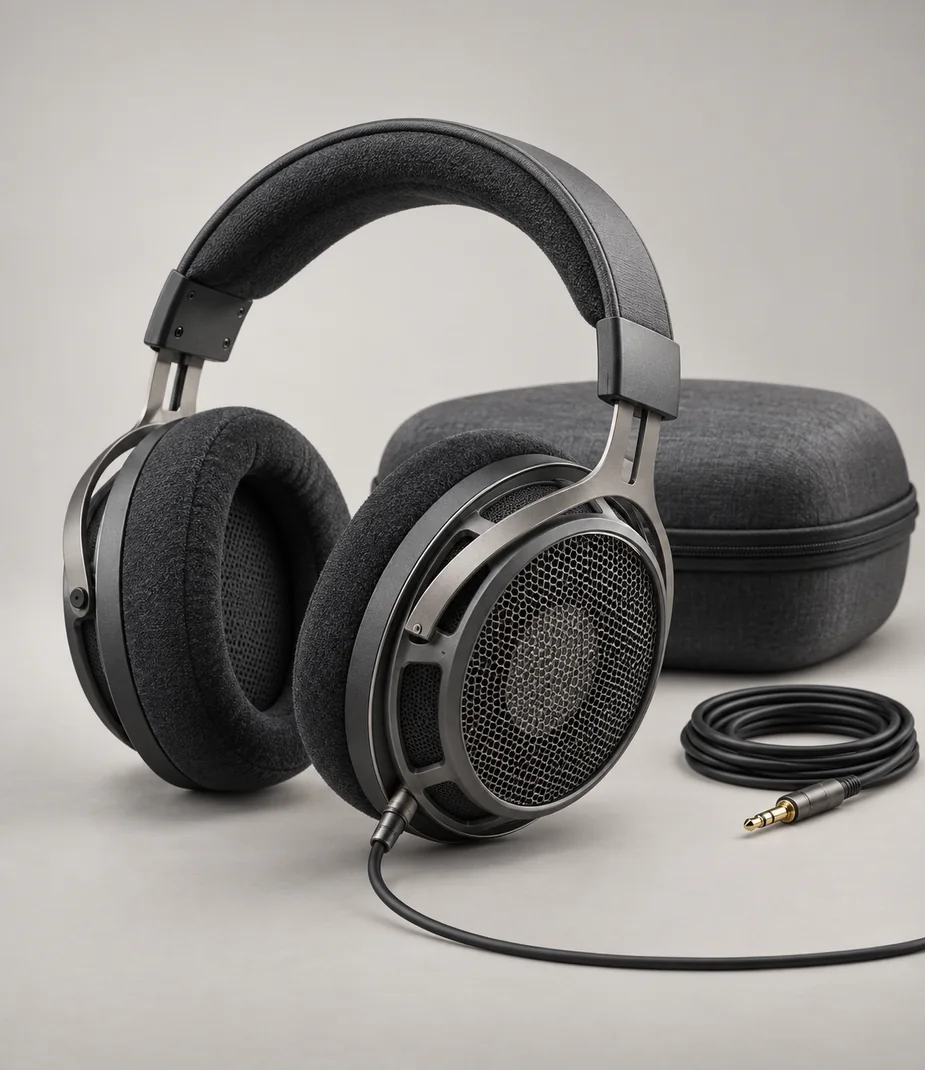
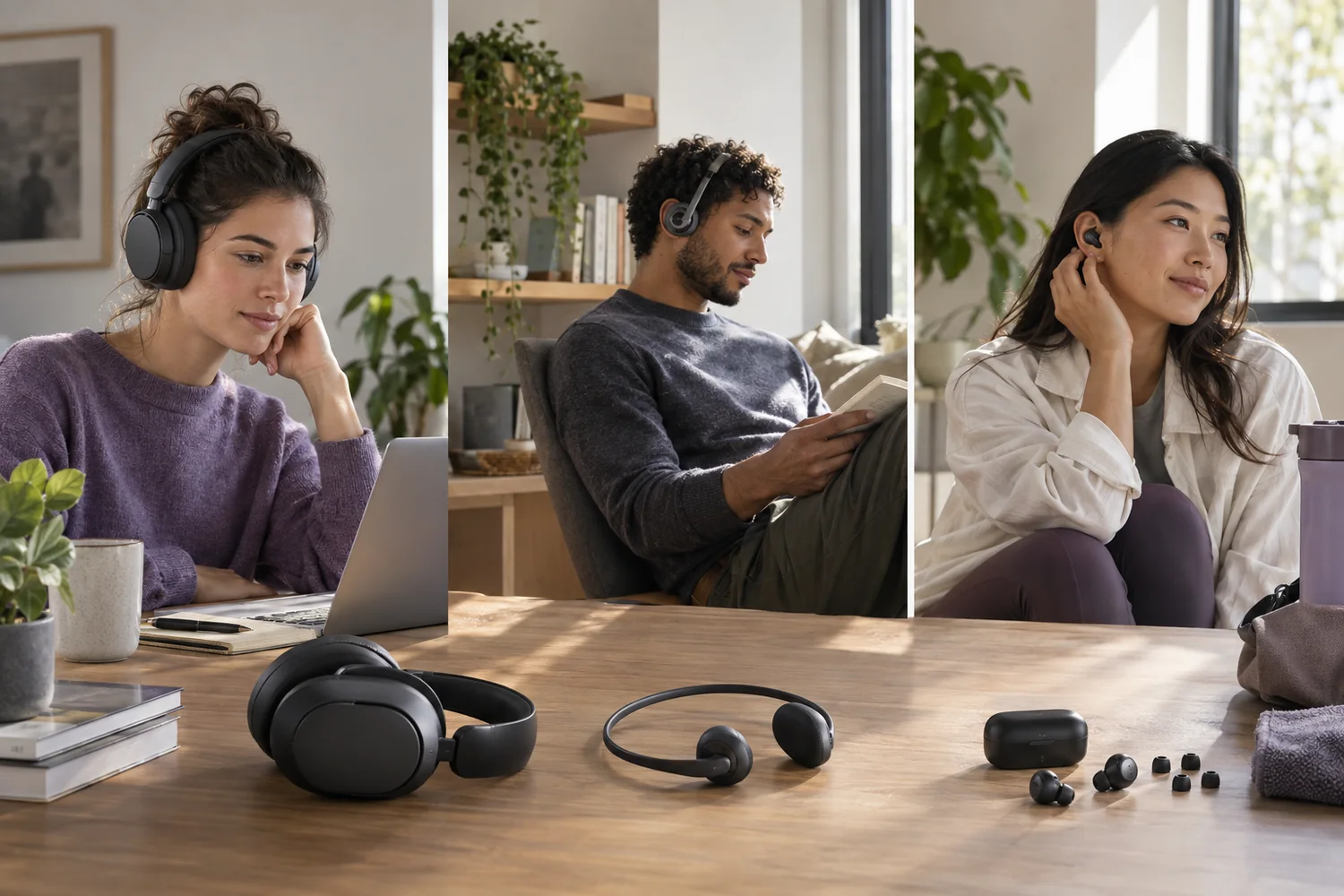
Listening during travel, joining a call and making an edit are different jobs. Start by deciding what you need to hear and what you need to keep out. A tightly sealing in-ear model can be convenient on the move, while an over-ear model may be more comfortable for a long session; fit varies from person to person.
Isolation from a physical seal and active noise cancellation are different features. Cancellation is often most noticeable with steady background noise and is not a guarantee of silence. No headphone in this fictional catalog is described as certified hearing protection.
Check the connection under use
Wireless listening can be convenient, but the available quality and delay depend on both devices and their supported modes. A microphone call may use a different wireless mode from music playback. Test the actual combination before relying on it for an edit or live performance.
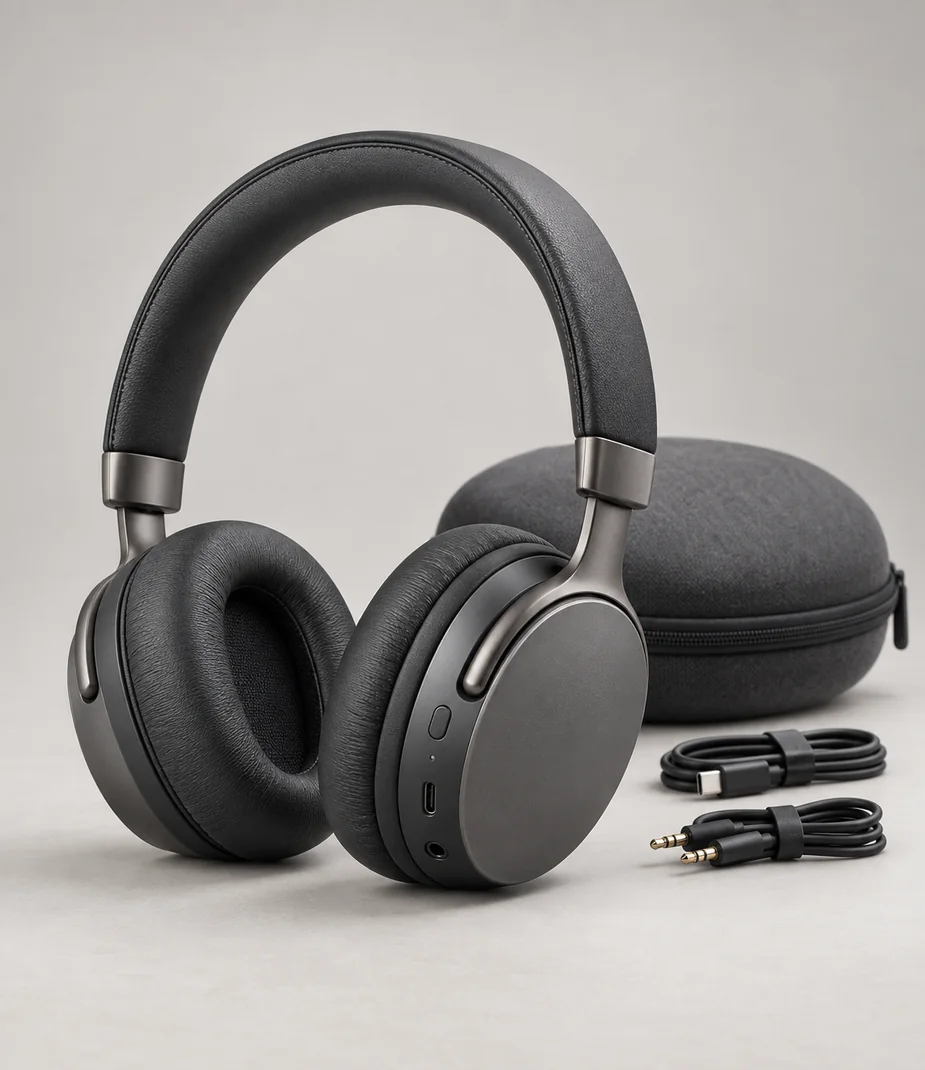
A wired input can be useful when delay matters, provided the selected model supports it. A charging connector is not automatically a wired audio input. Check whether the cable is included, whether the controls still work in wired mode and whether the headphones need battery power for the features you expect.
Read battery figures as conditions
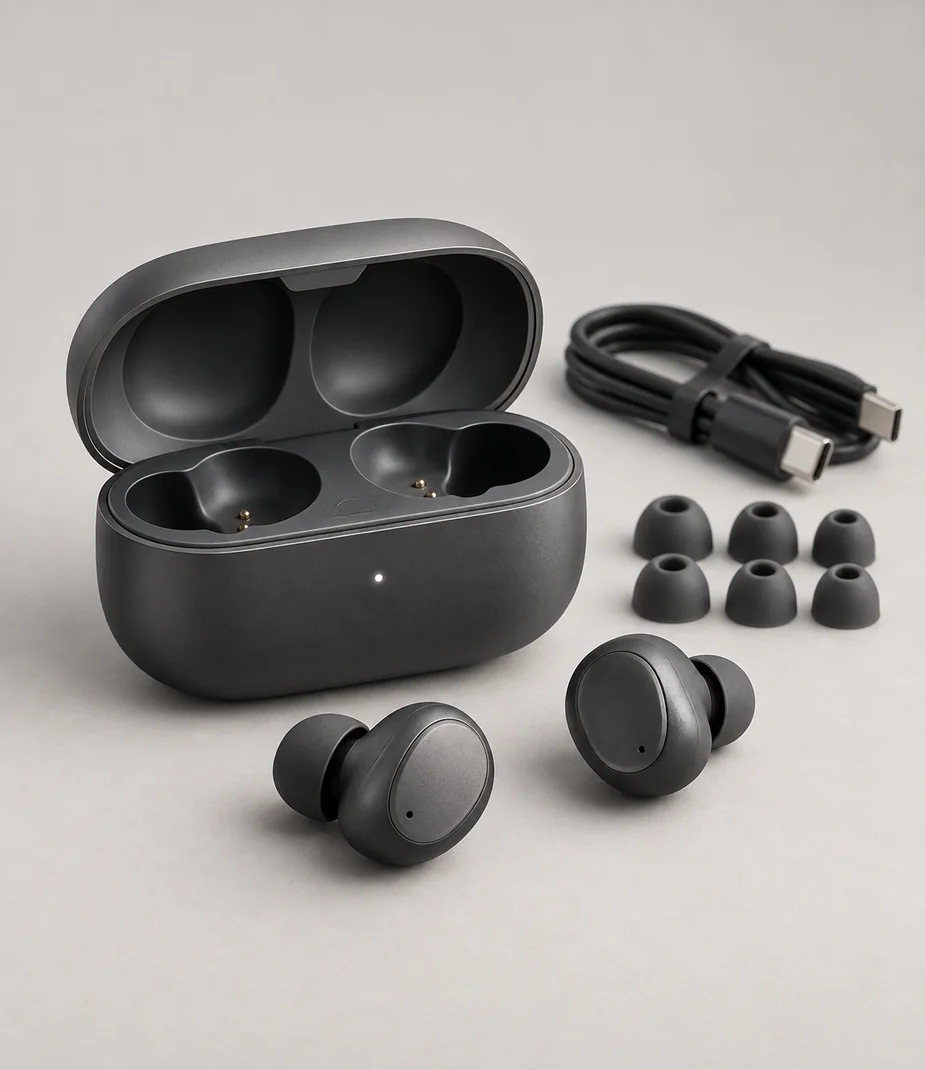
Battery duration changes with volume, wireless mode, noise cancellation and age. A charging case can extend the time between wall charges, but its combined figure is not one uninterrupted listening session. Compare the earpiece duration separately from the case total.
Plan a charging window for the way you use the kit. If the headphones cannot play while charging, a short top-up between sessions may matter more than a large total quoted under ideal conditions. Keep the correct lead with the case and avoid assuming that every phone cable is supplied.
Listen comfortably and considerately
Begin at a low volume and take regular breaks. If the environment is too loud to hear comfortably, consider moving to a quieter place rather than continuing to raise the level. Keep enough awareness for the activity and surroundings.
For shared equipment, follow the manufacturer's cleaning method for pads and tips. Do not soak electronics or use an unapproved solvent. Before returning the kit, remove saved pairing information where supported and account for tips, adapters and the case so the next setup starts with a complete set.
Before you decide
- Fit and isolation match the setting
- Microphone and playback mode tested together
- Wired operation confirmed where needed
- Earpiece duration separated from charging-case total
- Tips, cable, adapters and case checked
General planning guidance with illustrative catalog examples; use the actual manufacturer's documentation for real equipment.
Models to read alongside this guide