
Plan the flight before packing the drone
The kit, the location and the operating rules need separate checks. A compact airframe does not make every place suitable for flight.
Circuit & Field editorial desk
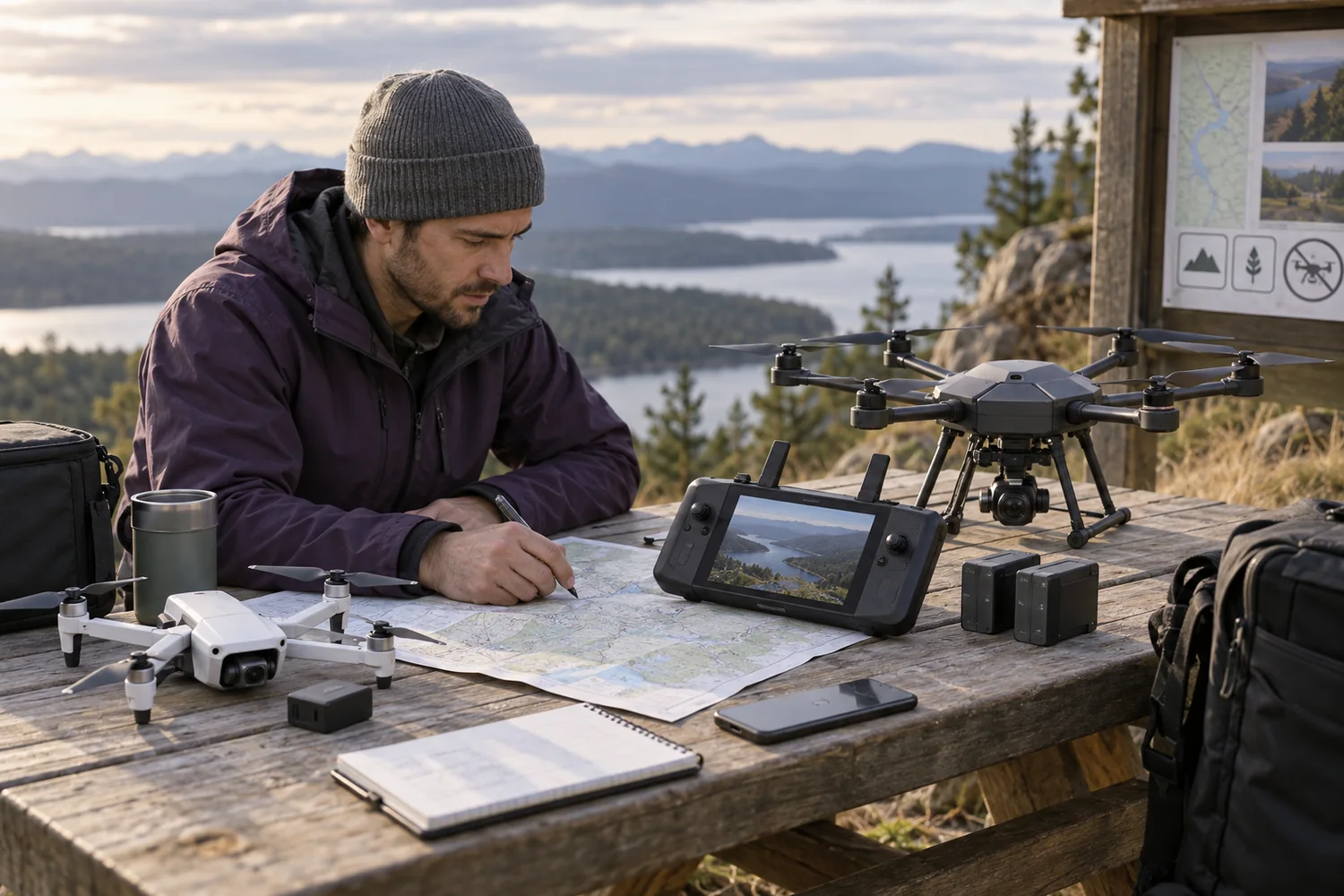
Begin with permission and purpose
Decide what you intend to record and where you would operate before comparing camera resolution. Real operations depend on local aviation rules, airspace restrictions, land access, privacy and the operator's qualifications. A product page cannot grant those permissions.
Check the current rules with the responsible authority for the actual location and date. Do not assume a smaller fictional catalog weight makes a real flight exempt from every requirement. Circuit & Field has no live airspace information and does not provide operational clearance.
Account for the complete flight kit
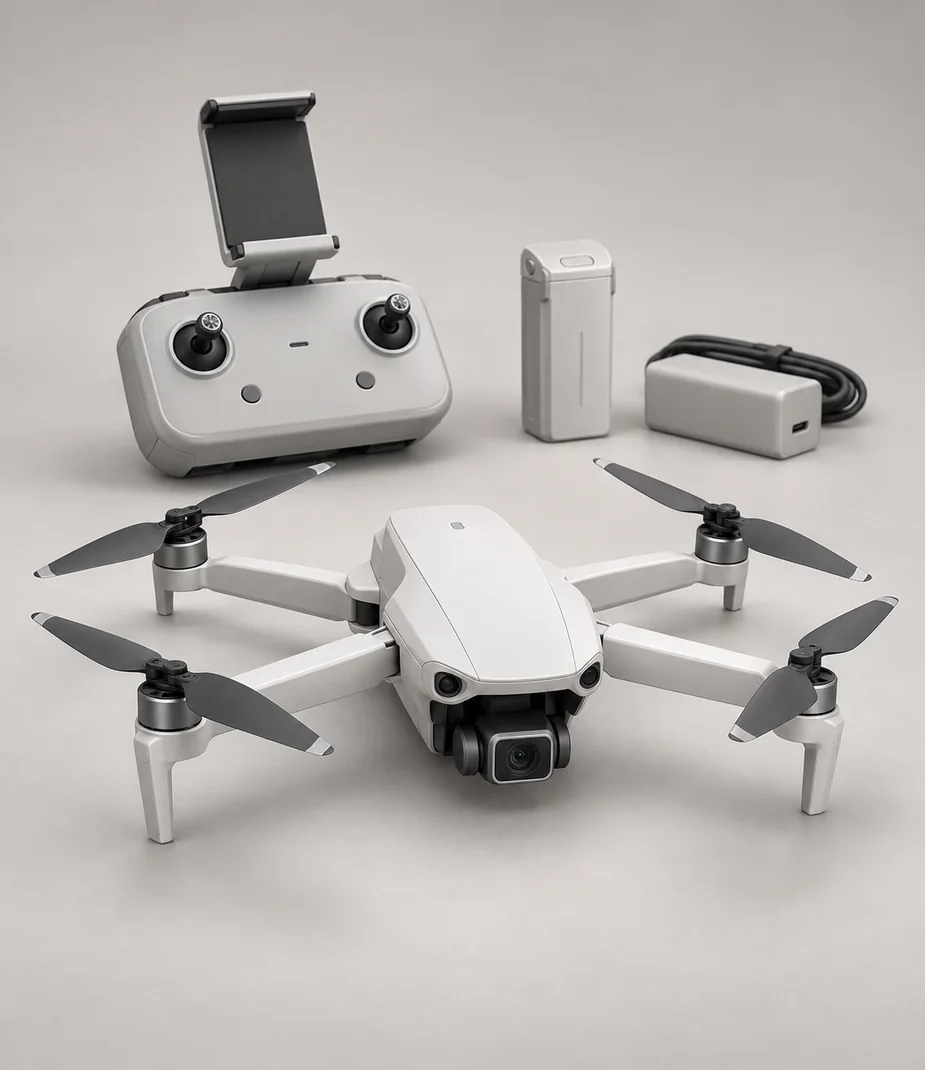
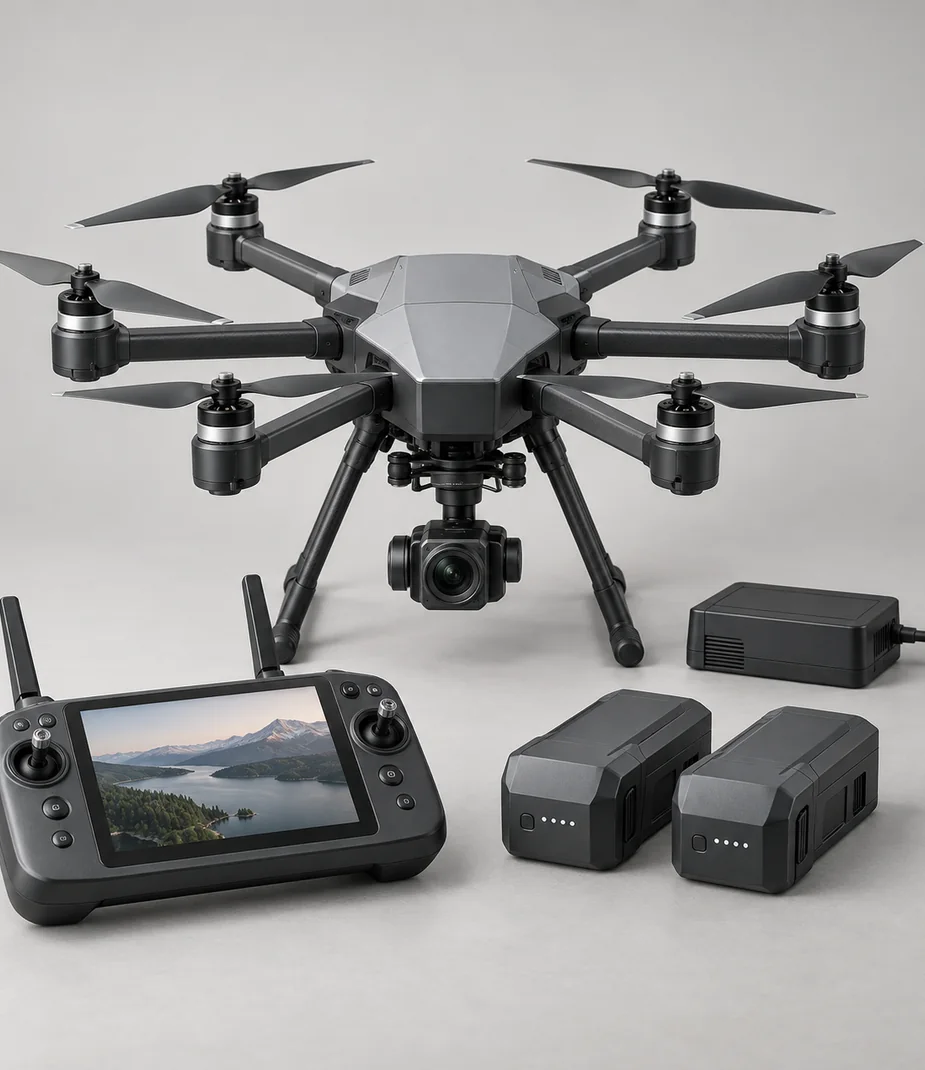
A drone, its controller and any required screen or phone form a system. Read whether the model comes with a screen controller or a phone-based controller, then verify the declared connection. A smart-looking remote in another bundle is not automatically compatible.
Count batteries and the charging method, and distinguish a single-battery kit from a multi-battery bundle. Additional batteries need secure transport and an appropriate charging plan. Follow the actual battery and carrier rules, especially when travelling; a case that protects a camera is not proof of compliant battery transport.
Treat duration as a ceiling
A quoted flight duration normally depends on test conditions. Wind, temperature, payload, battery condition and flight behaviour can reduce the usable time. Keep the reserves required by the actual operation and equipment guidance instead of planning to use the full advertised number.
Camera resolution does not describe stabilization, dynamic range or file handling on its own. Test an authorized recording, check the storage medium and verify that your editing machine can read the resulting files. A recording capability does not imply that a card or editing software is in the box.
Inspect before and after
Use the actual manufacturer's preflight procedure. Examine propellers, attachments and batteries, confirm the control connection and choose an appropriate safe operating area. Do not improvise repairs or continue using a damaged or swollen battery.
After use, follow the recommended cooling and storage procedure, note any faults and keep the matched controller with the airframe. The demonstration's supplied-items checklist helps account for the kit; it is not a flight manual, maintenance certification or substitute for trained judgement.
Before you decide
- Location, airspace, access and current rules checked
- Controller and screen requirements understood
- Battery count and transport plan verified
- Duration reserve and storage planned
- Manufacturer inspection and operating procedure followed
General planning guidance with illustrative catalog examples; use the actual manufacturer's documentation for real equipment.
Models to read alongside this guide
Kite · Larger aerial camera kits
Kite Hex 6 Survey Kit
From €59.20 / month · 12 months
€1,490.00 to buy

