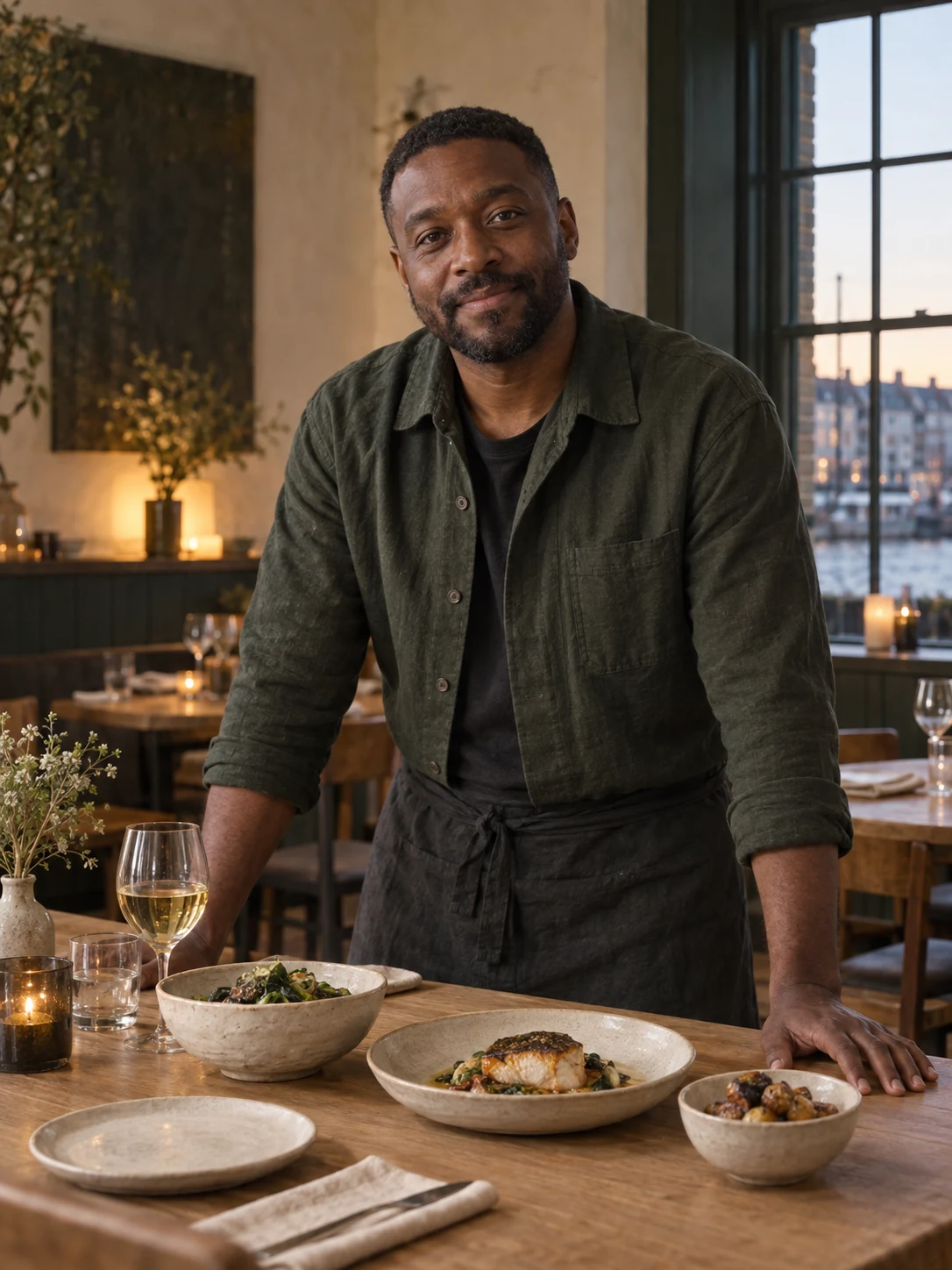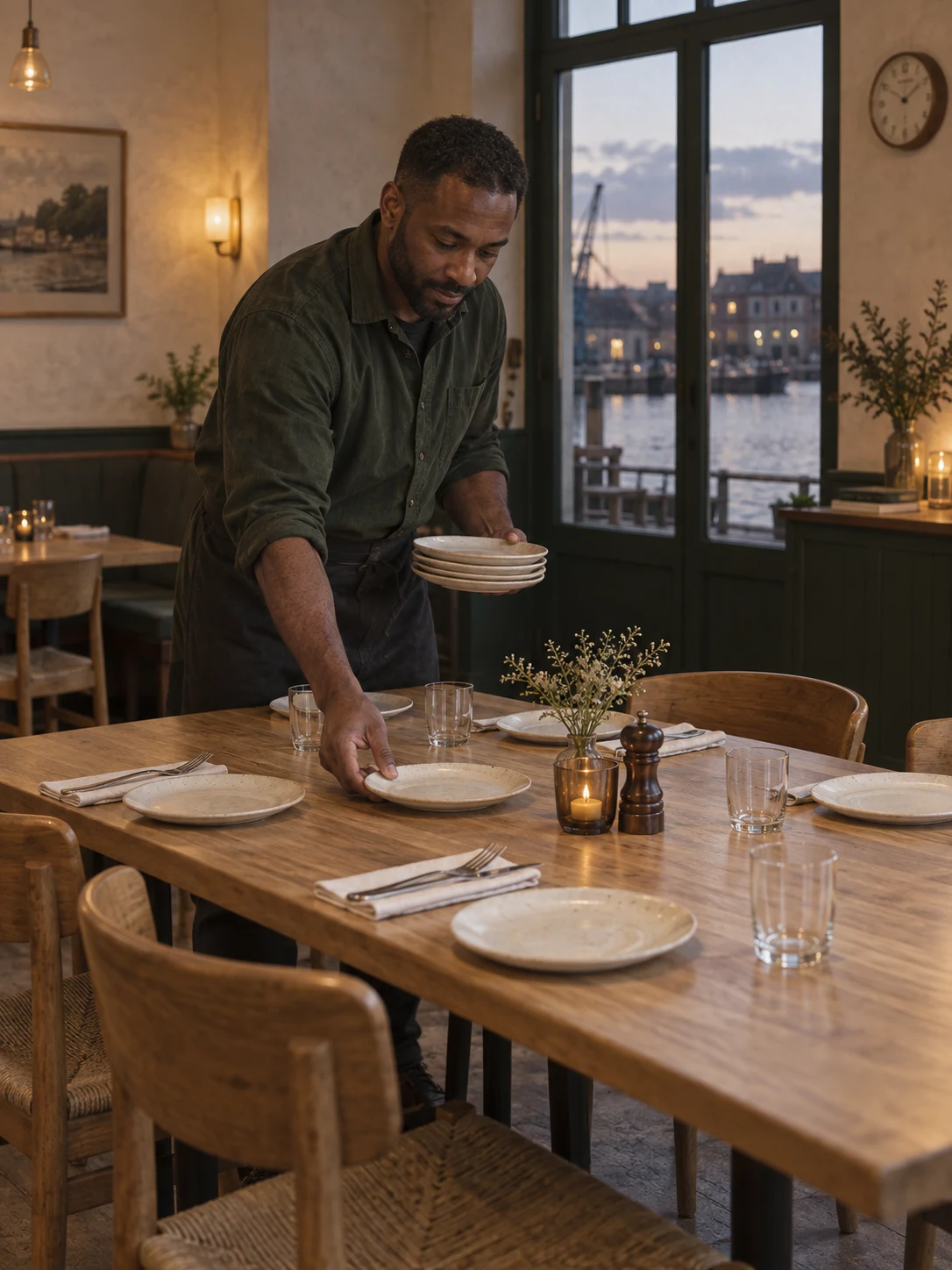
Jun’s notes for a table that can change
An imagined hosting conversation about a proposed meal, its timing and the questions still to ask.
A table often begins as an uncertain idea. Two people suggest dinner, another asks whether lunch would work, and someone else may bring a friend. Jun starts with that ordinary uncertainty rather than treating the first proposal as a finished arrangement. The useful early questions are the meal, the date and the likely party size. A local table plan can put those choices into a readable outline, while stating plainly that it is not a reservation and that nothing has been sent or held.
The meal changes the shape of the visit. Lunch gives a complete plate a ninety-minute allowance, while dinner leaves two hours for a slower sequence. Mondays are closed, and the calendar includes specific closed dates. A larger private group has its own starting point at 18:00 and three hours around the long table. Jun wants the organiser to see those differences early. It is easier to move an idea from lunch to dinner before people have built the rest of their day around it.
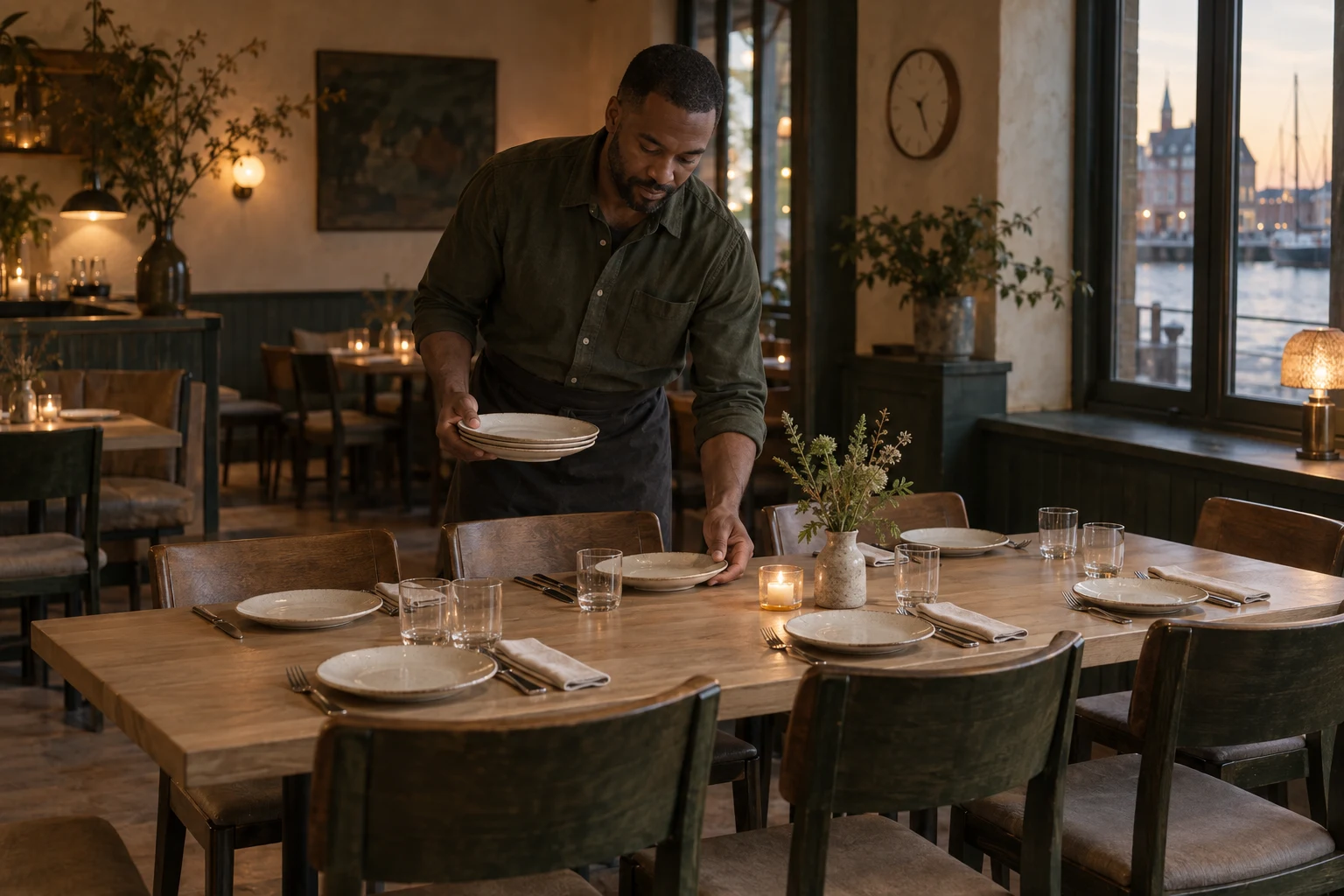
The date also belongs to the place where the meal would happen. Reed & Ember uses Europe/Amsterdam time for its planning rules, so a traveller reading from another timezone can understand the same lunch or dinner as someone nearby. Jun thinks of that as an arrival detail, much like an approach from the correct side of the quay. The plan should name its time clearly, rather than leave a person to wonder whether the selected evening refers to the restaurant or to the clock on their own device.
A useful plan should make its unfinished step visible.
Jun Calder · Original fictional dialogue
For a same-day meal, the outline asks for at least two hours before the proposed start. The final dinner seating is 20:30, leaving its full allowance before the 22:30 close; lunch ends its starts at 13:30 before a 15:00 close. Private dining needs at least seven calendar days of lead time. These limits give an organiser a useful frame for the proposal. They do not say that a table is free, that staff have agreed the arrangements or that the room has been reserved.
Party size is more than a number attached to a time. One person may want a complete bowl at the counter, a pair may share several plates, and a group may need to discuss a common beginning. Standard plans cover one to eight people; nine to sixteen belongs to private dining. Jun would not turn a larger group into several small bookings simply to make it fit the first form. The private-dining page instead sets out the longer meal and the practical questions an organiser would need to bring to a real venue.
Those questions can include access, allergies, arrival differences and whether a shared menu suits the people coming. They deserve a real conversation with someone able to act on the answers. This local preview therefore asks for no name, email address, telephone number or dietary detail. It keeps only the basic choices needed to describe the proposed meal, and it neither stores nor sends them. The result can help someone prepare, but it does not pretend that entering a note is the same as having it understood.
Plans change, and the saved outline should make that easy to recognise. When the date, meal, time or party size changes, the old result is removed until a new valid plan is prepared. A local text copy keeps the unsent status with the practical details, so it can be shared as a proposal without looking like a confirmation. Reset clears the choices and the output. The point is not to make an uncertain visit feel official; it is to make the current idea easy to read and discuss.
Jun’s final question is what remains unfinished. A visitor may now have a proposed date, meal, party size and period that fit the printed rules. A real reservation would still require a real restaurant to confirm the arrangements. Keeping that step visible leaves the organiser with a useful next conversation, rather than a false sense that the work is complete. In the meantime, the menus, room pages and FAQ give the table enough detail to think about the meal itself: what to eat, how to share it and how much time to leave.