The first hour of a group dinner
A private table needs a shared starting point and room for different choices.
Nine people do not become a coherent table simply because their chairs fit in one room. Some arrive ready to order, some need a moment to settle, and others want to understand how the food will be shared. Jun’s private-dining plan begins with those differences. The first useful piece of information is a common start, followed by a clear account of what the three-hour allowance includes.
The Reed Room plan gives a group dinner one clear beginning: 18:00, with a three-hour meal allowance. Nine to sixteen people can sit within the private-dining planning range, and the proposed date needs at least seven days of lead time. An organiser can use that frame to consider arrivals, the first plates and when the evening should finish. A local table plan remains unsent and does not reserve the room; it is a useful outline for the conversation a real venue would still need to have.
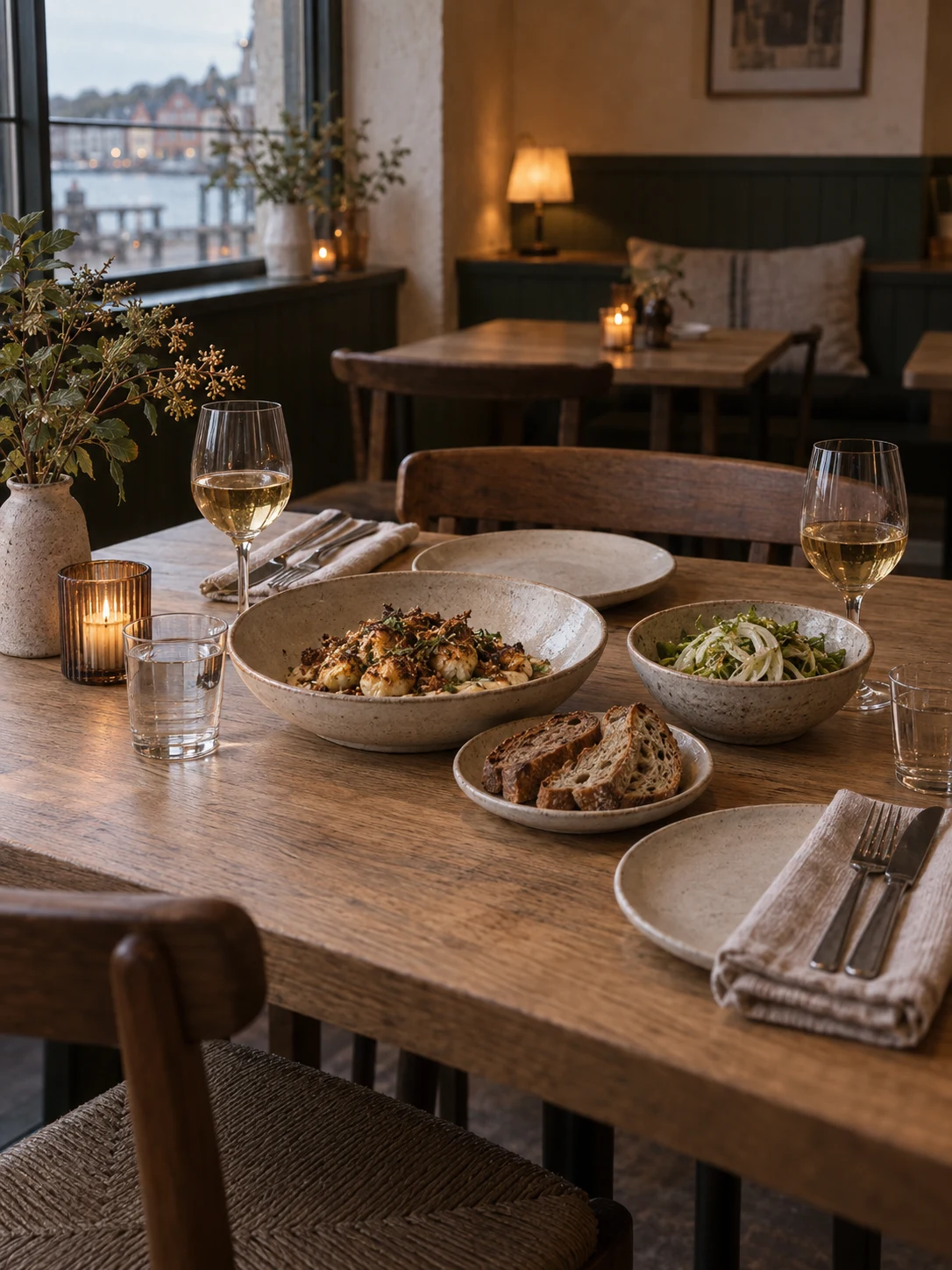
Food planning begins with portions. The two-person vegetable table is priced for two and includes two rice servings; ordinary mains are individual unless they say otherwise. A group can choose several shared selections, but it should still consider how each person will eat. Someone taking a fish main may want a different beginning from someone sharing vegetables. The complete menus let the organiser compare those choices before treating the table as one large order with identical appetites.
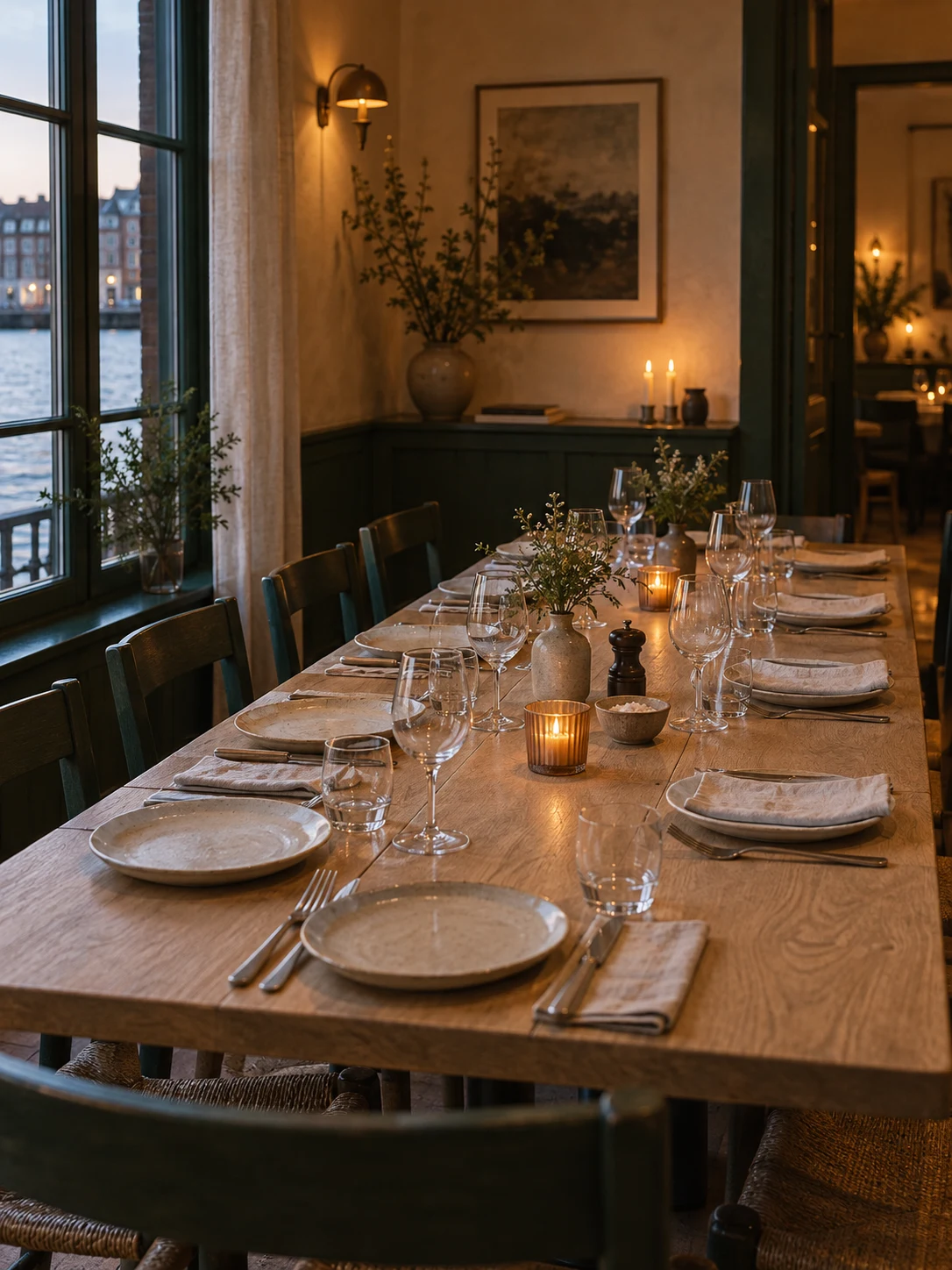
The room’s long table allows one conversation, while the connecting door and service route keep the meal linked to the rest of the restaurant. Those relationships matter more than a headline number of seats. A real organiser would also discuss access, allergies and other arrangements with the venue before confirming a visit. The room page describes the imagined layout and its limits, and the local planning form asks only for the basic meal, date, time and party size.
A good opening hour leaves the party with fewer uncertainties. Everyone knows the intended meal, the period set aside and whether a plate is shared. There is then room for a slower beginning: water, a few small plates and a conversation that does not have to compete with a stack of unexplained choices. That is the purpose of the planning document, even while every booking remains explicitly unsent.