Three kinds of sharpness
Cucumber, carrot and radish should not become the same pickle.
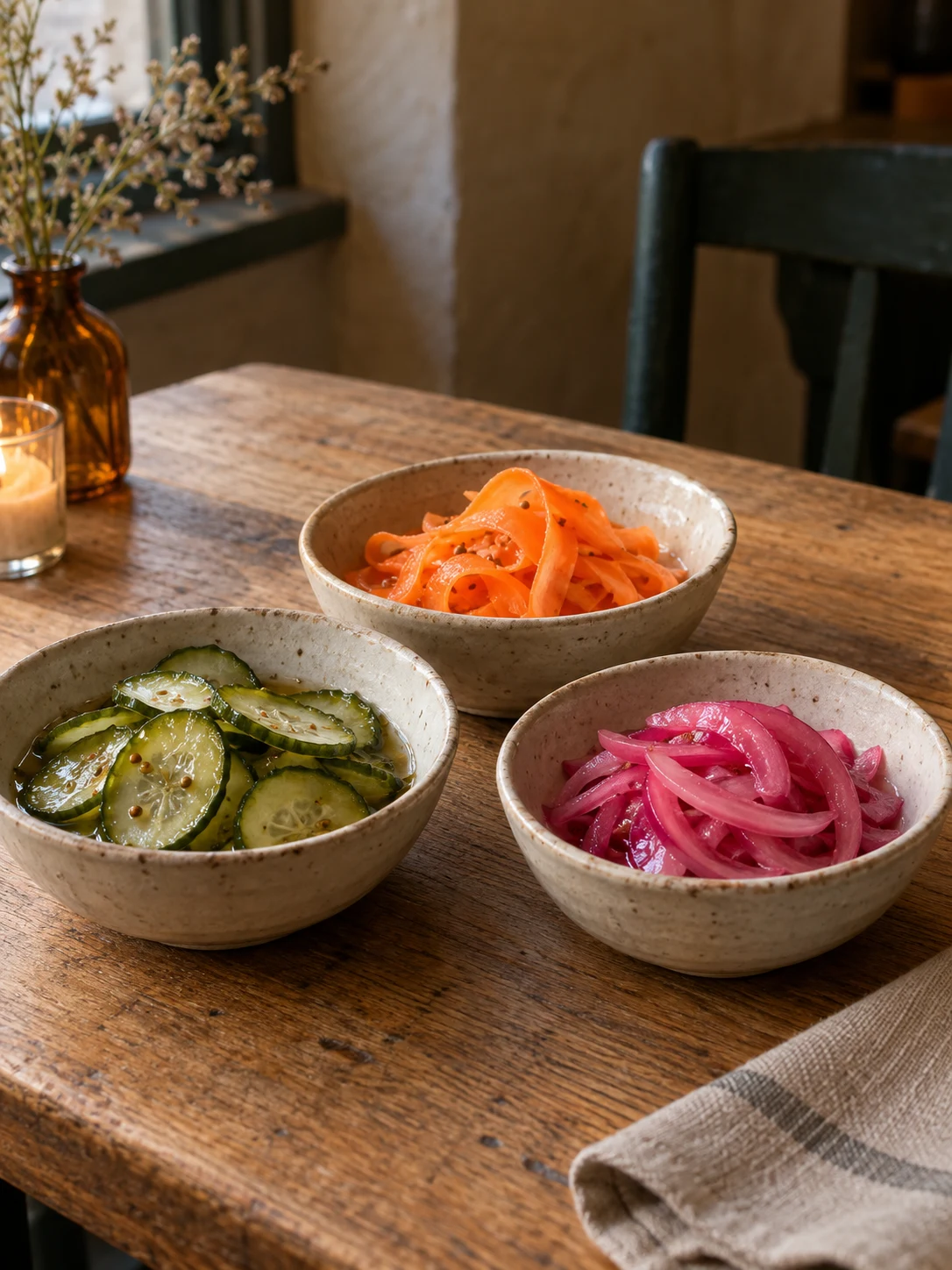
The three-pickle side begins with three cuts. Cucumber is sliced thin enough to bend, carrot retains a firmer piece, and radish keeps some of its rounded bite. They share rice vinegar, sugar and salt in the example recipe, but they do not share the same texture. Serving them together is useful only if the diner can still tell them apart. A uniform pile of acid would add intensity without adding much interest.
These are quick pickles in the menu’s language, not a claim about long preservation. The story does not give a storage life or imply that a jar on a shelf is safe indefinitely. Its subject is the role at the table: a cool mouthful beside warm rice, a crisp interruption after soft braised meat, or a sharp note between richer shared plates. The portion is small because the pickle is a companion, not another main.
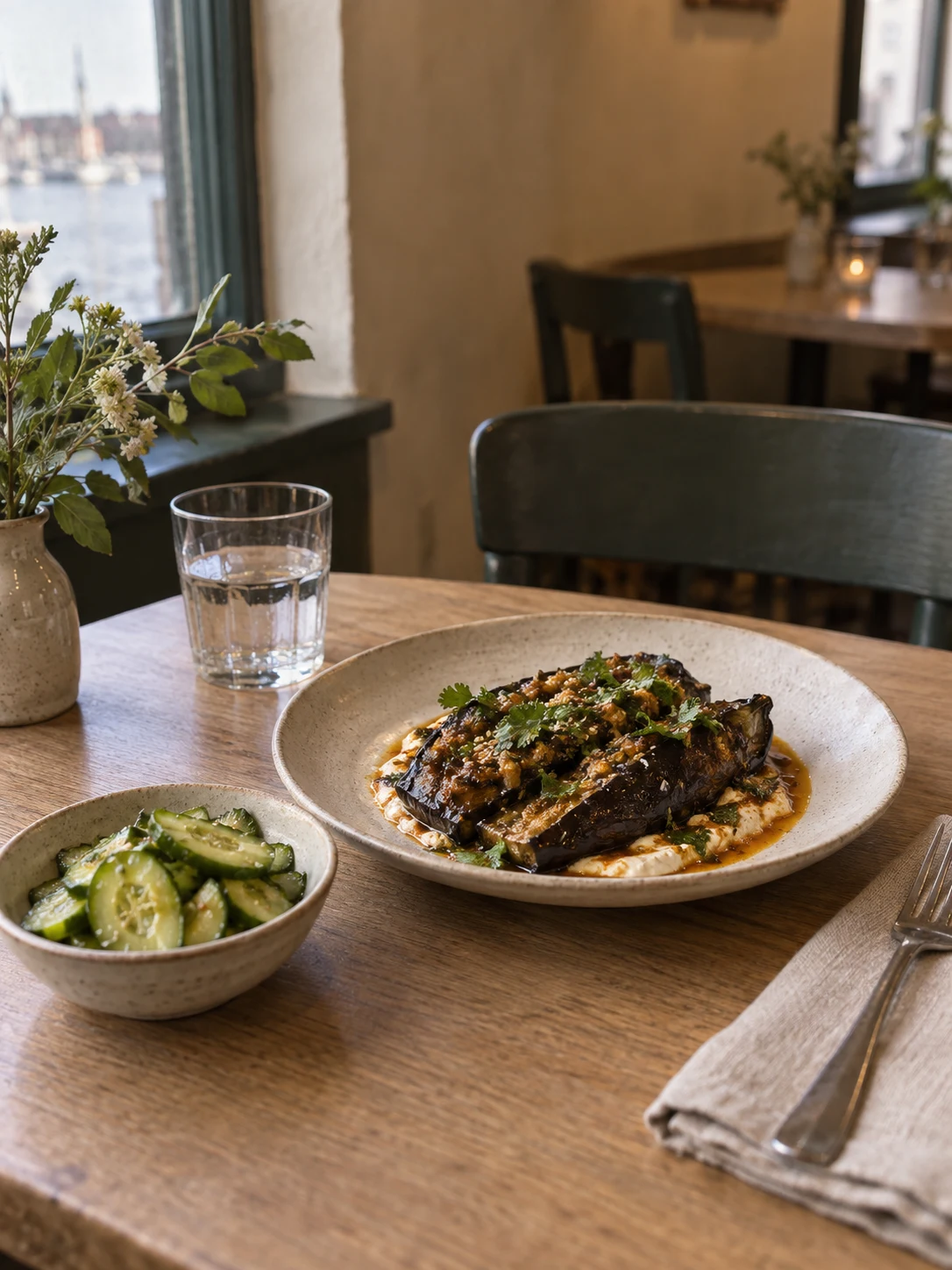
The lunch cucumber is a related but separate side, with a gentler, narrower role. It works especially well beside the ginger chicken bowl, where the main already brings a warm soy glaze. At dinner, the three-pickle plate can sit in the middle so different people can choose their preferred vegetable. There is no need to empty it at once. A small sharp bite halfway through a soft braise can be more welcome than an entire pickle course before the main.
The important contrast is not only sourness. A thin cucumber slice feels cool and flexible, a carrot piece asks for a firmer bite, and radish keeps a peppery edge beneath its dressing. Those differences make a small side worth sharing. The rice vinegar in the listed recipes is unsulphited, while the lunch white-bean salad and dinner tomato-and-plum salad use a separately declared wine vinegar. Anyone comparing ingredients should read the exact menu entry and the shared-kitchen note, rather than treating every sharp dressing as the same thing.