Rice is part of the dish
A plain bowl has a job beyond making a plate look complete.
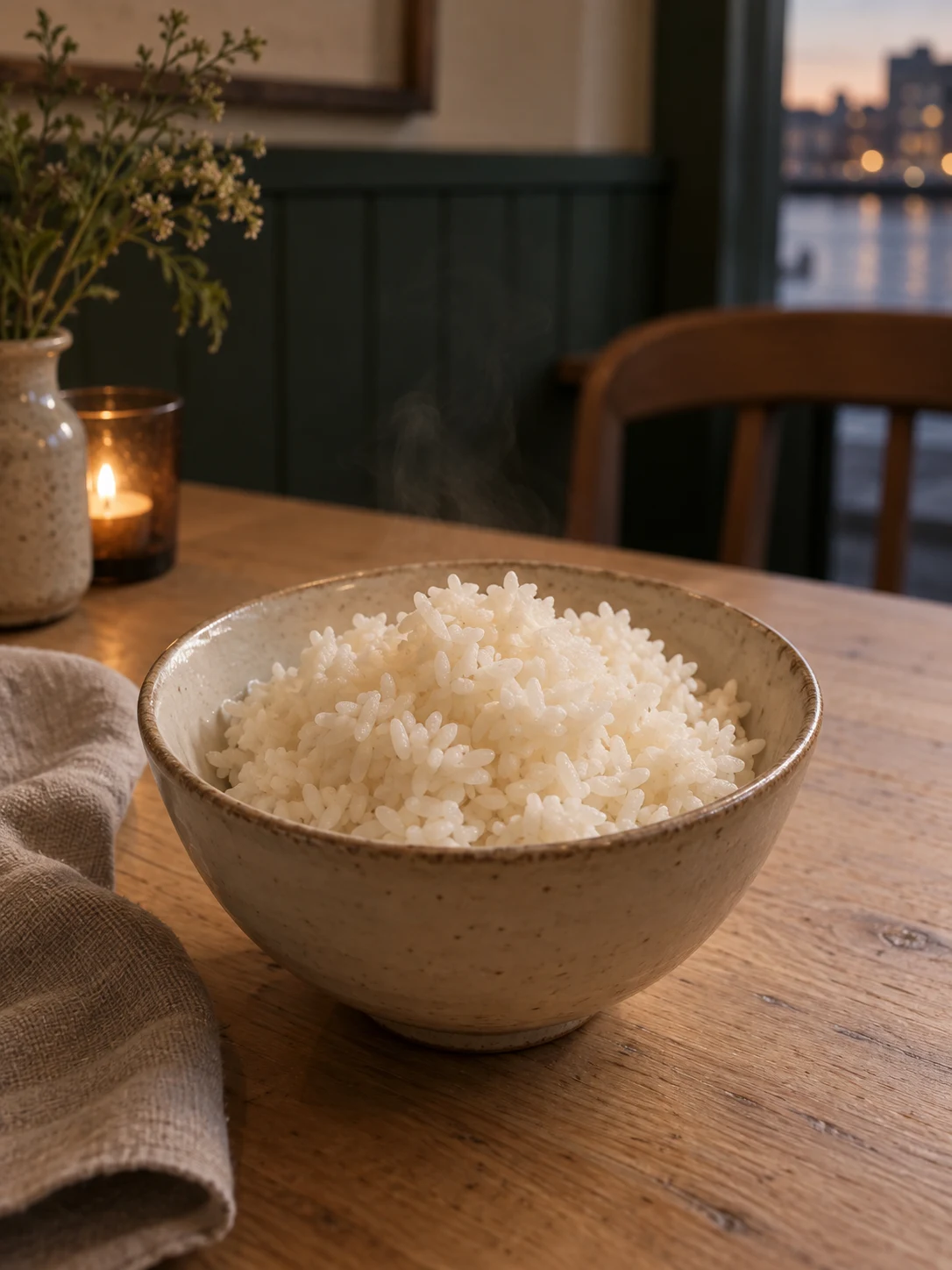
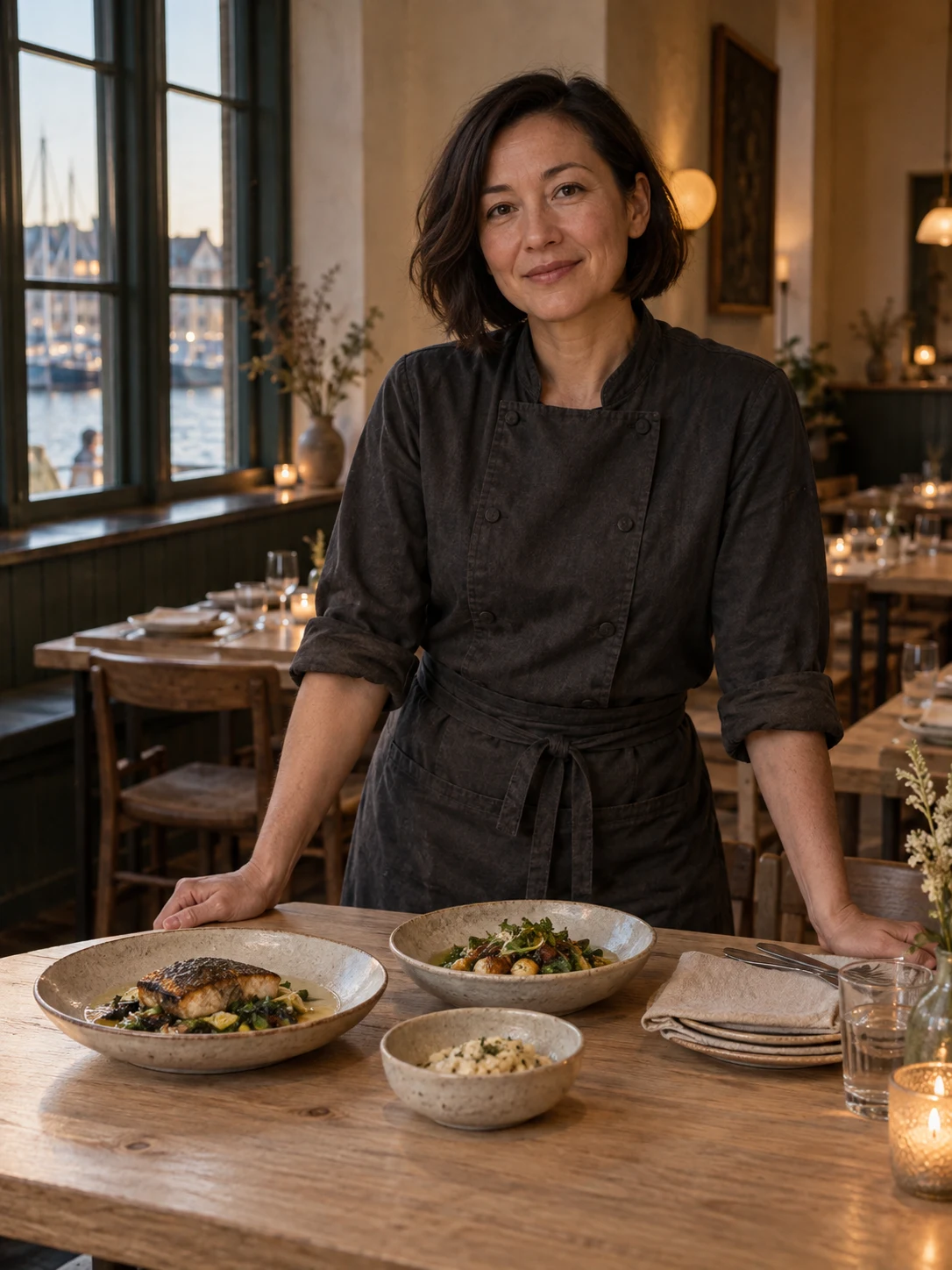
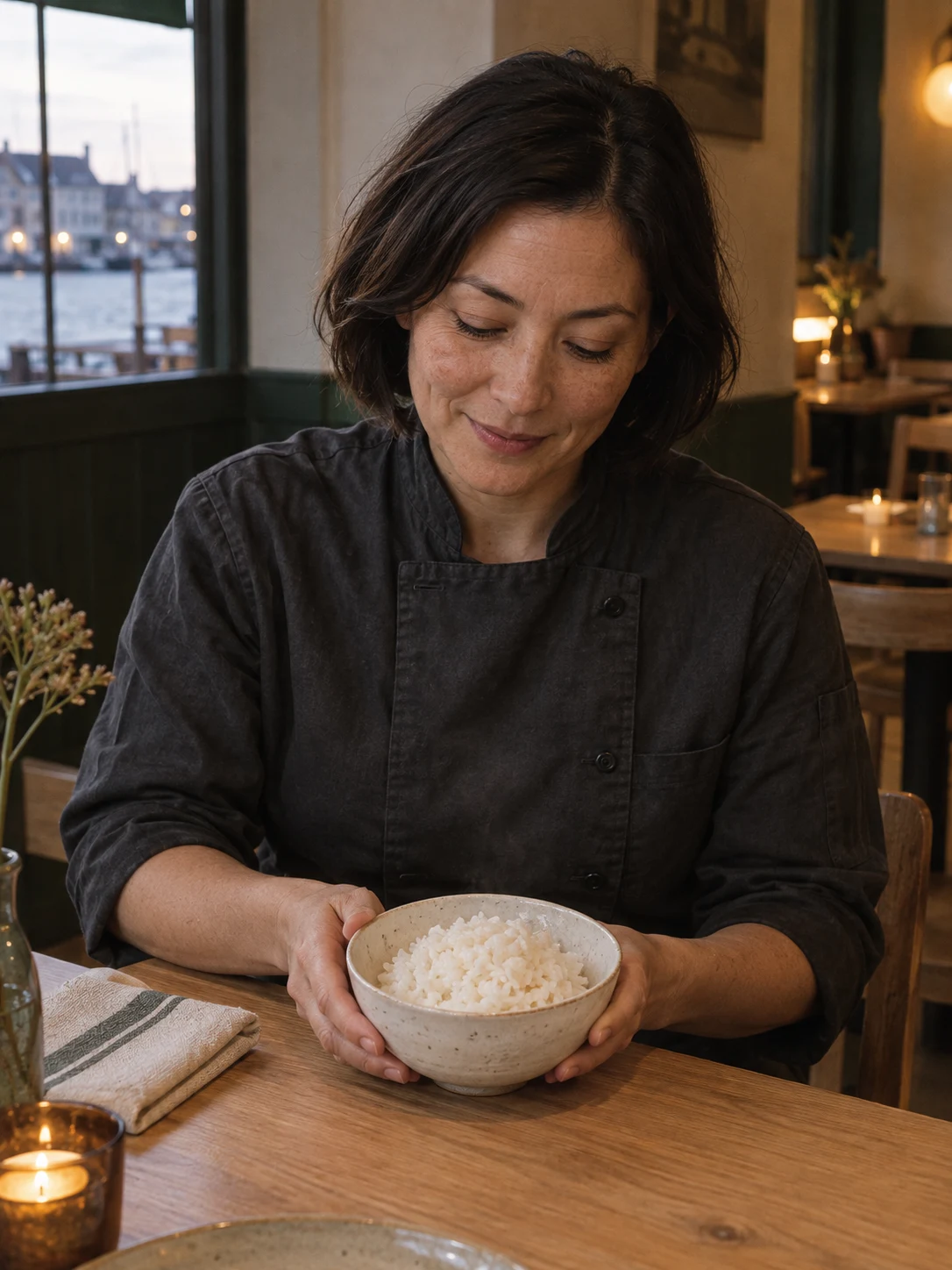
A bowl of rice can be so familiar that a menu treats it as punctuation. At Reed & Ember it is a measured part of the composition. The plain rice side is a defined cooked portion, and a main that includes rice says so in its serving. That distinction prevents a guest from ordering an unnecessary extra and prevents a photograph of a generous table from silently changing the menu’s promise.
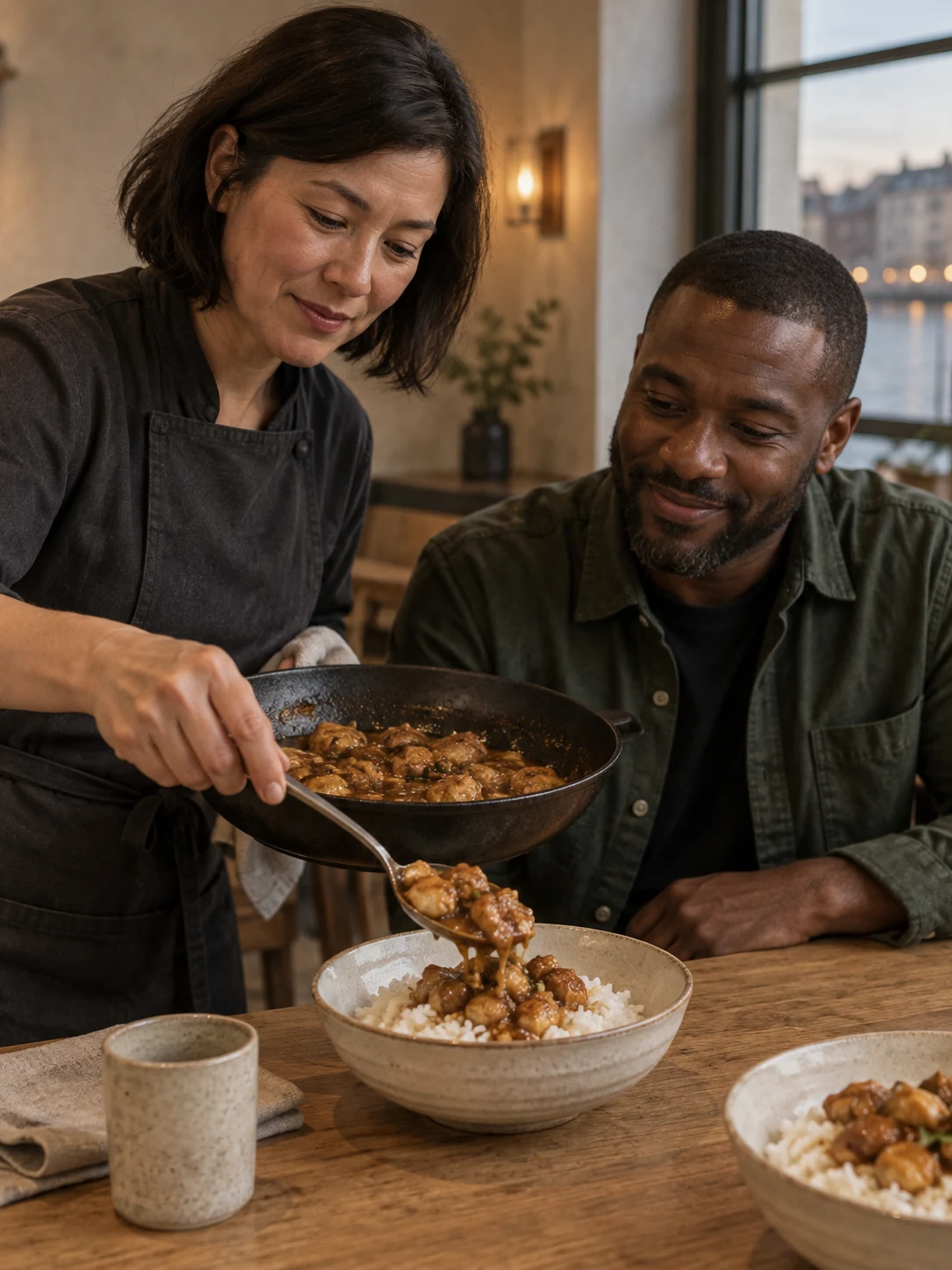
The rice should remain recognisable under its sauce. Ginger chicken brings its own glaze; tofu arrives with a peppery pan sauce; trout carries lemon and dill. Those are three different meals even when their warm base is shared. The kitchen notes keep dressing quantities with the main so the bowl does not become a pool of several competing liquids. Pickles stay separate until the diner decides how much sharpness belongs in the next bite.
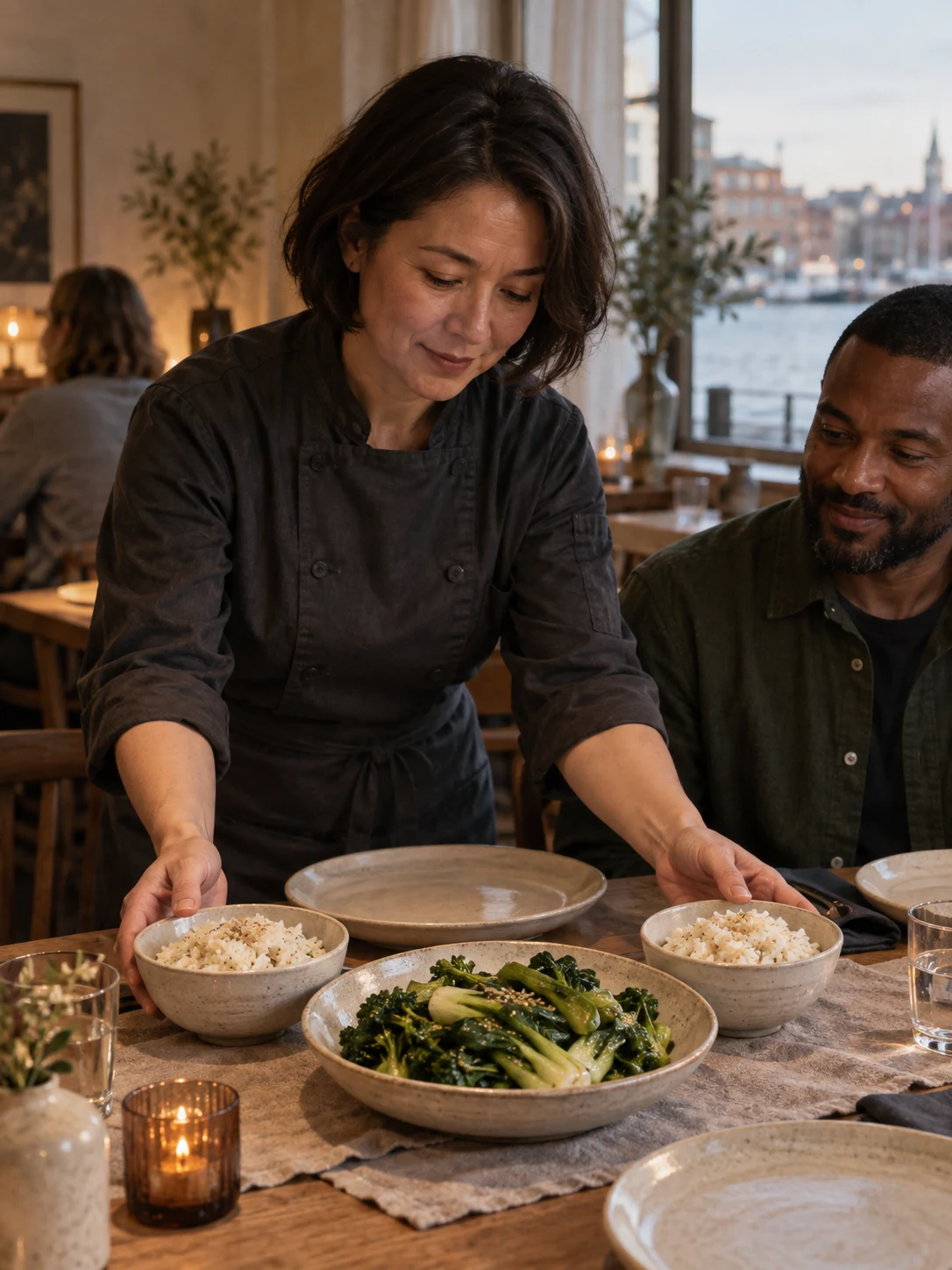
Our rice story also explains the difference between a main bowl and the small side. The useful questions are straightforward: how much is included, what sits on it, and whether another person can share the complete selection. The two-person vegetable table includes two rice portions, while the mussel pot leaves bread as a separate choice. Reading those details first gives the table a better starting point than ordering another bowl simply because rice appears in several appealing dishes.
A short lunch benefits from that clarity. Someone choosing one bowl can settle on a complete meal, while a slower dinner can add a plain side deliberately. Rice also gives the diner control over a stronger sauce: a little more in one bite, a little less in the next. The most supportive ingredient often asks for the least attention. Its warmth, texture and measured serving become noticeable through how comfortably the rest of the meal comes together.