Start with road, ocean or air, then review the handling and receiving questions that make the scope specific. Each service below has a real local destination.
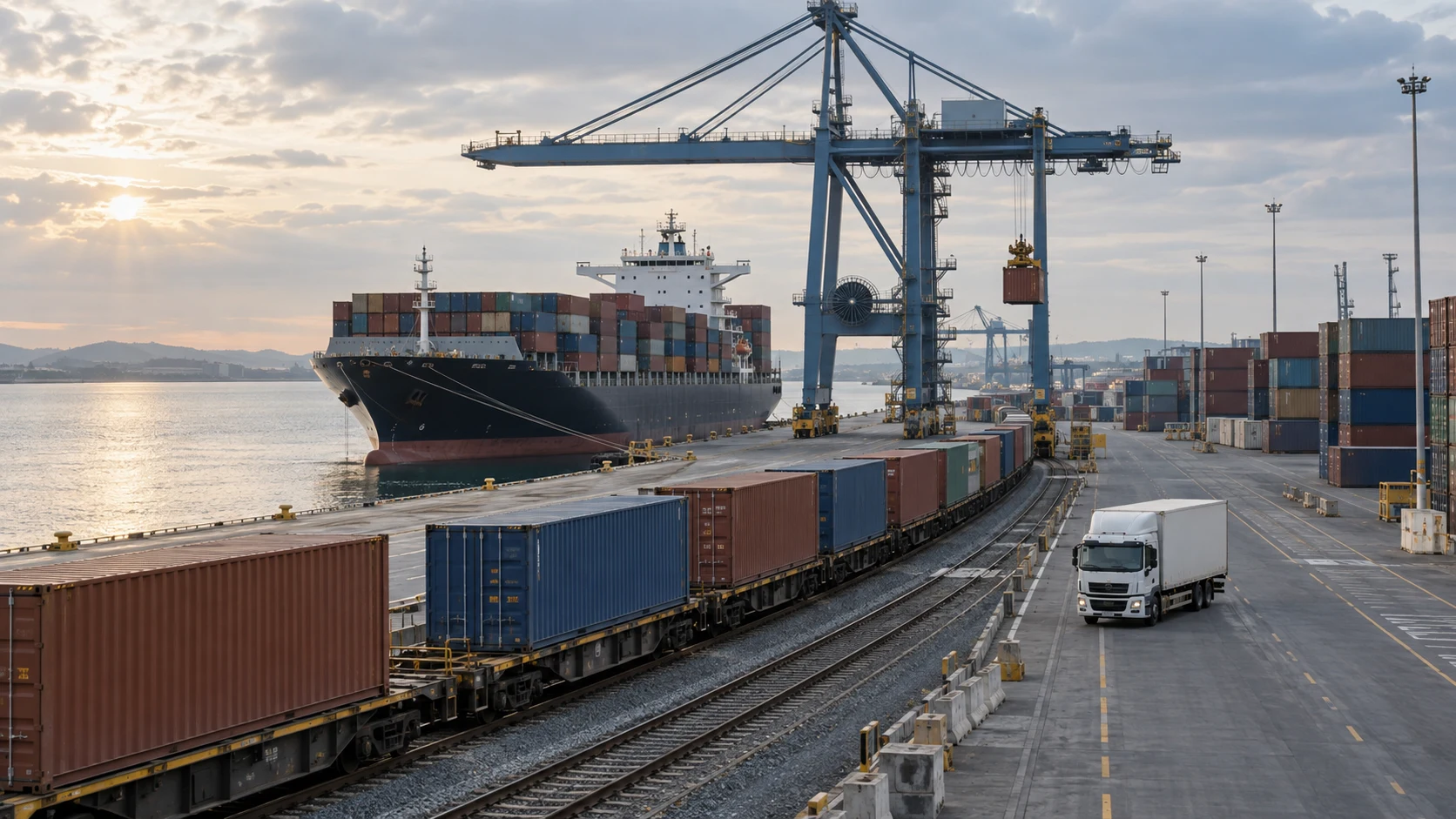
Container terminal with a cargo vessel, cranes, freight train and truck.
Road transport
A delivery slot is part of the route.
Plan regional cargo around the space and people needed at both ends. Packed dimensions, access restrictions and unloading arrangements matter as much as the distance between cities.
Container terminal with a cargo vessel, cranes, freight train and truck.
Ocean freight
Time the handovers around the sailing.
Sea freight begins before a container reaches the quay. Establish when goods are packed, who can release the documents and what the receiving team needs after arrival. A vessel window is one part of that plan.
Container terminal with a cargo vessel, cranes, freight train and truck.
Air freight
Measure the packed shipment before the clock starts.
Air cargo planning needs an accurate packed profile and an early suitability review. The lightest shipment can occupy the most space; a ready carton can still require information before it is accepted.
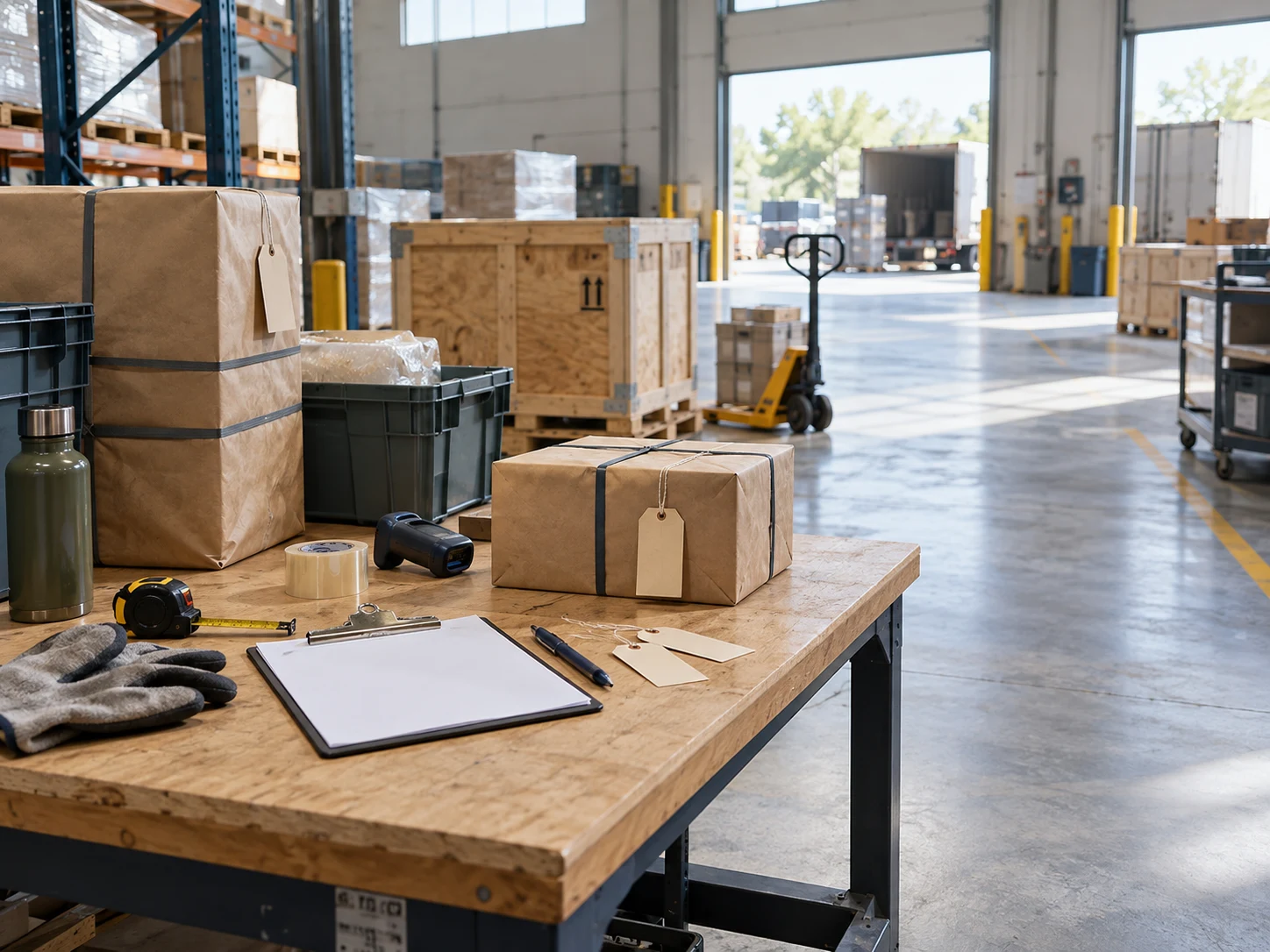
Receiving workspace with packed boxes, handling tools and a clipboard.
Relocation projects
Know which room receives each piece.
A relocation brief starts with an inventory that means something at the receiving end. Room, floor or department references can be more useful than a long list of ungrouped cartons. The fictional planning exercise records what must be available first and what can wait in temporary storage.
Receiving workspace with packed boxes, handling tools and a clipboard.
Sport and team equipment
Return transport belongs in the outward plan.
Equipment for a sporting event is needed in a particular order. Separate training essentials, competition equipment and supporting materials in the inventory. The useful question is which package must be accessible first, not simply how many cases travel.
Receiving workspace with packed boxes, handling tools and a clipboard.
Art and cultural collections
Condition information travels with the object.
The cultural-collection exercise uses fictional objects and makes the condition record central to the enquiry. Dimensions describe the packed piece, while unpacking responsibility and approved handling instructions remain distinct questions. This demo does not prescribe conservation or packing treatment.
Receiving workspace with packed boxes, handling tools and a clipboard.
Fairs and exhibitions
Work backwards from the stand opening.
An exhibition load can arrive at the venue and still be unavailable to the installation team. Plan the gate slot, unloading, movement to the stand and build sequence as separate handovers. The case example uses a fictional display system and does not imply a real venue contract.
Receiving workspace with packed boxes, handling tools and a clipboard.
Live-event logistics
The last metre can decide the show call.
The event exercise distinguishes rigging preparation, sound equipment and presentation materials without claiming to move a real production. Each group needs a receiving order and an accountable handover. A delivery deadline becomes useful only when the crew and access window are defined.
Receiving workspace with packed boxes, handling tools and a clipboard.
Packaged ambient food
Trace the batch through the handover.
This example concerns sealed, shelf-stable packaged goods described by a shipper as suitable for ambient transport. It does not establish food compliance, temperature suitability or a licensed storage operation. Refrigerated, frozen and otherwise controlled cargo require specialist review and no automated estimate.
If a site window, object condition or handling requirement defines the load, begin with a project brief. A route estimate is useful only after its assumptions are clear.