A spring table with space between
Leaves, clear broth and a warm main make a season through contrast.
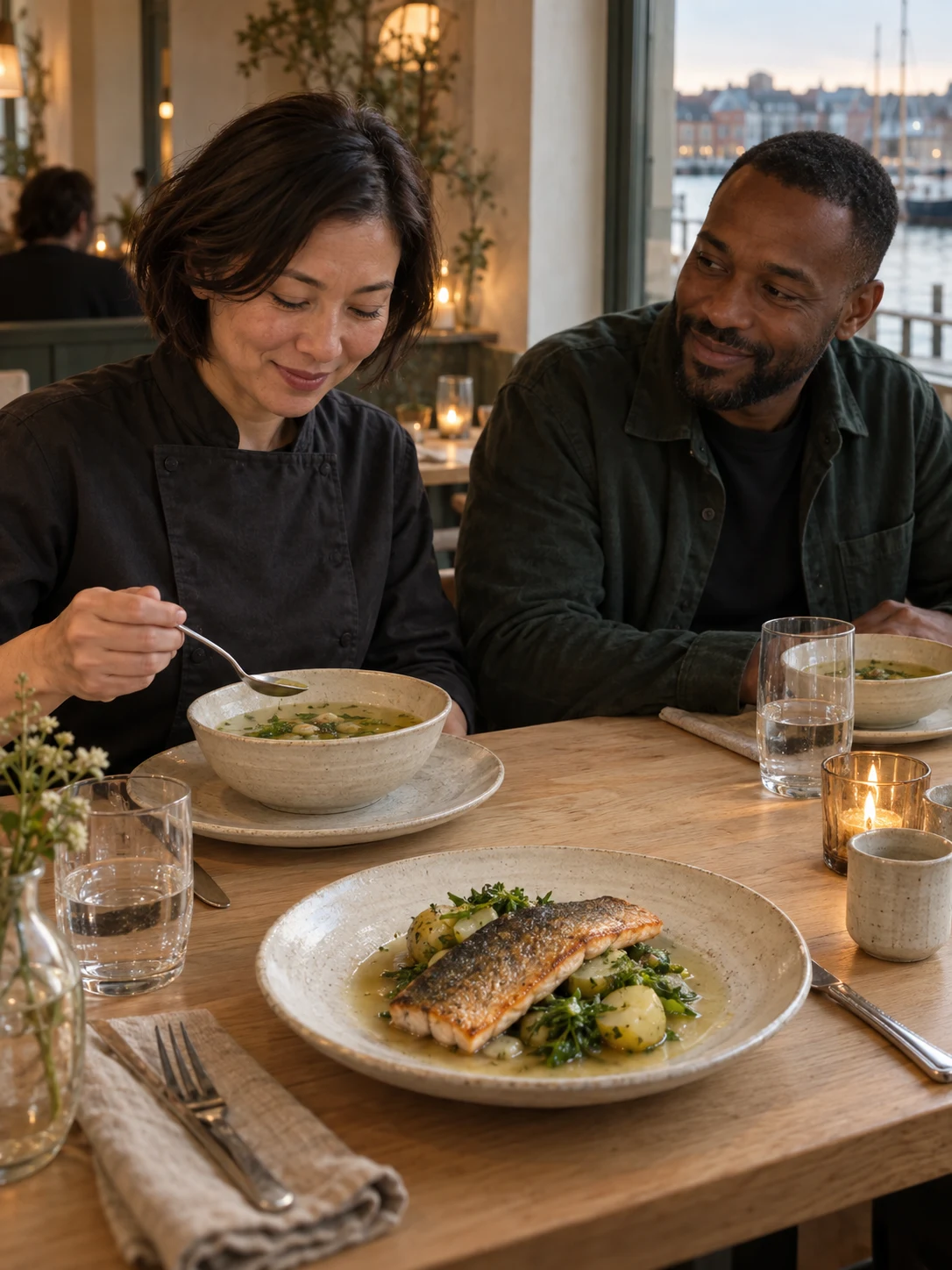
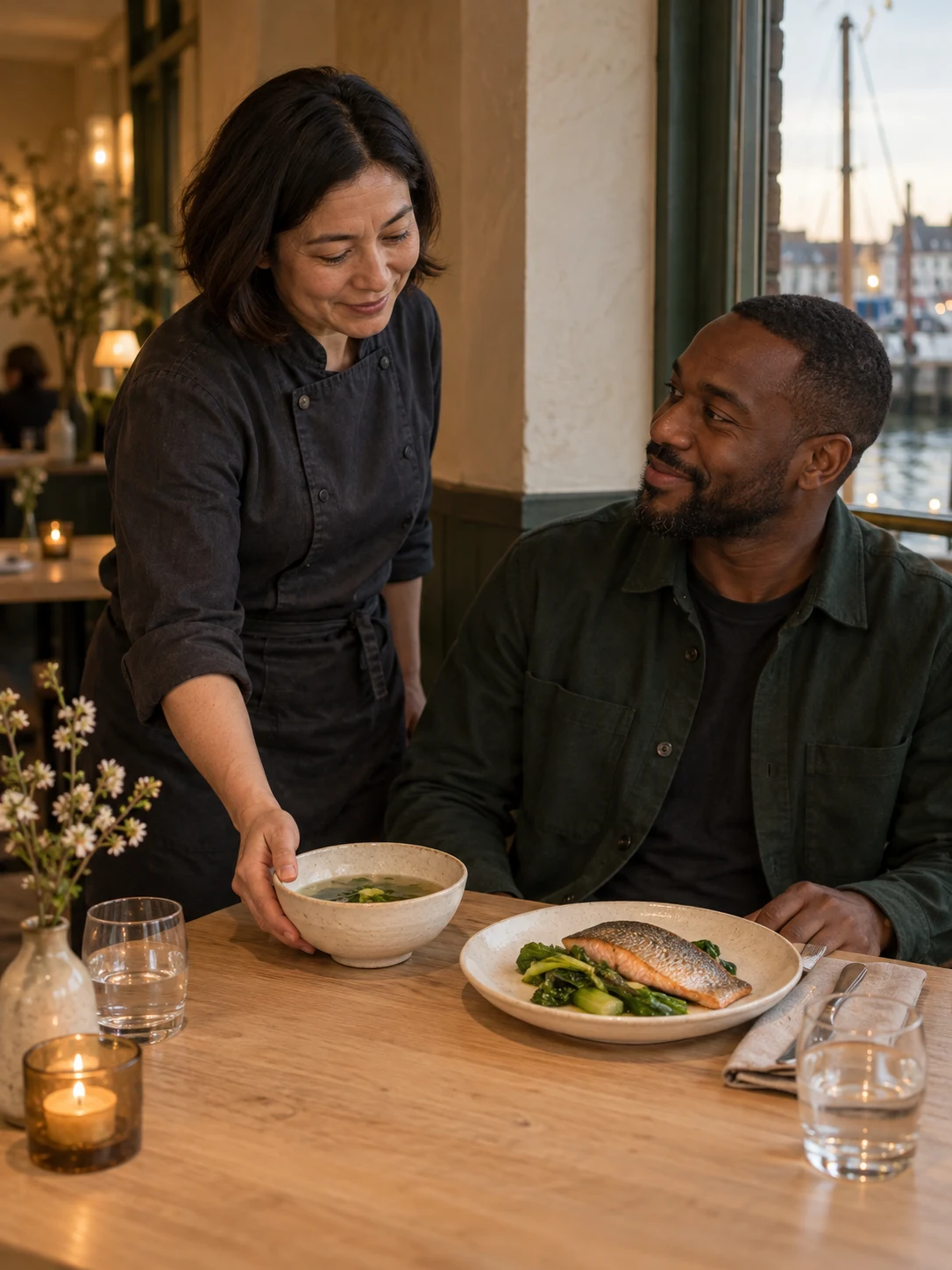
The spring table begins with space between strong flavours. A clear kombu broth gives warmth; a bright salad or quick pickle provides texture; a warm fish or vegetable main supplies the centre. The point is not to make every plate pale or small. It is to let the different temperatures and textures remain audible through the meal. The menu offers several routes through that idea, without requiring the whole table to choose an identical sequence.
A light-looking plate is not necessarily a complete meal, and a pale sauce is not necessarily dairy-free. The trout with lemon butter contains milk as well as fish, while the lunch trout uses olive oil and a different composition. Both can sit within the same seasonal discussion, but the record must identify which is meant. The plan chooses the dinner fillet explicitly and offers the aubergine main as a separately described alternative.
The room contributes its own contrast. The front room gives the table the imagined daylight of Lantern Walk, while the quieter Reed Room suits a single group with a longer plan. Those are spatial descriptions rather than guaranteed seating requests. The regular preview accepts parties up to eight; the private flow begins at nine and applies its separate lead time. A seasonal article does not turn either route into a real reservation.
The useful seasonal detail is a relationship: a warm fish plate beside a cool pickle, a clear broth before soft aubergine, a pot of tea after a small dessert. A season can shape those choices without becoming a strict rule about what every diner should enjoy. The spring plan gathers the relevant dishes and room information in one place, then leaves the final combination open. It is a starting point for an evening with enough room between its parts.