

Ren Ito on Making a Small Object Hold Its Own Weight
An original fictional conversation
Ren Ito’s current project begins with two modest forms leaning towards one another on a worktable. Neither is impressive in isolation; the interest lies in how little support their meeting appears to provide. In this conversation, Ito discusses the move from folded card to a heavier prototype, a trial that failed too convincingly and the value of leaving a working object open to revision.
Bea Harker asks: What made this pair of forms worth pursuing? Ren Ito replies: I was moving scraps of card out of the way and noticed that two folded pieces could share an awkward angle. Each looked unstable, but together they had a very definite stance. I did not want to turn that into a trick in which the viewer guesses where the hidden fixing is. I wanted the meeting to remain visible. My first decision was to keep the contact small enough to notice and large enough to understand. That meant making several blunt, rather unattractive versions before I could judge anything about the silhouette.
A prototype can become too convincing before it has answered the question that made it necessary.
Ren Ito
Bea asks: How did the materials change that first arrangement? Ren replies: Card is wonderfully forgiving about a lean. It has almost no weight, and a fold can do work that a solid edge cannot. I cut thicker paper versions and then tried a small plaster piece, expecting mass to give the arrangement more conviction. Instead, the cast made it look settled. The weight seemed inevitable, as if the two parts had always belonged together. I had also rounded the meeting point while finishing the surface. That removed the slight uncertainty which had interested me. The material was not wrong, but I had asked it to resolve the question too quickly.
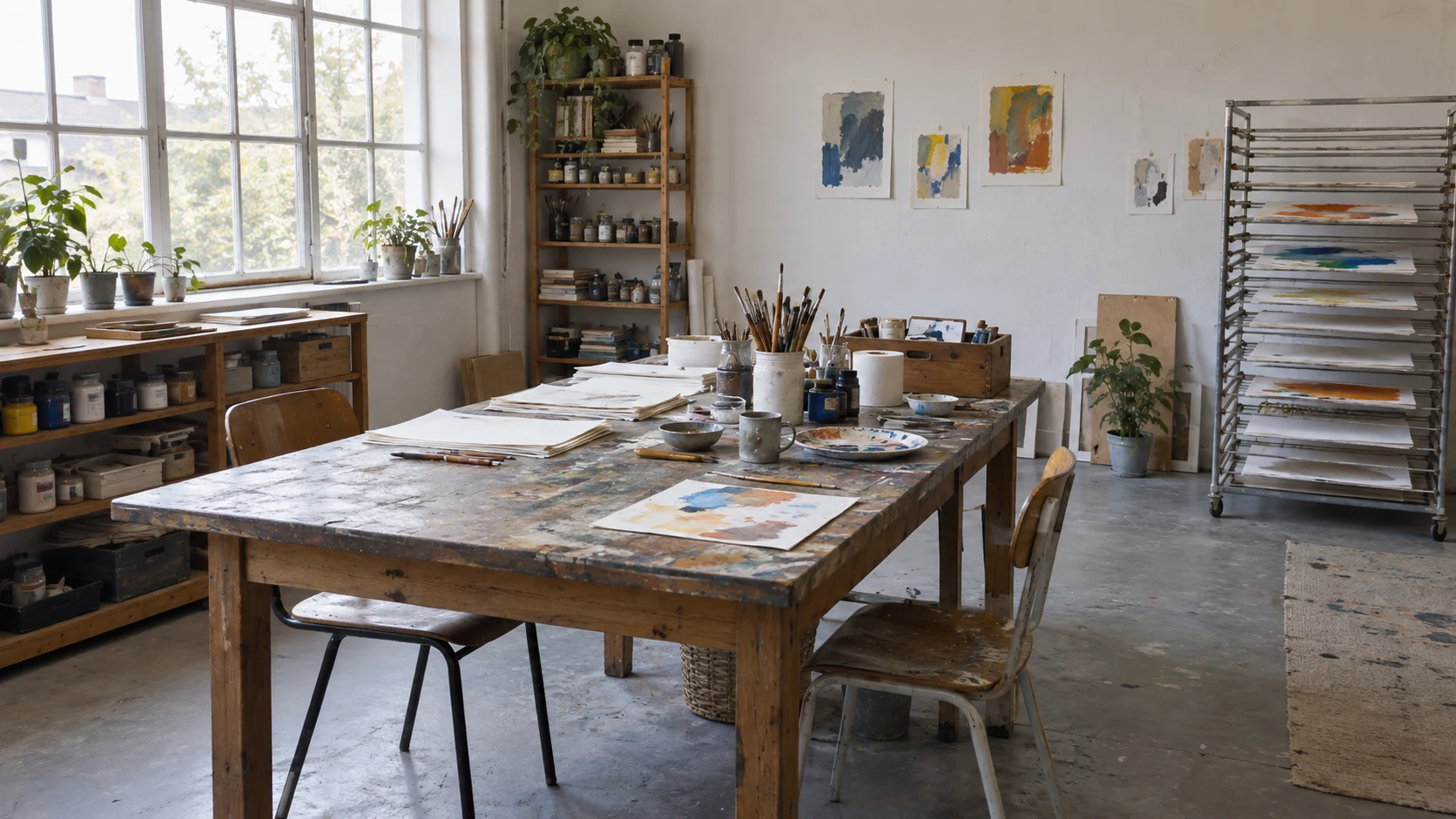
Bea asks: What did you keep from that unsuccessful trial? Ren replies: I kept the cast on a separate board, away from the new prototypes. Otherwise it would become the standard they had to look like, simply because it was the most finished thing in the room. Looking at it from the side helped me recognise that I had joined two different problems: how a piece stands, and how it appears to stand. I began using removable wedges to test those questions separately. The wedges were deliberately plain. They let me adjust a contact or a gap without making another whole object, and they showed me how much depended on a very small interval.
Bea asks: Does showing the support weaken the work? Ren replies: Concealing it would make the balance more theatrical, but that is not what I need here. When you can see how something is held, you begin to notice the terms of its dependence. One part touches a narrow edge, another rests against a wider face; they do not give each other the same kind of help. I want that difference to survive. On the table I turn the pair often, because the front view can make an unequal arrangement look symmetrical. A useful object should reward another position without requiring the viewer to discover one authorised view.
Bea asks: How will you decide that the project is ready to leave the table? Ren replies: I will make a display trial in which the objects cannot borrow interest from the surrounding mess. The empty space will be a fairer test. I also want to leave them alone for a few days and see whether the meeting still feels active when I return. Finishing will involve choosing which adjustments no longer improve the relation, not finding a flawless surface. I may retain one visible joint and a small difference in texture between the parts. They would give a viewer somewhere to begin, and remind me that the apparent simplicity was made through choices.

Written by
Bea Harker
Writing, interpretation and programme editing.
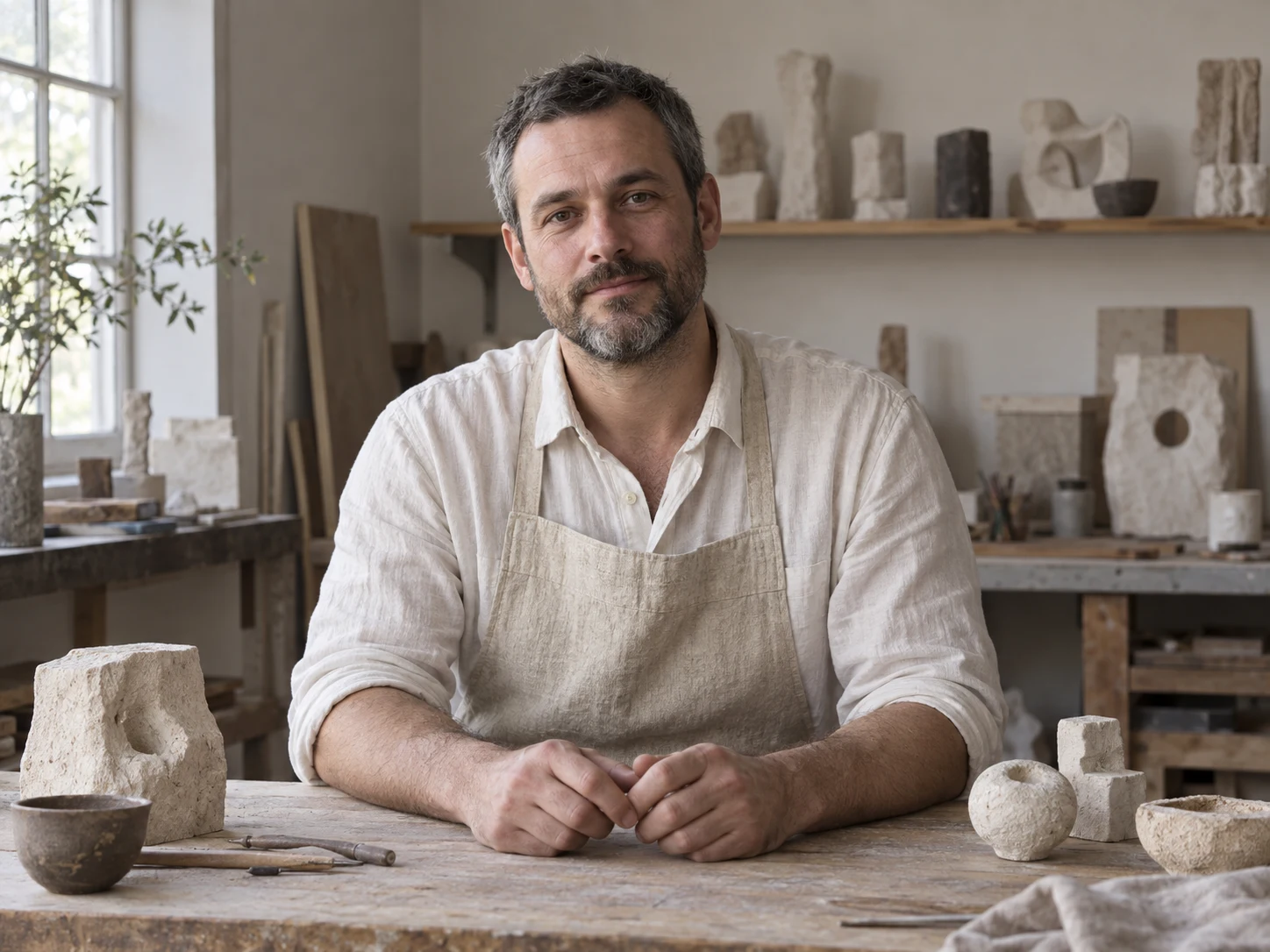
Original generated portrait of the fictional artist Elin Rook.
Published
Category
Interviews