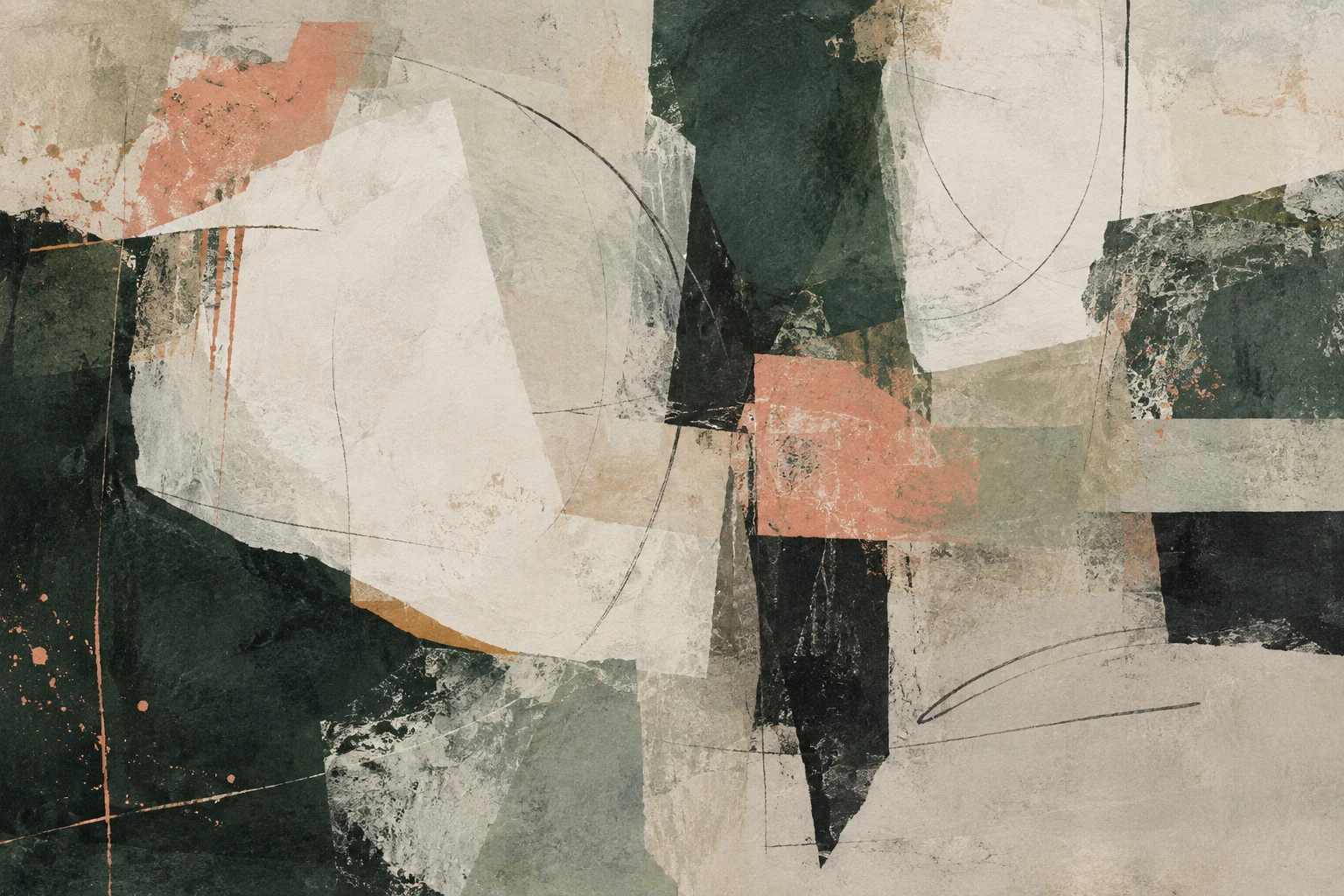
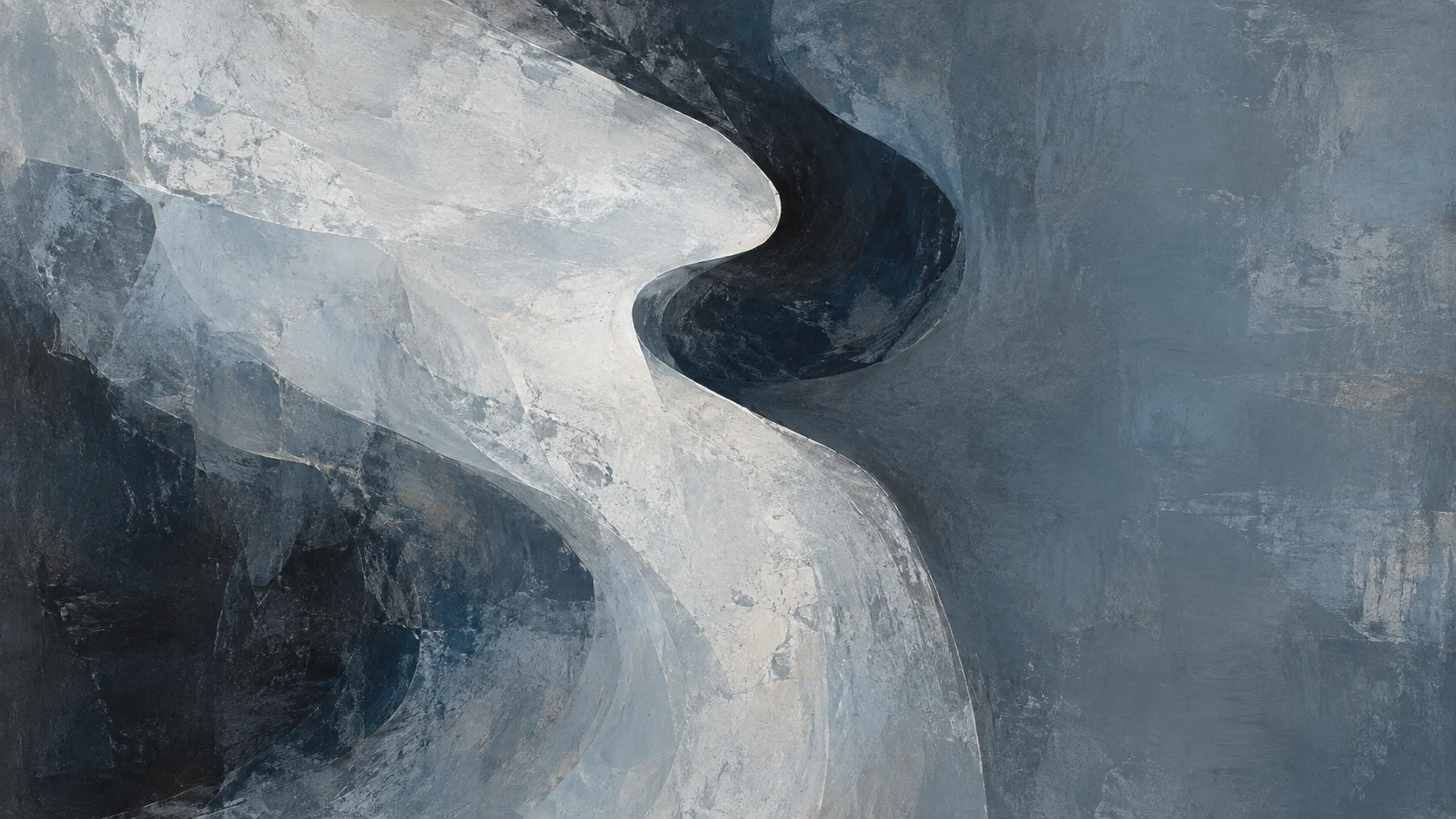
Drift Instructions gives a viewer direction without supplying a stable map. Mira Venn's exhibition begins with pale and dark forms that seem to billow, turn or gather, although none has to be recognised as water, cloth or cloud. The eye can follow a boundary for a while and then lose it in another layer. This is not an invitation to guess the correct object hidden in abstraction. It is a study of how a painted surface can organise a route, interrupt it and offer another point from which to begin.
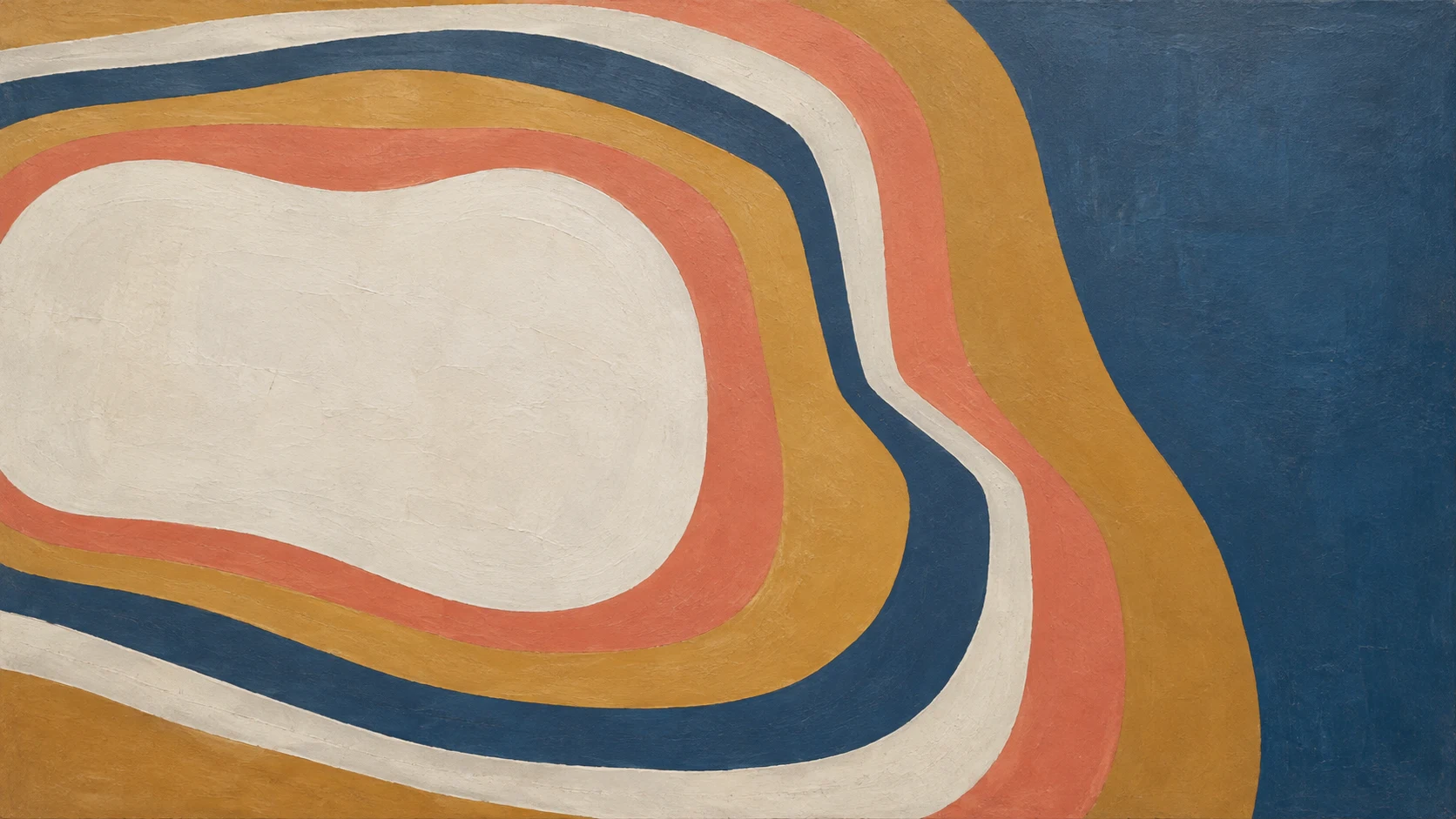
Venn's imagined working process moves between rotated paper studies and larger paintings made with a changed reach of the arm. The exhibition follows the consequences of that change in scale: a small curve can become a broad passage, and a pale gap can take on the weight of a separate shape. The accompanying visual sequence includes curling fields alongside more recognisable floral and marbled studies. Those contrasts make it possible to discuss a fold or an edge without claiming that all the images share one material or author. Each remains an illustrative reference with its own visible surface and limits.
Find a boundary that you can follow for several seconds. Stop where it disappears, and look for the different layer that has taken its place.
The word instructions in the title is deliberately provisional. Visitors are offered ways to enter an image, not an approved route through it. Drift Instructions closes by comparing a first impression of continuous movement with the local decisions that interrupt that impression: a scraped line, a darker pocket or a narrow area left open. These details give uncertainty a material basis. A viewer can disagree about what a form resembles while still pointing to the same boundary. Drift Instructions values that kind of accountable disagreement, in which a painting keeps producing questions because its particular marks continue to reward attention.
Find a route through the surface
An uncertain route can still begin with a precise mark.