

Tomas Reeve Makes the Corner Part of the Painting
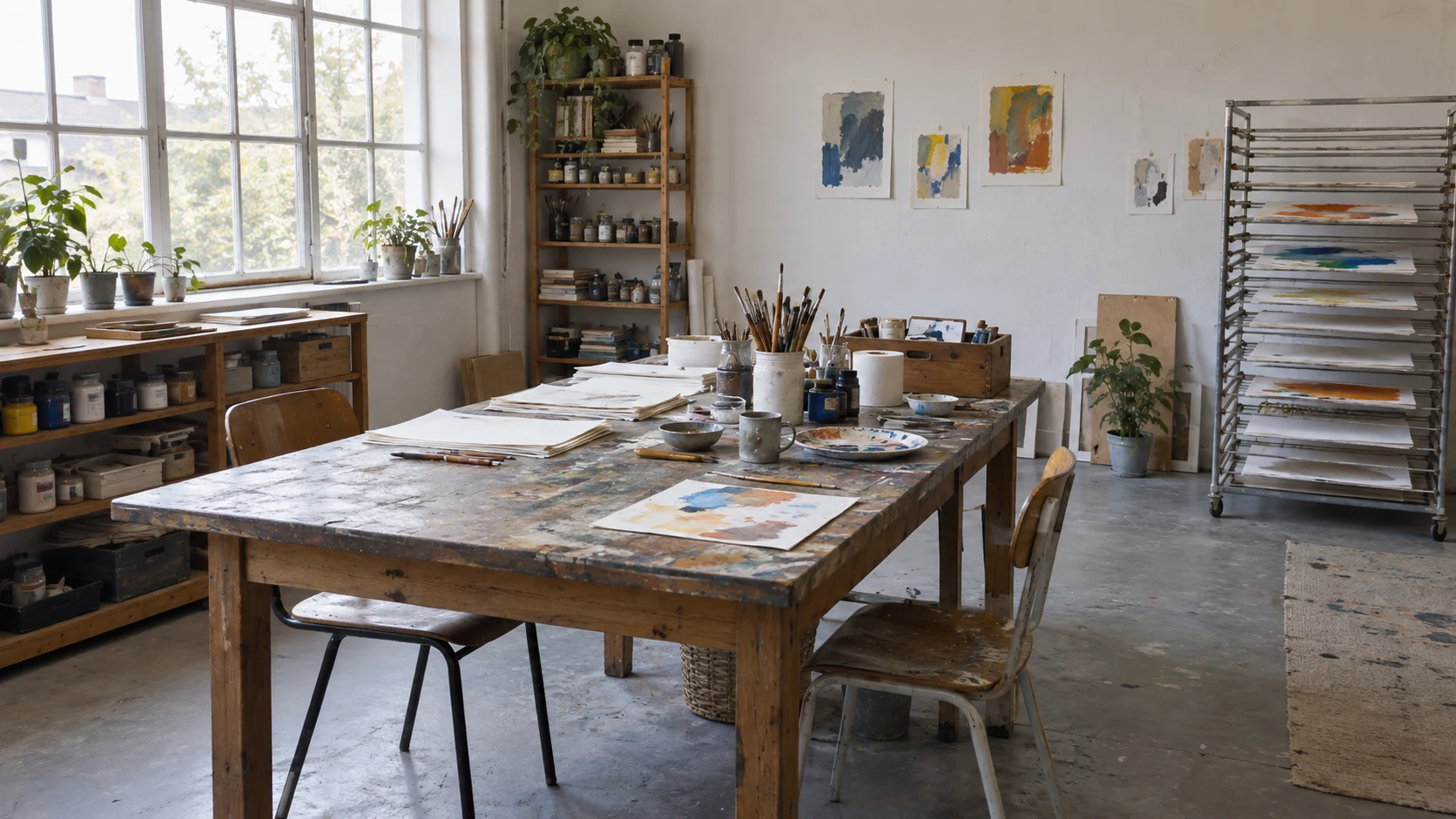
The most revealing place in Tomas Reeve’s recent installation was a corner that initially seemed unfinished. A broad painted band reached the junction of two walls, narrowed abruptly and continued at another height. From the entrance, the interruption looked like a mistake. Walking towards it turned the mismatch into an instruction: this was a painting that required a moving observer, and its most useful information arrived between views.
Reeve arranged the first wall as a generous field of colour, interrupted by a dark shape near the floor. That low mark gave the room a measure. Rather than directing attention towards a single centre, it made a viewer aware of the height of their own gaze. The paint followed the wall’s shallow irregularities; a ridge remained visible through a thin area, while a denser passage almost concealed the same texture. These differences mattered more at close range than the large composition suggested. What looked like one continuous expanse from the doorway became several decisions about pressure, coverage and the resistance of a surface that had not been made perfectly smooth.
A painted room needs places where the eye can stop moving even while the body continues.
Bea Harker
The route then opened sideways. There was room to turn without immediately meeting another work, allowing the first painted band to remain at the edge of vision. Reeve used that peripheral presence well. A colour could appear to belong to the wall ahead, only to reveal its connection to the surface just passed. Such an arrangement can become a puzzle with one correct solution, but here no privileged viewing point resolved everything. Short visitors, seated visitors and people standing further back would encounter different alignments. The work made those differences available without presenting one height or route as the normal way to look.
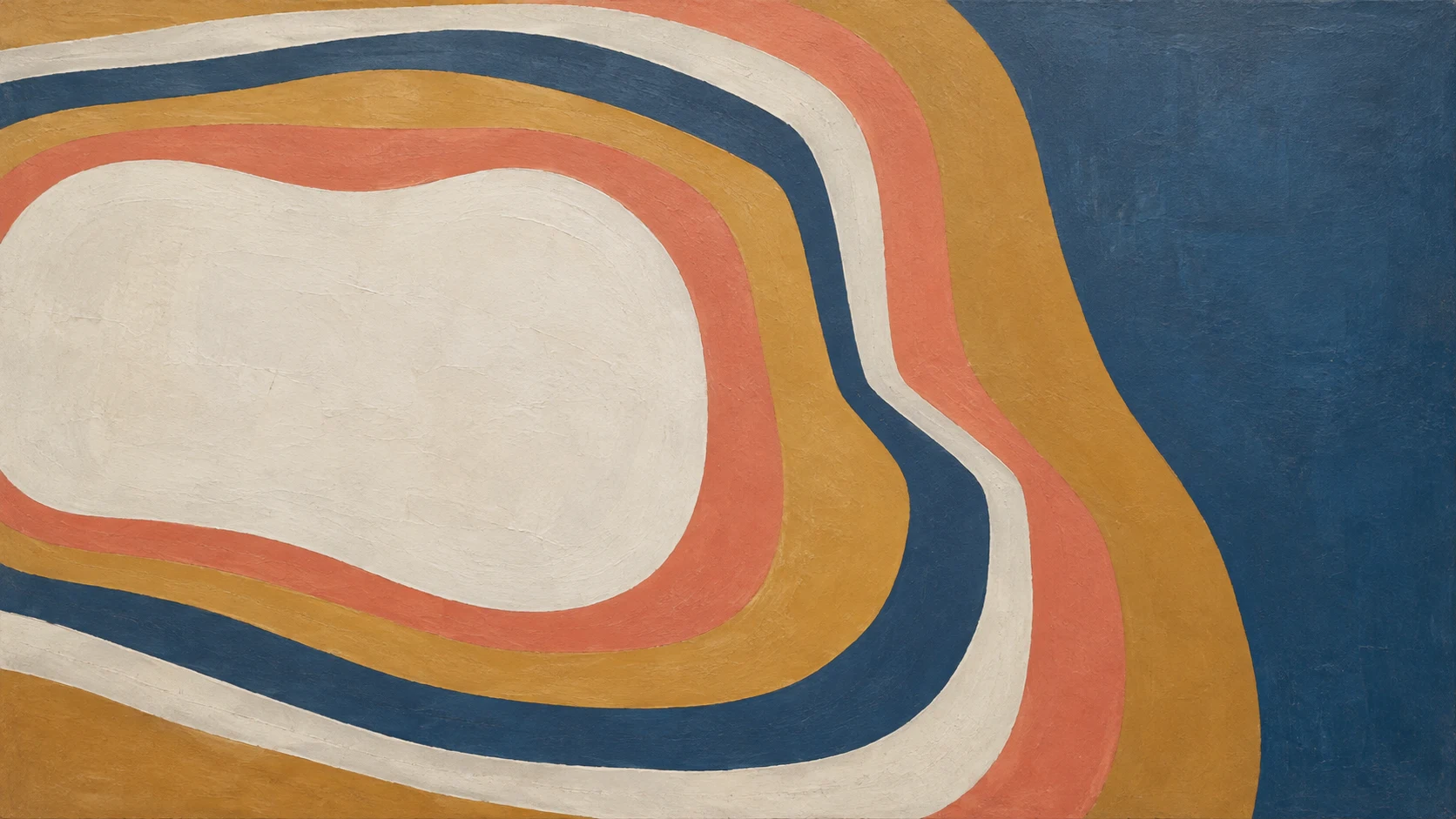
Its weaker passage was the narrowest stretch, where several strong diagonals crowded a small field. The compression created urgency, yet it also shortened the attention the material could receive. An encounter that elsewhere encouraged stopping briefly became a passage to get through. This is a useful distinction in immersive painting: a surrounding image does not automatically give its viewer more freedom. Scale can invite exploration or overwhelm it. Reeve’s quieter transitions, particularly the corner with the exposed ridge, held more possibilities than the densely worked section. They let the room and the painted image remain slightly out of agreement, so that neither became a mere support for the other.
Leaving by the entrance reversed the sequence without simply repeating it. The low dark shape returned as a remembered measure, and the apparently broken band now registered as a change in direction. The installation’s achievement was this modest alteration of attention. It made a corner, a pause and a backward glance feel like parts of a painting’s construction. Its unresolved moments also clarified the stakes: a work spread across walls needs places where looking can slow down. Reeve was most persuasive when he allowed the building to interrupt his image, and trusted the visitor to notice what that interruption could do.